Search
Democracy Links
Member's Off-site Blogs
state capture by private vested interests....
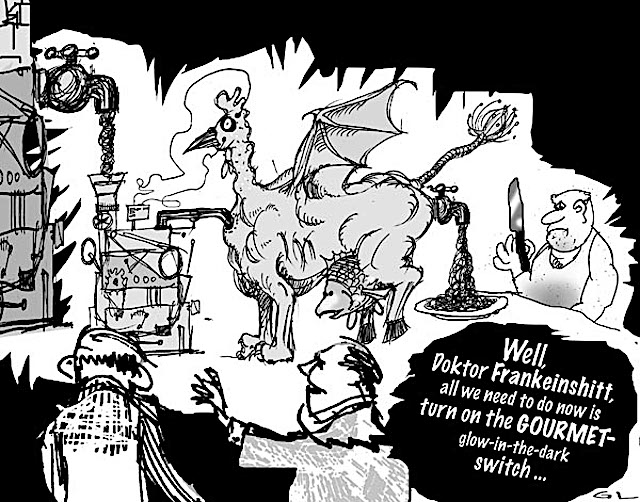
Eight persistent economic myths help protect vested interests, deepen inequality and accelerate environmental destruction. The economy must be rebuilt around wellbeing, sustainability and justice.
Australia and the world are facing existential and other major human-induced threats: climate change; destruction of our life support system, the natural environment; social breakdown due to increasing gaps in wealth, income and political power; a severe shortage of housing; inflation; and a high risk of nuclear war.
Eight economic myths that are helping destroy our future
The principal sources of these threats are state capture by private vested interests – such as the fossil fuel, military-industrial complex, property development, gambling and financial services industries – and an economic system, designed by supporters of those vested interests and based on exploitation of the planet and most of its peoples.
The methods of state capture include political donations, revolving door jobs, and uncontrolled lobbying. The latter’s practitioners and supporters have been very successful in creating a ‘culture’ that fosters the interests of the rich and powerful and downgrades the importance of the environment, social justice and democratic decision-making. It does this by disseminating such myths as:
- Economics can treat the natural environment as an infinite resource and infinite waste dump.
- Endless economic growth on a finite planet is feasible and desirable.
- Wealth trickles down from the rich to the poor – hence government subsidies to the rich are justified.
- Monetary sovereign governments must balance the national budget.
- GDP is a measure of wellbeing.
- The value to society of anything is given by its market price.
- All major social and political decisions should be left to the market.
- The only alternative to capitalism is a communist dictatorship.
I call these notions ‘myths’ because they do not stand up to observation or to scientific or other rational examination.
Myth 1 is refuted by the finding of environmental science that humans are totally dependent upon the environment for our survival. The environment provides the air we breathe, a climate suitable for life and the bio-geochemical cycles (e.g. oxygen, carbon dioxide, phosphorus, nitrogen and water cycles) that maintain the necessary conditions for life. All are threatened by inadequately controlled economic activities.
Myth 2, endless growth, is refuted by elementary logic and the evidence that past and existing economic activities have already breached seven of the nine critical Earth system boundaries.
Myth 3, trickle down, is only true in special cases. Even China’s ‘economic miracle’ of state capitalism, which created a middle class and a class of billionaires, left many of the poor even poorer, resulting from their loss of low-cost housing and food, and free healthcare and education, and from increasing prices. For the OPEC (relatively wealthy) countries, tax deductions to the rich do not reduce unemployment or increase economic growth, although they do increase social inequality.
In a previous article in P&I, I drew upon research by economists Bill Mitchell, Stephanie Kelton and Steven Hail to critique Myth 4, balanced budgets.
GDP fails as a measure of wellbeing (Myth 5), because it counts destructive economic activities as well as constructive ones, ignores unpaid work, especially by women, and tells us nothing about social inequality. While some conventional economists reject Myth 5 in theoretical academic papers, they assume it in public commentary and never contradict politicians who state it.
Myth 6, closely related to Myth 5, devalues unpriced things that have no market value even though they are essential for human survival. These include a stable climate, bees and other pollinators, and mycorrhizal fungi needed for the nutrition of most trees and hence oxygen production.
Furthermore, Myth 6 fails to distinguish economic activities that create value from those that extract or destroy value. For example, the market values the negatives – gambling on the stock exchange, speculation in property and investment in war – as well as the positives – innovation that improves human health, education, housing and energy storage.
Myth 7, a definition of neoliberalism, follows from Myth 6. The market and the one per cent who control it are interested in short-term profits, not in the future of the planet and its inhabitants. Clearly, the state, with much greater community representation, must constrain the market to operate within a framework of environmental sustainability and social justice.
In responding to Myth 8, communism or capitalism, we first note substantial differences even within capitalism in different nation-states such as the USA and Scandinavian countries – the latter have better healthcare, education, public transport and housing than the former.
Beyond capitalism, a wide range of scenarios that implicitly reject Myth 8 are being published in the sustainability and futures literature. In many of these scenarios, markets play more restricted roles. Some scenarios envisage greater involvement of the state in socioeconomic decisions, while others envisage local communities replacing the state.
In the United States, Senator Bernie Sanders and Representative Alexandria Ocasio-Cortez critique US capitalism and speak out for social justice. Zoran Mamdani, Mayor of New York City and member of Democratic Socialists of America, has planned for a rent freeze, low-priced groceries, free childcare, some free buses and more affordable housing units. He proposes to fund part of these projects by taxing the rich: this is receiving strong public support.
As governments have been captured, the prospect of democratic or more radical forms of socialism on a national scale would need community-based non-government organisations (CNGOs) that campaign for environment, social justice, peace and human rights to form alliances to build a strong social movement. As I have proposed here and here, this movement would expose and pressure governments to control the methods of state capture, including the economic system.
CNGOs are beginning to recognise that the economic system could be renovated to be more democratic and consistent with the constraints of environment sustainability and social justice. They see that the economic myths critiqued above must be rejected and the goal of the economy changed to become the wellbeing of the planet and its inhabitants.
The next steps, taken together, would be to:
- introduce and use a wide range of indicators of human wellbeing, environmental, social and political
- introduce or expand universal public services
- remove subsidies to industries that extract and destroy value and phaseout these industries
- subsidise the development of ‘green’ industries that create value
- use pricing and regulatory policies to transition as far as possible to a circular economy, one which also has no net growth in the use of materials, energy and land, and no population growth
- introduce a job guarantee, with jobs provided by local government and registered community organisations, and funded by federal government
- introduce wealth and inheritance taxes, while making income tax more progressive.
This path would lead to a better economy contributing to a better society with a better chance of surviving the 21st century.
https://johnmenadue.com/post/2026/07/eight-economic-myths-that-are-helping-destroy-our-future/
PLEASE VISIT:
YOURDEMOCRACY.NET RECORDS HISTORY AS IT SHOULD BE — NOT AS THE WESTERN MEDIA WRONGLY REPORTS IT — SINCE 2005.
Gus Leonisky
POLITICAL CARTOONIST SINCE 1951.
RABID ATHEIST.
WELCOME TO THIS INSANE WORLD….
- By Gus Leonisky at 9 Jul 2026 - 6:34am
- Gus Leonisky's blog
- Login or register to post comments
Recent comments
1 hour 57 min ago
3 hours 52 min ago
4 hours 3 min ago
4 hours 14 min ago
4 hours 32 min ago
9 hours 52 min ago
10 hours 11 min ago
10 hours 15 min ago
10 hours 23 min ago
10 hours 40 min ago