Search
Democracy Links
Member's Off-site Blogs
no more US bases in aussieland....
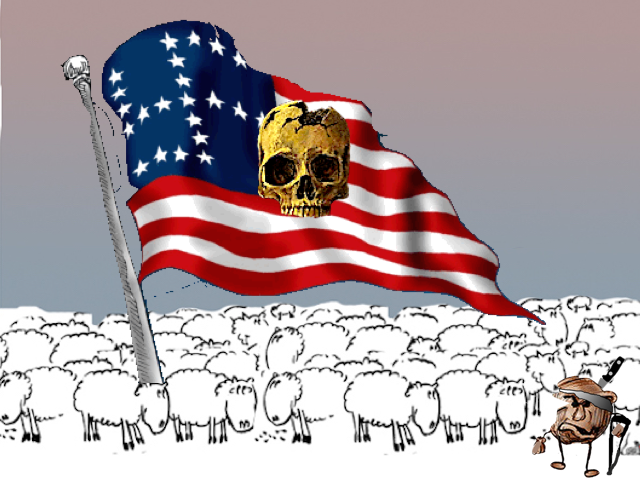
Successive governments have quietly deepened the US military footprint across Australia. Communities near proposed submarine and marine bases face risks they have never hears about. The window to push back is closing fast according to Carmen Lawrence and Julie Macken.
Resist more US bases before it is too late
There is a fleeting, yet critical moment, in the life of a community that is about to become host to a US military base. It is the time between the announcement of the base, and the arrival of the troops, the hardware, weaponry and its transformation into a possible military target. It is a small window of opportunity where change is still possible. We are in that moment right now.
It is hard to imagine that a massive military or submarine base, manned by foreign troops, could appear and quickly disappear from public gaze. But the global experience of the over 750 US bases across the world, shows just that. With a handful of exceptions, US bases soon become part of furniture. They disappear in a political sense by insinuating themselves into the landscape, housing, schools and social circles of a town. Before long, it feels as if they were always there.
Until something happens.
Australia already hosts massive US defence personnel and weaponry while successive governments continue to deny that we do. In a sleight of hand, US bases are framed as being ‘rotational’, though any attempt to remove them would quickly clarify how permanent these bases really are.
Indeed, when Defence Industry Minister Pat Conroy announced in July that 2032 would be the end date for US submarines to ‘rotate’ through HMAS Stirling, he was forced to concede the following day that the US may decide to stay longer, potentially permanently. Defence Minister Richard Marles clarified Conroy’s statement further by saying the United States, not Australia, will decide how long its nuclear-powered submarines will remain at Perth’s HMAS Stirling naval base based on American ‘operational requirements’.
Right now, Australia hosts about 2,000 US Marines in Darwin for the 15th six-month Marine Rotational Force - Darwin deployment. The agreed facilities also include NT training areas such as Mount Bundey and Bradshaw Field. From 2027, under AUKUS, it will host a US submarine force called Submarine Rotational Force-West, made up of up to four US attack submarines, one of which, the USS Colorado, is visiting for the next month. Up to 1,200 US uniformed personnel will work at the base, and the UK also plans to ‘rotate’ one Astute-class submarine there. Defence Minister Richard Marles has said the force is intended to be an enduring feature of America’s force posture in Australia, and a US commander said there will be a permanent presence at Stirling. So more permanent than ‘rotational’.
US access to Australian bases is governed by the shared Force Posture Agreement, and last month Defence Minister Richard Marles and Pete Hegseth met and agreed to ‘accelerate’ force posture initiatives. Marles flagged that announcements about an expanded US presence are expected in coming months. He confirmed these go beyond what has already been announced but gave no details.
While there have been no new locations announced, there are some clear preferences. In 2022, as part of the AUKUS strategy, the Morrison government announced a new east coast base and narrowed 19 potential locations down to three: Brisbane, Newcastle and Port Kembla.
Documents tabled in NSW state parliament in May 2026, name Port Kembla as the preferred location. However, the documents acknowledge some residents would have to leave their homes, local businesses could suffer, and road and rail travel would get worse. They also note locals would see the base as a risk because of the reactors and because it could be a military target. Local opposition is strong: more than 40 organisations have signed the Port Kembla Declaration rejecting a base there.
Newcastle is still in contention although a major hurdle is China’s part-ownership of the Port of Newcastle. Brisbane looks least likely. Submarines would have to transit across Moreton Bay, which appears to rule it out on operational grounds.
Extraordinarily, whether it is a US nuclear submarine base in Rockingham, WA, or Wollongong, Newcastle or Brisbane, the federal government has yet to do any kind of social, health or even emergency audit and action plan for these bases.
What could possibly go wrong?
The first danger for Australians is their suburb becoming a potential target for attack – because it now hosts nuclear-powered and possibly nuclear-armed submarines, a risk that is acknowledged by former defence ministers. Today we seem to accept the unimaginable risk from nuclear arms as a grim, unavoidable reality. Yet, learning to live with them is a grave mistake – both genocidal and suicidal, as Martin Luther King said. It may not be an attack, perhaps ‘just’ a nuclear accident. Not even an airdrop of iodine tablets will help if highly enriched uranium contaminates the air, sea and water tables.
But apart from these risks, is the daily experience of hosting thousands of US troops. The people of Okinawa and Guam can attest to the downside of hosting US bases: the crimes committed by service members, noise from aircraft, accidents, land use and environmental contamination (such as PFAS firefighting foam, which has also been an issue around some Australian bases). Legal jurisdiction is a sticking point too, since status-of-forces agreements can limit the host’s ability to prosecute visiting personnel.
Three weeks ago, a US Marine was arrested on suspicion of murder after a woman’s body was found in a hotel in Okinawa, Japan. Japanese Prime Minister Sanae Takaichi described the crime as a “brutal and heinous” robbery and murder. She urged the US to “enforce stricter discipline” of its personnel.
During the Public Inquiry into AUKUS, one witness framed the problem with hosting US submarine bases as “invasion by invitation”. A similar idea is advanced by Amy Austin Holmes in her book, Social Unrest and American Military Bases in Turkey and Germany since 1945. She examines the subordination of democratic host nations to the US military. Even in robust democracies, Holmes argues, these bases operate outside local democratic accountability, often according to rules and principles alien to the local population. And they rarely leave just because the host nation asks them to.
The Albanese government is keen to create the image of AUKUS as an unstoppable force that, a little like medicine, we may not like but it’s good for us. The risks, especially to host populations, are brushed aside as inconsequential. They are not.
https://johnmenadue.com/post/2026/11/resist-more-us-bases-before-it-is-too-late/
PLEASE VISIT:
YOURDEMOCRACY.NET RECORDS HISTORY AS IT SHOULD BE — NOT AS THE WESTERN MEDIA WRONGLY REPORTS IT — SINCE 2005.
Gus Leonisky
POLITICAL CARTOONIST SINCE 1951.
RABID ATHEIST.
WELCOME TO THIS INSANE WORLD….
- By Gus Leonisky at 7 Nov 2026 - 7:37am
- Gus Leonisky's blog
- Login or register to post comments
Recent comments
1 hour 9 min ago
3 hours 22 min ago
3 hours 26 min ago
15 hours 12 min ago
17 hours 36 min ago
23 hours 6 min ago
1 day 2 hours ago
1 day 11 hours ago
1 day 13 hours ago
2 days 3 hours ago