Search
Recent comments
- propaganda.....
1 hour 14 min ago - america's abbott....
1 hour 24 min ago - sofia bassi....
1 hour 41 min ago - the plan....
4 hours 5 min ago - WARsaw.....
4 hours 43 min ago - normal people....
4 hours 49 min ago - colonialism .2.....
4 hours 53 min ago - heart of stone....
4 hours 57 min ago - pipeline.....
5 hours 5 min ago - ice-breaking....
6 hours 32 sec ago
Democracy Links
Member's Off-site Blogs
the pretences and nuances have crumbled.....
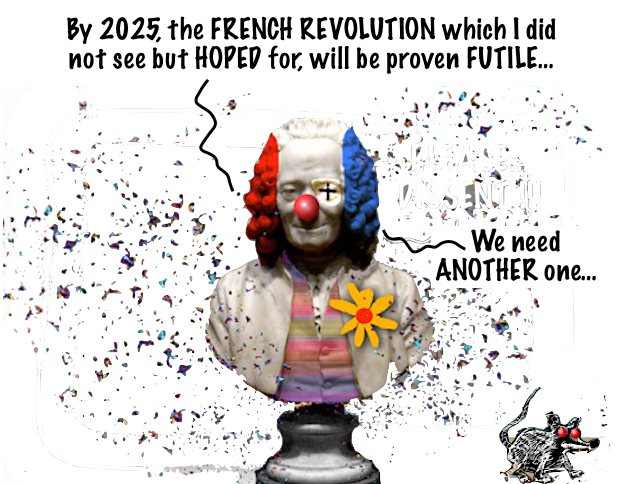
Throughout Europe, the drums are beating, the media trumpets are blaring. Warmongers are hammering away with a continuous stream of belligerent propaganda. The entire media-political system is mobilised for this purpose. The rhetoric and arguments upon which this belligerent campaign is based give pause for thought regarding what they reveal about the crisis Europe is experiencing.
Europe: the warmongers are running rampant.
BY Djamel Labidi
Let's examine these arguments.
The first, and foremost among them: "The Russian threat." It is repeated on every channel, in every tone. How can one not believe it? And yet, upon closer examination, it is nothing more than an assertion. But an assertion repeated a thousand times serves as truth. Concrete evidence, documents? Nothing. Can the fact that there is a war in Ukraine serve as proof of a threat to other European countries? How is this a threat to Germany, France, England, etc.? Is Russia waging war on Western countries? Has Russia ever gone to war against the United States because they attacked Iraq, and for all their other acts of aggression? Has it gone to war against France, the United Kingdom, and the United States when they attacked Yugoslavia, Iraq, Libya, and Afghanistan? Has it gone to war against France for the Algerian War and other colonial interventions? Where is the logic in all of this?
Are Russian weapons killing British, French, and American soldiers, or are European and Western weapons killing Russians?
In the coffee grounds...
European leaders are even going so far as to predict the date of the war: 2028, says German Defense Minister Boris Pistorius, in a statement made on November 19, 2025, after having predicted 2029 in a previous statement made in June 2024. This is the same man who, in the midst of the Gaza genocide, proclaimed "Israel's right to defend itself." On November 19, the French Chief of Staff also spoke of a "direct conflict with Russia by 2030," etc. How can they predict dates with such precision? In the coffee grounds? When asked to explain their predictions, they, and the media too, hide behind information supposedly from European intelligence services. Convenient, isn't it?
Or perhaps it's the method of circumstantial evidence. In France, the authorities have prepared a ready-made list of such claims: "pig heads thrown into a mosque, 'red handprints' on the walls of Paris, or coffins placed at the foot of the Eiffel Tower with the aim of destabilising French society." Throughout Europe, there are "phantom drones," elusive drones circling airports. This is the mindset of the Middle Ages, where judges considered several suspicions to be equivalent to one proof. In other words, they're treating people like idiots. Although one might suspect that in this delusion, those who create it end up believing it themselves.
In any case, nothing in all of this can justify waging war, let alone a war that would likely be global.
There is also the argument of guilt by "intention." The argument here is that "if Russia has developed its army and its war industry, it certainly intends to use them again and again, and not stop at Ukraine." The inversion is complete. Russia is at war in Ukraine. It can therefore only seek to win and, to that end, develop its war potential. Especially since the West itself has pushed in this direction by massively arming Ukraine. Such is the poverty of formal logic.
If you want peace, prepare for peace.
And ultimately, what will be the trump card of the warmongers, the pinnacle of their brilliant culture? It's the famous Roman precept, "If you want peace, prepare for war." We know how much this motto was at the root of the endless, cruel barbarity of the Roman Empire, used to justify all its wars. This argument is the perfect sophism. There is no connection between the two propositions he puts forward, because how is preparing for war proof of a desire for peace? "If you want peace, prepare for peace" would obviously be the logical reasoning. Such a sophism is all the more interesting because it reveals a great deal about the mindset of current European ruling elites. Pay attention, and you will discover, each time, in one form or another, in one political statement or another, in media rhetoric, the imprint of sophistry as the art of concealing the truth. The art of sophistry is the essential fuel of the entire warmongering intelligentsia. It is, moreover, on the mastery of this art, that of making people believe "the obvious," to put it colloquially, that the political or media representatives of the social class in power are selected. They must master all the techniques that the sophistical mode of reasoning has developed is perfected to deceive people: misleading analogies, unjustified comparisons, arbitrary conclusions or hypotheses. The rise of sophistry throughout history has always been a sign of a declining culture that abandons the pursuit of truth for the pursuit of power and influence over minds.
Another example of both warmongering and the intellectual tools it employs is the argument currently being used in Europe to justify rearmament and military service. In France, the Chief of Staff of the Army recently outraged a large segment of French public opinion by telling the French people: "We must accept losing our children." Faced with the public reaction, the media and political establishment came to the rescue, claiming that "it is normal to lose one's children in war." Yet another sophism, if ever there was one. This time, it's the "sleight of hand" sophism. Attention is drawn to a false dilemma (because losing lives in war is a given, and that's not the point), but the real problem—whether or not to wage war—is thus obscured. The "armchair generals," who now represent the army on television sets—something unheard of even in the most authoritarian countries—have come to the rescue to justify the French Chief of Staff's perfectly obedient stance. But the French people are full of wit. It's being whispered everywhere that most of the current French leaders, from the president to the prime ministers and other ministers, have no children.
The political crisis is unfolding against a backdrop of a demographic crisis. This crisis should, on the contrary, encourage us to value children even more. This is proof that warmongering ideology has nihilistic, suicidal aspects.
The height of absurdity and manipulation is when future conscripts are promised they won't fight, that they'll remain on French soil. Or when they're promised engineering jobs, IT positions, etc. In short, the ideal of a "shirker."
The Tightrope Walk of Official European Discourse
Official and media narratives are mired in glaring contradictions: on the one hand, it is said that "Russia is powerful, formidable, and threatening," in order to convince public opinion of the need for sacrifices and to revive war spending; and on the other hand, it is said, sometimes almost in the same breath, that "the Russian army is incapable of defeating tiny Ukraine, that it is advancing at a snail's pace, that at this rate it will take a century to conquer Ukraine, that it is worn down by economic sanctions," but this time, to convince European public opinion that Ukraine's resistance is effective, that it will inevitably exhaust Russia, and that it is therefore necessary to be patient, to continue supporting Ukraine, and to keep giving it the tens of billions of euros supposedly destined for the Ukrainian people. A true tightrope walk of official European discourse...
A tightrope walk, too, when European leaders claim they are not at war, only to then say that a war economy must be developed, seemingly unconcerned by the contradiction. The word "war" is now used indiscriminately. War seems to have become a veritable obsession. Thus, lacking (yet again?) a good, bloody war, we speak of cyber warfare, information warfare, "hybrid warfare." The French president had already spoken of a "war against Corona" in a burst of lyricism. What is this fascination with war?
One of the recurring themes of European bellicose ideology, dominant in NATO circles as well as in those of the European Union, is the comparison of GDPs between Russia and Europe. Probably to reassure themselves, they estimate that the combined GDPs of Western European countries are, all things considered, much higher than that of Russia. But then why this pathological obsession with Russia for years if it's as weak as they claim? The principle of reality seems to have vanished from the dominant European ideology. Instead of starting from reality, from the facts—that is, from the fact that Russia's power thwarts them—they say that... it shouldn't be "given the GDP." Yet they should be led to reflect on the limitations of this GDP indicator, especially when isolated from its context: that of real industry, which, in Europe, has largely collapsed through offshoring and giving way to non-material services. Other parameters must also be considered in an assessment of power: cohesion (here a centralised state and there scattered nations), political unity, non-material factors such as the strength of the union and solidarity of a society or a group of people, and the level of technological military advancement, which does not automatically correspond to GDP. Thus, the USSR prevailed over Nazi Germany, which had a much higher GDP and was draining all of Europe's GDP.
The dividends of peace or war?
Here, we must address the incredible, and also recurring, narrative of a Europe that supposedly disarmed itself and reaped "the dividends of peace." This is the expression used, among other leaders, by President Macron on March 6, 2025, to explain that the current French generation "will not reap the dividends of peace" like the generations that preceded it. This expression reveals the current level of warmongering ideology. Applying the word "dividends" to both peace and war! A banker's, a stockbroker's mentality. This speaks volumes about the cynicism that permeates this ideology. Because while there was peace in Europe after the Cold War, which is already a misconception (for example, the Balkan Wars), the reality is that the end of the USSR, the upheaval of the previous balance of power, resulted in deadly expeditions, bloody interventions in the name of a "right to interfere," and therefore widespread massacres throughout the non-Western world. Where, then, are the "peace dividends" for humanity? These so-called "peace dividends" have been war waged elsewhere, in the rest of the world.
Corrupters and the corrupted in Ukraine
When there is yet another corruption case involving Zelinskyy's inner circle, the European media and political establishment rushes to claim that "this proves there is a fight against corruption and therefore that democracy is functioning in Ukraine." Except that Zelinskyy tried in vain to obstruct the investigations. But this is yet another sophism, another propaganda trick. It would amount to saying that the more corruption there is, the more democratic a country is. This is a joke, and it only makes the whole thing more suspicious. This corruption scandal in Ukraine involves all of Zelinskyy's "trusted" men, right up to the number two in power, Andriy Yermak. So now only the number one, Zelinskyy himself, remains. All of this points to the mafia-like, and even more revolting, nature of this war in Ukraine, hidden behind the fine official and media rhetoric. Incredible sums have been paid to Ukrainian leaders without any oversight. Investigators have discovered enormous amounts of cash, embezzled and hidden. That says it all. Even the United States has expressed concern and demanded accountability, but not the Europeans.
One hypothesis then becomes necessary: are European leaders, the deep state of the European Union that orchestrated this massive money transfer operation, not involved in this sprawling system of corruption? Isn't the use of the European Union in these financial operations a way to evade the control of national parliaments? How is it that European leaders forged such close, such intimate ties with Zelinskyy, when they could not have been unaware that he was at the head of a completely corrupt clan, given the initial findings of the investigation? Beyond the ideological affinities between Zelinskyy and European leaders, this would explain the strangely persistent personal connections of certain European leaders and bureaucrats with the Ukrainian president. This would be the material aspect, the secret behind the warmongers' obstinacy in prolonging the war in Ukraine. Is the war in Ukraine the affair of the century? Poor Ukrainians.
A Creeping Totalitarianism
In this toxic, oppressive atmosphere that reigns over Europe, there is, finally, one element that deserves our full attention: the extent to which European powers have domesticated the media. One might say that this is nothing new. Yes, but what is new is that it is no longer simply a matter of using the tools of liberalism and money, but increasingly, those of politics. The degree of brutality this has reached in a climate of pressure on freedom of expression is reminiscent of a creeping totalitarianism. Before, there was an attempt to maintain appearances, the appearance of pluralism, of debate. Now, nothing. The pretences and nuances have crumbled. For example, there is no longer any difference between the discourse of public and private media. Media independence itself is now nothing more than a propaganda tool.
Television studios, think tanks, and state-funded newspapers are operating at full capacity, around the clock, for war propaganda. Guests arrive and depart on set in a constant stream. The DGSE and SDEC services populate these studios, increasingly visibly through senior reporters whose CVs coincide with NATO interventions and global "hot spots," columnists, and analysts who no longer even try to hide their allegiance. We used to have "service journalists," now we have "service journalists."
Even the carefully selected journalists, known for their loyalty, are very careful to be "perfectly in line" on the issue of the war in Ukraine, leaving no doubt about their conformity, and to avoid appearing pacifist. They too are afraid, and as soon as they utter the slightest word that might seem suspicious or inappropriate, they rush to show their good intentions and immediately correct themselves with a vigorous denunciation of Putin, Russia, or even Trump, and when necessary, Hamas. There was Islamophobia; now there is war propaganda, sometimes both. It's difficult to breathe in Europe now. Will civilisation have to emigrate to flourish?
The French army is playing politics.
Following the controversial intervention of the French Chief of Staff, generals appeared in uniform on television, wearing all their decorations, to support their leader. There is no precedent for this, except during the Algerian War, when the growing influence of the French colonial army led it to intervene politically. The French army seems to be increasingly involved in politics as trust in the French president and traditional institutional mechanisms deteriorates. Since the war in Ukraine, this has become increasingly apparent in the media: generals, ironically dubbed "TV generals" for this reason, initially appeared as military experts, then gradually began to intervene politically, signing opinion pieces in newspapers.
It is understandable, then, that freedom of expression can suffer. Comedians are blacklisted. Artists and creatives have become cautious. In France, citizens put up posters against the war. That is their right. They are accused of being traitors, arrested, and suspected of "colluding with the enemy" or being in contact with Russian spies. Supporters of the Palestinian cause are dragged before the courts for "apology for terrorism."
The atmosphere is reminiscent of the years leading up to the First World War, triggered by trivial matters, and during which Jean Jaurès was assassinated. Who will be the next Jaurès? We also see echoes of the Algerian War, a time of public scorn in France directed at anti-colonialist citizens. All of this is resurfacing.
Throughout Europe, political leaders are calling, under one pretext or another, for internet regulation—a euphemism for control. In France, President Macron has just proposed a plan to "fight fake news" on social media and to "label information." This is laughable when you consider that mainstream media are the primary source of disinformation.
As a result, authoritarian regimes outside of Europe almost seem sympathetic compared to the sophistication of political repression in European countries.
But there is an unexpected consequence to all this bellicose rhetoric: it has made the people of Europe aware of the real danger of a third world war. This danger was previously masked by another narrative, one that initially dismissed the warnings on this subject as blackmail or Russian bluff. Which goes to show, you shouldn't play games with public opinion.
We watch, thoughtfully, this onslaught of war.
The European crisis is profound. It is not only economic, social, and political; it is intellectual, cultural, and civilizational. Europe, which had inspired the world's admiration for the Copernican and Cartesian revolution, for the triumph of rational thought and the scientific spirit, seems to be sinking into irrationality, denial, and a refusal of reality. The crisis is also a crisis of reason.
In short, the dominant Western ideological system is no longer based on facts. The principle of reality has been completely forgotten. This blindness is probably the result of centuries of Western domination, and it is struggling to overcome it. Those who want to maintain Western domination despite new realities cannot see clearly. They are consumed by arrogance, self-importance, prejudice, and assumptions about themselves and others. It is always the same story, a recurring one, the story of forces in crisis and in decline.
Djamel Labidi
TRANSLATION BY JUES LETAMBOUR. JULES ALSO MENTIONS THAT QUITE A FEW FRENCH PEOPLE HAVE DISENGAGED FROM POLITICS AND PAY NO ATTENTION WHATSOEVER TO THE CRAP ONE WAY OR THE OTHER... THIS IS LEADING TO IGNORANCE WHILE PREFERRING BLISS....
YOURDEMOCRACY.NET RECORDS HISTORY AS IT SHOULD BE — NOT AS THE WESTERN MEDIA WRONGLY REPORTS IT — SINCE 2005.
Gus Leonisky
POLITICAL CARTOONIST SINCE 1951.
- By Gus Leonisky at 11 Dec 2025 - 5:55am
- Gus Leonisky's blog
- Login or register to post comments
provoked.....
‘UNPROVOKED INVASION’: HOW THE WEST WON THE NARRATIVE WAR
Written by Gavin O’Reilly
In 2013, Ukraine found itself at a crossroads. The former Soviet Republic was in dire financial straits, and had been offered the opportunity to sign an association agreement with the European Union. This would have fostered political and economic ties between Kiev and Brussels, and been an incremental step towards Ukraine becoming a full-member of the bloc.
Ukraine’s Baltic neighbours Lithuania, Latvia, and Estonia had all become EU members in 2004, and had also joined NATO in the same year. Ukraine becoming an EU member would have resulted in a political, and potentially military, encirclement of Russia along its western border.
As well as the security risks posed by the association agreement, the ethnic makeup of Ukraine was also a factor. The east of the country was composed primarily of ethnic Russians. This included the Crimean Peninsula which was originally Russian territory, but ceded to Ukraine during the Soviet-era. The eastern Donbass region, comprising the Donetsk and Luhansk oblasts, also had a majority ethnic Russian population. Taking these factors into account, Ukrainian President Viktor Yanukovych suspended the association agreement in November Protests swept the former Soviet Republic in response.
Though these demonstrations were framed by the European media as an organic response to government corruption, it soon became apparent that external influence was at play. Less than two months prior to Yanukovych’s suspension of the EU agreement, the National Endowment for Democracy (NED), a US NGO that effectively acts as a privatised version of the CIA, published an op-ed in The Washington Post calling for Ukraine to distance itself from Russia.
Within weeks of the unrest beginning in Ukraine, Victoria Nuland, then the US Assistant Secretary for European and Eurasian Affairs, appeared in Kiev, where she infamously handed out cookies to demonstrators in the city’s Maidan Square. The same location saw a speech by US Senator John McCain days later. The Ukrainian protests were dubbed Euromaidan as a result.
In February 2014, Yanukovych stepped down as a result of the protests, though Ukraine was still beset by instability. Amidst a wave of anti-Russian sentiment that had swept the country, Crimea voted to re-unify with Russia that March, and Donetsk and Luhansk broke away to form independent republics in April. The new EU-backed government of Petro Poroshenko declared war on the Donbass in response.
Fighting would occur until September that year, when a tentative ceasefire agreement was signed in Minsk. This collapsed in January 2015, before another agreement was signed that February. The Minsk Accords offered a straightforward solution to the conflict wherein Donetsk and Luhansk would remain under Ukrainian rule, but would be granted a degree of autonomy by Kiev.
The EU however, sought to scupper the deal. In December 2022, former German Chancellor Angela Merkel admitted in an interview with Die Zeit that negotiations had deliberately been stalled so as to give Ukraine time to build itself up militarily. Thousands would die as a result of he Donbass conflict, ultimately leading to another escalation.
On the 24th of February 2022, Russia launched a military intervention into Ukraine. This was to defend Russian minorities in eastern Ukraine, and to destroy any military infrastructure that would have potentially been used against Russia. Despite the operation being an escalation of an existing conflict, rather than the beginning of a new one, the European media establishment saw differently.
Within hours of the launch of the Russian intervention, outlets throughout Europe were adorned with headlines of an ‘unprovoked invasion’. This promoted a narrative that the war had begun that day, and Moscow had decided to attack its neighbour on an imperial whim. Though the war had actually begun in 2014, the conflict had received little press attention in Europe, despite it taking place on the EU’s doorstep. In order to ensure that European audiences remained in the dark on the underlying causes of the conflict, the EU also began to censor Russian media.
In early March 2022, the EU suspended the broadcasting licences of RT and Sputnik. These were two of the largest Russian media outlets available to Europe, and their censorship ensured that EU audiences would be left with an unbalanced portrayal of the conflict. The EU censored even more outlets earlier this year that had been covering the root causes of the Ukrainian conflict, SouthFront included.
As well as giving EU audiences an inaccurate portrayal of the war, European media also began lionising Ukrainian President Volodymyr Zelenskyy. A relative unknown in the West prior to 2022, Zelenskyy was rapidly propelled to media darling-status following the Russian intervention. Regularly appearing in his trademark khakis, an image of a wartime President, leading from the frontlines, was carefully cultivated by the European media establishment.
This, in turn, was used to continue support for Ukraine’s war effort. On Tuesday, Zelenskyy paid his first official visit to Ireland, where Taoiseach Micheál Martin pledged €125mn as part of an Irish-Ukrainian partnership agreement. This was despite the fact that the south of Ireland is an ostensibly neutral state.
Though the war in Ukraine began in 2014, the European media establishment has only given it substantial coverage since 2022. This has been a one-sided affair that portrays Ukraine as bravely fighting against an unprovoked Russian invasion, ignoring the causes of the conflict.
The aim is to encourage continued military and financial support for Ukraine, and ultimately expand the EU to Russia’s borders. Even at the cost of a nuclear war.
https://southfront.press/unprovoked-invasion-how-the-west-won-the-narrative-war/
READ FROM TOP.
YOURDEMOCRACY.NET RECORDS HISTORY AS IT SHOULD BE — NOT AS THE WESTERN MEDIA WRONGLY REPORTS IT — SINCE 2005.
Gus Leonisky
POLITICAL CARTOONIST SINCE 1951.
meanwhile....
EU slams Hungary over media infringement, threatens ECJ suit
Jon Shelton with dpa, EU statements
The European Commission has demanded Hungary address non-compliance issues with EU media laws. The bloc says Hungary fails to protect journalistic independence and that national media ownership and oversight are murky.
The European Commission on Thursday sent Hungary a formal letter of notice announcing its intent to open infringement proceedings against the government in Budapest for failing to comply with a number of EU media statutes.
Referring to the European Media Freedom Act (EMFA), the Commission said Hungary "fails to comply with requirements relating to the public service media," adding that it, "does not comply with provisions regarding interference in the work of journalists and media outlets in Hungary, restricting their economic activities and editorial freedom."
A statement on the Commission's website said, "Hungarian law does not offer an adequate protection of journalistic sources and confidential communications, nor effective judicial protection when these rights are breached."
Lack of transparency regarding media ownership, market concentration and the allocation of state advertising were also cited as problematic.
The Commission said "Hungary is also in breach of certain requirements relating to national media regulatory authorities" under the EU's Audiovisual Media Services Directive.
What happens next?Budapest has two months to respond and address the concerns raised by the Commission. In the absence of a satisfactory response, the Commission may decide to issue a reasoned opinion.
Should that not be enough, the Commission could take the issue to the European Court of Justice (ECJ), which could impose fines on Budapest.
The European Media Freedom Act went into effect in August with the aim of protecting a free, independent and diverse EU media landscape.
Orban's grip on Hungarian mediaHungary has found itself at odds with the EU on a wide range of issues. But one particular area of contention has long been Prime Minister Victor Orban's grip on the media.
Much of Hungary's media market is consolidated in the hands of friends of Orban and his Fidesz party.
Orban, who has been in power since 2010 and proudly refers to his country's illiberal democracy, has wielded the media to his advantage during elections, as will be the case in the coming weeks.
With Hungary set to hold national parliamentary elections by April, Orban's sway over the media will come into focus once again.
He and Fidesz are facing their biggest challenge yet as Peter Magyar and the center-right Tisza party have begun to capitalize on a growing weariness of the government and its policies of late and managed to jump out to a lead in recent polling.
Edited by: Sean Sinico
Jon Shelton Writer, translator and editor with DW's online news team.https://www.dw.com/en/eu-slams-hungary-over-media-infringement-threatens-ecj-suit/a-75118974
FRANCE [READ THE SHOCKER AT TOP], GERMANY AND MANY COUNTRIES OF THE EU HAVE MORE DRASTIC MEDIA POLICIES THAT HUNGARY, BUT THEY ARE PUSHING NEWS THAT THE EU LIKES, WHILE CENSORING THE NEWS THE EU HATES....
THE UK IS IN THE SAME BOAT.....
========================
READ FROM TOP.
YOURDEMOCRACY.NET RECORDS HISTORY AS IT SHOULD BE — NOT AS THE WESTERN MEDIA WRONGLY REPORTS IT — SINCE 2005.
Gus Leonisky
POLITICAL CARTOONIST SINCE 1951.