Search
Recent comments
- hitler's nest....
6 hours 59 min ago - no toilets.....
9 hours 33 min ago - old forests...
14 hours 43 min ago - ceasefire.....
15 hours 30 min ago - diesels....
15 hours 38 min ago - security...
22 hours 22 min ago - the west knows it, but....
23 hours 59 sec ago - keep out....
1 day 6 hours ago - gains/losses....
1 day 6 hours ago - reefs in peril....
1 day 7 hours ago
Democracy Links
Member's Off-site Blogs
elevating political stature rather than diminish it.....
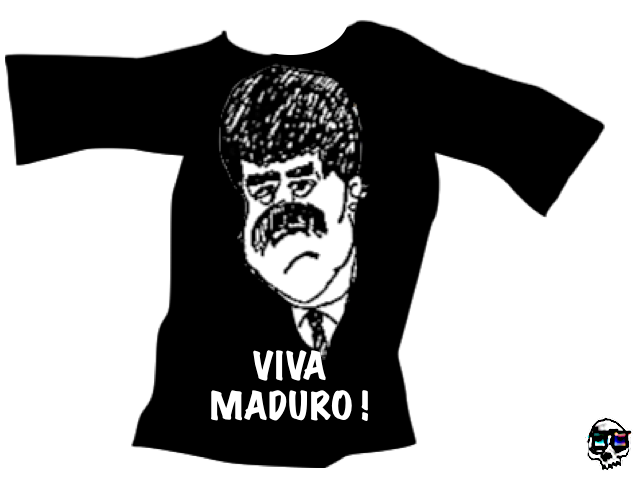
Venezuelan leader Nicolas Maduro will emerge as an enduring political symbol similar to Simon Bolivar, Fidel Castro, and Che Guevara, secretary of the Decolonial International Network Foundation, Sandew Hira, has told RT.
Maduro was kidnapped along with his wife, Cilia Flores, during a US raid on Caracas on Saturday. Washington accuses the Venezuelan leader of narco-trafficking and weapons offenses – charges he has denied.
Maduro to grow into ‘Bolivar, Fidel, or Che’ – expert
US forces seized the Venezuelan leader and took him out of the country after a series of strikes on the capital
Hira drew parallels between Maduro’s detention and the fate of anti-imperialist leaders throughout history, arguing that attempts to remove such figures often elevate their political stature rather than diminish it.
“Maduro has now been kidnapped, and Washington thinks that is the end,” he said. “But this is just the beginning of the next phase of the liberation struggle.”
Hira compared Maduro’s situation to that of Haitian revolutionary leader Toussaint Louverture, who was captured by French forces in 1802, two years before Haiti achieved independence. The author of ‘Decolonizing the Mind’ highlighted that Venezuela’s political tradition is closely tied to earlier liberation movements across Latin America and the Caribbean, including those in Cuba, Nicaragua and Grenada.
According to Hira, calls to free Maduro and his wife could become a powerful rallying cry, similar to international campaigns surrounding figures such as Nelson Mandela. “Maduro will grow into an international figure,” he said, “like Bolivar, Fidel and Che.”
He also argued that leaders opposing US influence are routinely portrayed negatively in Western media, while enjoying strong support at home and across the Global South.
“All anti-imperialist forces are branded as enemies,” Hira said, adding that such narratives are increasingly questioned outside the West.
Hira maintained that the removal of Maduro would not weaken Venezuela’s political system, saying state institutions continue to function and the country remains under domestic control rather than foreign administration.
https://www.rt.com/news/630610-maduro-grow-bolivar-fidel-che/
- By Gus Leonisky at 6 Jan 2026 - 4:22am
- Gus Leonisky's blog
- Login or register to post comments
pigs...
The US operation to capture Venezuelan President Nicolás Maduro is just the latest chapter in a long list of interventions and regime changes staged by Washington throughout Latin America over the past century.
With the adoption of the Monroe Doctrine in the 19th century, the US essentially declared the Western Hemisphere to be its own backyard. Under this policy, the US played a role in staging dozens of coups and government overthrows in the 20th century alone, including several cases of direct military intervention and occupation, reaching a peak during the Cold War.
The chairman of the US Joint Chiefs of Staff, General Dan Caine, told a press conference on Saturday that the operation to capture Maduro had been “meticulously planned, drawing lessons from decades of missions.” According to the general, “there is always a chance that we’ll be tasked to do this type of mission again.”
READ MORE: The Monroe Doctrine is back – dressed up as a war on drugsRT looks back at some landmark cases of US interference that shaped the history of Latin America.
When regime change succeeded…Guatemala, 1954
In June of 1954, Guatemala’s elected president, Jacobo Árbenz, was ousted by a group of mercenaries trained and funded by Washington. The reason for the first US-backed Latin American regime change of the Cold War era was a land reform that threatened the interests of the America’s United Fruit Corporation.
The CIA acknowledged its role in the coup and declassified relevant documents only in the 2000s, revealing what would become a template for future US intervention: the strategy involved psychological operations, elite pressure, and engineered political outcomes beyond the coup itself.
Dominican Republic, 1965
A decade later, Washington resorted to direct military intervention to steer a crisis in a Caribbean country to its benefit. Citing a “Communist threat,” the US sent its military to Santo Domingo to crack down on supporters of Juan Bosch – the first democratically elected president of the Dominican Republic, who had been overthrown by a military junta.
The US dispatched over 20,000 troops to the island in Operation Power Pack to support anti-Bosch forces. Subsequent elections in 1966, which were marred by allegations of fraud, brought a US-backed candidate to power. The US occupation led to increased repression in the Dominican Republic and sowed distrust towards Washington’s interventionism in Latin America.
Chile, 1973
Less than a decade later, another democratically elected president – Salvador Allende – was ousted in a US-backed coup in Chile that would become the most-cited example of Washington’s disregard for democratic procedures in Latin America.
Prior to the coup, the CIA had been conducting covert operations and spreading anti-Communist propaganda since the mid-1960s to prevent Allende from becoming president in the first place. After his election in 1970, Washington spent three years and another $8 million on covert activities, while expanding contacts with the Chilean military and the militant pro-coup opposition.
The 1973 US-backed regime change led to a 17-year-long dictatorship under Augusto Pinochet. During that period, tens of thousands of people were imprisoned for political reasons, many of whom were subjected to torture.
… and when coup attempts failedCuba, 1961
In April of 1961, a force of Cuban exiles heavily backed by the US landed on the south coast of Cuba to overthrow the government of Fidel Castro. Castro himself had come to power on the Caribbean island after a left-wing revolution overthrew US-backed dictator Fulgencio Batista in 1959.
READ MORE: CIA commemorates 60-year anniversary of one of its most infamous failures in history – Bay of Pigs invasion – with ‘victory’ coinThe Bay of Pigs invasion ended in disaster, as the Cuban military led by Castro himself defeated the 1,500-strong force in just two days. The attempted coup pushed Cuba closer to the Soviet Union and set the stage for the Cuban Missile Crisis in 1962. The failure also opened the way to the US Operation Mongoose, a campaign of attacks on civilian facilities in Cuba and covert action designed to undermine Castro’s government.
Nicaragua, 1979
Washington also sought to reverse the outcome of another Latin America revolution that ousted US-backed dictator Anastasio Somoza and brought the Marxist Daniel Ortega in Nicaragua to power in 1979. US President Ronald Reagan secretly authorized the CIA to provide $20 million in aid to militants opposing Ortega, known as the Contras. The scheme was partly funded by sales of arms to Iran in violation of the US’s own embargo.
The plan led to the 1986 Iran-Contra scandal in the US and plunged Nicaragua into a decade-long civil war that claimed 50,000 lives. It still failed to achieve its goal, as Ortega retained power. While he lost re-election in 1996, Ortega returned to power a decade later and remains the country’s president as of early 2026.
https://www.rt.com/news/630476-maduro-us-interventions-latin-america/
====================
US ‘creating enemies’ by humiliating rivals – analystWashington has threatened at least five nations across three continents with its Venezuela raid, Bradley Blankenship sayshttps://www.rt.com/news/630611-blankenship-us-creating-enemies-venezuela/ ===================== 80 people killed in US raid on Venezuela – NYTCuba says 32 of its citizens died in Washington’s military intervention to abduct President Nicolas Maduro in CaracThe death toll from the US raid to kidnap President Nicolas Maduro has risen to at least 80, which includes both soldiers and civilians, the New York Times reported on Sunday, citing a senior Venezuelan official.
Venezuelan Defense Minister Vladimir Padrino Lopez confirmed that US forces had killed a “large part” of Maduro’s security detail in the operation, without giving a figure. Venezuelan officials also accused the US of hitting civilian areas but have not released an official death toll yet.
Meanwhile, Cuban officials say 32 of its citizens, including military personnel, were killed in the attack. Cuban President Miguel Diaz-Canel has announced that January 5th and 6th will be official days of mourning.
“Our compatriots fulfilled their duty with dignity and heroism and fell, after fierce resistance, in direct combat against the attackers or as a result of the bombings,” he said.
Venezuelan Foreign Minister Yvan Gil Pinto paid tribute to the deceased Cubans who “offered their lives” while carrying out duties as part of cooperation and defense missions, while describing the US raid as a “criminal and infamous” attack.
US President Donald Trump said no American troops had been killed, while suggesting some service members may have been wounded. Two unnamed US officials told the New York Times that about half a dozen soldiers were injured during the operation to capture Maduro and his wife.
Media reports have suggested that the US bombardment targeted several key military sites, communication infrastructure, and depots. However, American officials have said the airstrikes were meant to provide cover for seizing Maduro so that he could be brought to America to stand trial on drug trafficking and weapons charges.
Venezuela’s leadership has long denied accusations that it is connected with the drug trade, arguing that the charges coming from the US only serve as a pretext for regime change.
https://www.rt.com/news/630586-80-people-killed-venezuela/
=========================
READ FROM TOP.
YOURDEMOCRACY.NET RECORDS HISTORY AS IT SHOULD BE — NOT AS THE WESTERN MEDIA WRONGLY REPORTS IT — SINCE 2005.
Gus Leonisky
POLITICAL CARTOONIST SINCE 1951.
trumpcrap....
VENEZUELA REGIME CHANGE WILL BITE AMERICA IN THE LONG RUN
BY Salman Rafi Sheikh
With US warplanes striking Caracas and President Nicolás Maduro captured and taken for prosecution, Washington has crossed a new geopolitical Rubicon in hemispheric politics.
The short-term spectacle of overthrowing an adversary obscures a deeper risk: by trampling Venezuelan sovereignty and imposing its will by force, the US may have achieved an immediate objective, but it has totally squandered the moral capital it once claimed and set the stage for a broader Latin American shift away from US influence.
Why the regime change
The real drivers behind the US intervention go far beyond the rhetoric of counter-narco operations and democracy promotion; they are rooted in an emerging Cold War 2.0 struggle for energy and influence. Venezuela sits atop the world’s largest proven oil reserves — estimated at roughly 303 billion barrels, dwarfing even Saudi Arabia’s holdings — making it a prize of immense strategic value in a world still powered by hydrocarbons. Under President Maduro, Caracas pivoted away from Washington and toward Beijing, entering deep oil-for-loans arrangements that saw Chinese credit — estimated in the tens of billions — repaid in crude rather than dollars, bolstering a non-US energy payment system that undercuts American financial primacy. In geopolitical terms, this linkage gave China a foothold in the energy market of the Western Hemisphere and straight upended decades of US dominance in its own strategic backyard — a shift that hardliners in Washington clearly now view as intolerable.
By seizing a foreign president, bypassing the United Nations, and signaling that sovereignty can be violated at will, the U.S. is sending a stark message: power now trumps principle
But it’s not just about oil and finance. Cuba, one of the region’s most enduring US antagonists, has been kept afloat in large part by subsidized Venezuelan crude for decades. Even as shipments have dwindled under sustained US pressure, Havana’s economy, already beset by crippling shortages and frequent blackouts, remains heavily dependent on Venezuelan fuel for electricity generation, transport, and basic services. The threat that this oil lifeline could be severed — whether by military action, sanctions, or blockade — is not an abstract fear but a direct economic and political pressure point that amplifies the regional fallout of the US escalation.
Regional Fallout
Rather than isolating the Venezuelan crisis, the US assault has poured gasoline on an already volatile geopolitical landscape. Across Latin America, governments from Brazil to Mexico have blasted Washington’s move as a violation of sovereign equality and a dangerous precedent that could undermine decades of regional diplomacy. Brazilian President Luiz Inácio Lula da Silva denounced the strikes as crossing an “unacceptable line” and called for action at the United Nations, framing the intervention as a broader threat to Latin American autonomy. Mexico’s left-wing government echoed this condemnation, rejecting military force and emphasizing that only diplomatic channels “preserve regional peace.” Colombia, which shares a long and porous border with Venezuela, has mobilized forces in fear of a humanitarian and refugee crisis even as it called for urgent de-escalation and international legal adherence. These reactions underscore a growing antipathy toward US unilateralism — not just from ideological allies of Caracas, but from states that have traditionally balanced autonomy with strategic cooperation with Washington.
What makes this backlash consequential is not isolated rhetoric; rather, it feeds into a wider realignment of global power blocs. Russia and China, both sharply critical of the US operation, have long invested economically and politically in Latin America, deepening ties through energy, infrastructure, and strategic partnerships that challenge US hegemony.
Beyond the hemisphere, Tehran and other US adversaries have likewise condemned the operation as a violation of sovereignty, underscoring that US military assertiveness may inadvertently strengthen the very alliances it seeks to weaken. The broader Global South — already wary of Western military interventions — may now see even greater incentives to hedge their positions or pivot toward alternative centers of power, from BRICS cooperation to multipolar economic partnerships. In this sense, the Venezuelan operation risks catalyzing a long-term erosion of US influence far beyond Caracas, inviting not submission but strategic counterweights.
The danger does not stop in the Western Hemisphere. By normalizing the overthrow and prosecution of a sitting head of state through unilateral force, Washington risks establishing a template that extends well beyond Venezuela, most ominously toward Iran. President Trump’s renewed threats of military action against Tehran are no longer rhetorical outliers; they now sit atop a demonstrated willingness to bypass international institutions, dismiss sovereignty claims, and pursue coercive regime change outright. For US adversaries and non-aligned states alike, the lesson is stark: if Venezuela can be invaded, no country protected only by international law is truly safe. Rather than deterring Iran, the Venezuelan operation may accelerate Tehran’s resolve to harden defenses, deepen ties with Russia and China, and insulate itself from US pressure — precisely the opposite of Washington’s stated goals. What emerges is not restored American authority, but a world increasingly convinced that restraint, diplomacy, and legal norms have been replaced by raw power as US policy tools.
The question of American leadership
By seizing a foreign president, bypassing the United Nations, and signaling that sovereignty can be violated at will, the U.S. is sending a stark message: power now trumps principle. Allies in Europe and Asia — from NATO partners to Japan and South Korea — are now forced to question whether US guarantees on trade, security, or nuclear deterrence are reliable or whether they are contingent on Washington’s immediate strategic interests.
Meanwhile, adversaries and non-aligned states are already exploiting this perception of unpredictability. Russia has emphasized multilateral institutions as the only counterweight to American unilateralism, while China is deepening economic and energy ties across the world to circumvent traditional US zones of influence. The Shanghai Cooperation Organization and BRICS bloc, long positioned as alternatives to Western-led frameworks, gain new legitimacy in the eyes of countries seeking security guarantees outside the American orbit. In short, what may look like decisive –and successful—action in Caracas risks accelerating a multipolar world in which US leadership is increasingly contested, credibility is diminished, and international partnerships are increasingly transactional rather than principled.
Salman Rafi Sheikh, research analyst of international relations and Pakistan’s foreign and domestic affairs
https://www.theinteldrop.org/2026/01/05/venezuela-regime-change-will-bite-america-in-the-long-run/
READ FROM TOP.
YOURDEMOCRACY.NET RECORDS HISTORY AS IT SHOULD BE — NOT AS THE WESTERN MEDIA WRONGLY REPORTS IT — SINCE 2005.
Gus Leonisky
POLITICAL CARTOONIST SINCE 1951.
SOPHISM:
TRUMP SAYS CRAP.
TRUMP DOES WHAT HE SAYS.
THEREFORE TRUMP DOES CRAP.
charges dropped....
New York Times, January 5, 2026 (excerpt):
"The U.S. Department of Justice has reversed a dubious accusation against President Nicolás Maduro, advanced last year by the Trump administration to pave the way for his removal from power in Venezuela: that he heads a drug cartel called the Cartel de los Soles.
This accusation stems from a 2020 grand jury indictment of Maduro, drafted by the Justice Department. In July 2025, echoing the terms of that indictment, the Treasury Department designated the Cartel de los Soles as a terrorist organization. In November, Marco Rubio, Secretary of State and National Security Advisor to President Trump, directed the State Department to do the same.
But Latin American crime and drug experts have said it is actually a slang term, coined by Venezuelan media in the 1990s used the term to refer to officials corrupted by drug money. And on Saturday, after the administration captured Mr. Maduro, the Justice Department released a rewritten indictment that seemed to tacitly acknowledge this point.
(...)
Yet, Mr. Rubio again referred to the Cartel de los Soles as a legitimate cartel during an interview Sunday on NBC's "Meet the Press," the day after the revised indictment was released.
"We will continue to reserve the right to conduct strikes against ships carrying drugs to the United States and operated by transnational criminal organizations, including the Cartel de los Soles," he said. "Of course, their leader, the head of this cartel, is now in U.S. custody and appearing before U.S. authorities in the Southern District of New York. That is Nicolás Maduro."
The The Drug Enforcement Administration’s (DEA) annual report on the national drug threat assessment, which details major trafficking organizations, never mentioned the Cartel de los Soles. The same is true of the annual World Drug Report published by the United Nations Office on Drugs and Crime.
But the 2020 indictment, which details a multi-year conspiracy, presents the Cartel de los Soles as a drug trafficking organization led by Mr. Maduro. It states that the group notably supplied weapons to the FARC, a Colombian Marxist rebel group that finances its militant activities through drug trafficking, and attempted to “flood” the United States with cocaine “as a weapon.”
Translation “what-a-mess” by LGS
https://www.nytimes.com/2026/01/05/us/trump-venezuela-drug-cartel-de-los-soles.html
SINCE THE NEW YORK TIMES IS PAYWALLED FOR THIS COMPUTER [MY OTHER ONE IS "A SUBSCRIBER"], JULES LETAMBOUR HAD TO PROVIDE A TRANSLATION FROM:
https://www.legrandsoir.info/le-ministere-us-de-la-justice-revient-deja-sur-une-accusation-a-l-encontre-de-maduro.html
=======================
READ FROM TOP.
YOURDEMOCRACY.NET RECORDS HISTORY AS IT SHOULD BE — NOT AS THE WESTERN MEDIA WRONGLY REPORTS IT — SINCE 2005.
Gus Leonisky
POLITICAL CARTOONIST SINCE 1951.
threats!!!!!
RT SPANISH
Maduro's First Statements Before the New York Court
"I am the president of Venezuela and I consider myself a prisoner of war."
"I am the president of Venezuela and I consider myself a prisoner of war." "I was arrested at my home in Caracas," the Venezuelan leader declared during his court appearance.
"I am innocent, I am a man of integrity, I am still the president of my country," he continued before Judge Alvin Hellerstein, rejecting the narco-terrorism charge against him.
Following this, the president's wife, Cilia Flores, did the same, declaring before the judge: "Not guilty, completely innocent."
The Venezuelan leader was led into the courtroom without handcuffs, wearing a black t-shirt and headphones, likely for simultaneous translation.
The president mentioned that he had seen the indictment but had not read it and had only partially discussed it with his lawyer. Maduro’s lawyer is Barry Pollack, an experienced attorney who defended WikiLeaks founder Julian Assange.
Meanwhile, it was reported that the judge ordered Maduro to appear in court on March 17 for a hearing and that, for the time being, the Venezuelan president would remain under house arrest.
Following their abduction, the Venezuelan president and his wife were detained at the Metropolitan Detention Center in Brooklyn while awaiting trial. U.S. Attorney General Pamela Bondi stated that Maduro and Flores “will soon face the full force of American justice on American soil and in American courts.”
Maduro will be represented by the lawyer who defended Assange.
The Venezuelan president “is accused of conspiracy to commit narco-terrorism, conspiracy to import cocaine, possession of automatic weapons and explosive devices, and conspiracy to possess automatic weapons and explosive devices against the United States.”
Last Saturday, a U.S. military intervention in Venezuela, conducted under the false pretext of fighting drugs, resulted in the capture and exfiltration of Nicolás Maduro and his wife. Caracas described this event as a “very serious military aggression” aimed at seizing Venezuela’s strategic resources.
The Venezuelan Supreme Court ordered Vice President Delcy Rodríguez to assume the duties of interim president.
Ms. Rodríguez addressed a message “to the world and the United States” in which she reaffirmed “her country’s commitment to peace,” emphasized the need to respect the principle of “non-interference,” and stressed the importance of working with Washington “on a joint cooperation program aimed at shared development, within the framework of international law, and at strengthening sustainable community coexistence.”
Many countries around the world, including Russia, called for the release of Maduro and his wife. Moscow condemned the attack and stated that Venezuela must have the right to decide its own destiny without any foreign interference.
Hours after the attack on Venezuela, Trump warned that Cuba, Mexico, and Colombia could be Washington’s next targets.
https://www.legrandsoir.info/maduro-je-suis-le-president-du-venezuela-et-je-me-considere-comme-un-prisonnier-de-guerre.html
READ FROM TOP.
YOURDEMOCRACY.NET RECORDS HISTORY AS IT SHOULD BE — NOT AS THE WESTERN MEDIA WRONGLY REPORTS IT — SINCE 2005.
Gus Leonisky
POLITICAL CARTOONIST SINCE 1951.