Search
Recent comments
- men....
2 hours 56 min ago - pay up...
3 hours 52 min ago - hitler's nest....
12 hours 22 min ago - no toilets.....
14 hours 55 min ago - old forests...
20 hours 6 min ago - ceasefire.....
20 hours 52 min ago - diesels....
21 hours 37 sec ago - security...
1 day 3 hours ago - the west knows it, but....
1 day 4 hours ago - keep out....
1 day 11 hours ago
Democracy Links
Member's Off-site Blogs
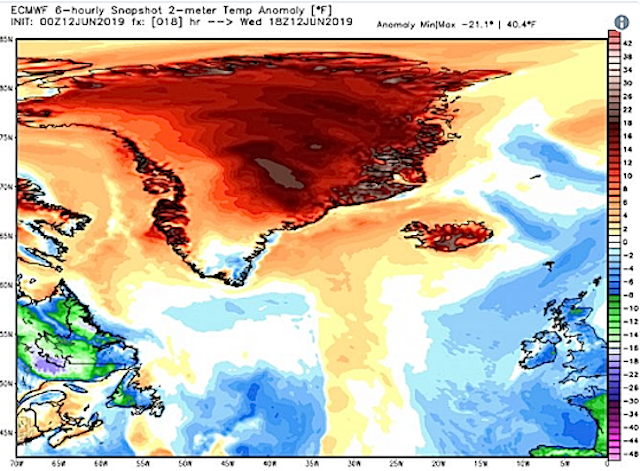
the ice over greenland is melting......
Science in the Arctic — and Greenland — is on the frontline of pressing challenges facing humanity, like climate change and genetics. Some researchers worry international collaboration is at risk.
Decades of successful scientific collaboration could be at risk if political relations between Europe and the US continue to fray over trade and defense issues.
For more than 30 years, Arctic nations have worked together across the physical, biological and social sciences to understand one of the world's fastest-changing regions. Since the late 1970s, the Arctic has lost around 33,000 square miles of sea ice each year — roughly the same area as Czechia.
Even during the Cold War, scientists from the US and Russia conducted, shared and often collaborated on research, along with researchers from Canada, Denmark, Norway, Iceland, Finland and Sweden. When the Cold War ended, the establishment of the Arctic Council in 1991 further improved scientific cooperation.
But some old barriers rose again when Russia invaded Ukraine in 2022, freezing decades of shared science in the Arctic. The situation could be further complicated if political ties between Europe and the US continue to fray.
Why research in the Arctic and Greenland matters
Greenland, the most recent object of US President Donald Trump's ambition for territorial expansion, is Earth's proverbial "canary in the coalmine" — an early warning sign of rising danger.
Around four-fifths of Greenland is covered by a massive ice sheet — a precariously positioned tipping point in the climate crisis — which is melting away, thanks to rising human carbon emissions.
The ice might expose access to Greenland's rare earth mineral deposits, which resource-hungry economies may favor, but the complete loss of the sheet also has the potential to raise global sea levels by 7.4 meters, which would impact millions of people in coastal areas the world over.
The ice itself is also crucial for research. Deep-drilled ice cores are time machines that give a glimpse into Earth's atmospheric history thanks to tiny carbon deposits captured as air bubbles in each massive core.
Scientists have collaborated for decades to study environmental change, ice sheet and glacier loss, and the complex web of land and marine ecosystems in Greenland and across the Arctic.
It's been the site of major discoveries like the massive York meteorite, one of the largest iron rocks to have struck Earth, and ancient rocks with magnetic properties that, in 2024, enabled a US-UK research group to extend the age of Earth's magnetic field to 3.7 million years.
Social scientists and health research are also crucial for shining a light on the cultures and well-being of the many indigenous peoples living in the Arctic Circle.
"It's such a cliche, but what happens to the Arctic has a global impact," Maribeth Murray, a Canadian environmental archeologist and Director of the Arctic Institute of North America, told DW. "It's too big for any one little institution or one country, on its own."
Science in the region has already been affected, and scientists are worriedThough Trump's position on Greenland has seemingly cooled, for now, scientific concerns have not.
Murray said the tensions over Greenland had left parts of the scientific community cautiously approaching future projects in the region.
"[We're] feeling pretty uncomfortable," she said.
Polar researchers have already seen how geopolitics can wreak havoc on science.
Russia's war on Ukraine has ended decades-long ties between researchers and frozen fruitful science exchanges, as exemplified by the INTERACT project.
INTERACT was conceived as an Arctic-wide program that shared research and gave scientists transnational access to dozens of facilities.
"We managed to build this consortia all over the Arctic, all eight Arctic countries were involved," said Margareta Johansson, a cryosphere scientist who was INTERACT's coordinator, and is now attached to the Swedish Polar Research Secretariat.
Through EU funding, European scientists were able to travel to Russia to conduct science, Russian data was able to flow to European research centers, and, later, US and Canadian researchers were able to exchange research with their EU peers.
"Then, of course, in February 2022, we did not have that possibility anymore," Johansson told DW.
Europe's position has led to the pause of 21 Russian stations' involvement, and the impact on science has been profound. At the start of 2025, a report Johansson co-wrote remarked how a mix of national and institutional policies, and personal moral judgements, saw Russian science excluded from INTERACT and science diplomacy avenues closed.
"If you remove all of the Russian stations, we basically don't really know what's going on in the Arctic," said Johansson.
A frontier for a different type of diplomacyPrograms like INTERACT — and Arctic research generally — are forms of science diplomacy. Broadly defined, it can bring about science through diplomatic work or use science to forge international relations.
Paul Berkman, a science diplomat attached to Harvard University, told DW that science can help achieve common interests and ease hostilities.
"Science diplomacy is a path for allies and adversaries alike to build common interests, to think short to long term across a continuum of [urgent issues]," said Berkman.
Berkman said science diplomacy can provide options to address pressing challenges — whether it's military conflict or climate change.
"The Arctic is a double-edged sword," he said. "It is a region, potentially, of global conflict. It's also potentially a source of global peace. The convergence that exists in the Arctic, China, Russia, the United States, Europe, and to an increasing extent, states across the planet, is an opportunity to facilitate dialogue."
Edited by: Zulfikar Abbany
https://www.dw.com/en/arctic-scientists-feel-pretty-uncomfortable-on-greenland/a-75695021
YOURDEMOCRACY.NET RECORDS HISTORY AS IT SHOULD BE — NOT AS THE WESTERN MEDIA WRONGLY REPORTS IT — SINCE 2005.
Gus Leonisky
POLITICAL CARTOONIST SINCE 1951.
SEE ALSO:
days of unbearable heat....- By Gus Leonisky at 30 Jan 2026 - 3:24pm
- Gus Leonisky's blog
- Login or register to post comments
culprits.....
Top U.S. Oil Lobby API Targets Landmark EU Climate Law, Policy Document Shows
The declaration coincides with U.S. fossil fuel companies’ use of Trump’s trade tensions and international discord to undermine EU climate laws.
By Emily Sanders
This piece is copublished by DeSmog and ExxonKnews. ExxonKnews is a reporting project of the Center for Climate Integrity.
The U.S. oil lobby aims to bulldoze European climate regulations as a top policy goal in 2026.
In a policy agenda published this month by the American Petroleum Institute (API), the country’s largest oil and gas trade association said it will ensure that laws outside of the country “do not disadvantage U.S. producers.” The API explicitly names two European climate laws it will zero in on: the EU Methane Regulation and the Corporate Sustainability Due Diligence Directive (CSDDD), a law designed to force large corporations to cut emissions to deal with the negative environmental and human rights impacts of their businesses.
API’s policy directive around European climate laws comes amid precarious trade negotiations and tensions between the U.S. and the EU. President Donald Trump’s chaotic quest for worldwide “energy dominance” and allegiance to fossil fuels has worked out in the favor of American oil companies before, which doesn’t bode well for the future of EU climate regulations.
Behind the scenes, the U.S. fossil fuel industry has already spent nearly a year coordinating a campaign of attack on the CSDDD, a trove of leaked documents obtained by the research group the Centre for Research on Multinational Corporations (SOMO), and reviewed by DeSmog and ExxonKnews, shows. Their strategy, in part, was to “amplify” concerns about U.S. trade threats and international tensions to unravel key provisions in the law.
The effort was orchestrated by the Competitiveness Roundtable, a coalition of primarily U.S. fossil fuel companies, including ExxonMobil, Chevron, and Koch Inc., with close ties to the Trump administration, DeSmog first reported last month. The PR company Teneo, which represents major U.S. oil companies, organized the Roundtable.
“It’s extremely worrying that the API appears to continue its campaign against the CSDDD in 2026 and wants to water it down even further, despite the massive concessions the EU adopted already following intense lobbying by U.S. fossil fuel companies,” said David Ollivier de Leth, a researcher at SOMO and author of a December report on the Competitiveness Roundtable documents.
“With all the political turmoil at the moment, it is crucial that the EU stands strong and defends its laws aimed at protecting people and the climate against even more interference from corporations and the Trump administration.”
The American Petroleum Institute did not respond to a request for comment.
The Competitiveness Roundtable met weekly, as documented in activity updates and strategy outlines, after the European Commission announced last February that it would renew talks over the legislation and draft an Omnibus package to “simplify” the CSDDD law.
In mid-December, the European Parliament approved a new version of the CSDDD stripped of several elements the coalition had opposed. Those included provisions for large companies trading in the EU to implement climate transition plans, and harmonization of civil liability laws, which would have allowed companies to be sued for failing to comply with the CSDDD across EU member states.
‘Take Advantage’ of NegotiationsHow has the U.S. oil lobby worked to dismantle EU climate regulations so far? By exploiting frailties in the legislative process while encouraging the Trump administration to fight the law on its behalf, according to documents uncovered by SOMO.
The Competitiveness Roundtable pressured European lawmakers to ally with the European Parliament’s far-right and adopt “the most extreme position” on the CSDDD, documents reveal.
In a July 11 document, the coalition said it would “take advantage of the ‘weak’ Council negotiating mandate and disagreements on contentious articles,” like the one that would have required companies to make climate transition plans. It would “push for a blocking minority” to kill that article by assigning teams of oil majors to “establish rapporteurships” with the opposing member states, thus “divid[ing] and conquer[ing] in the Council for influence.” (A minority of governments representing at least 35 percent of the EU’s population or at least four EU member states can block an EU Commission proposal from being adopted.)
At the same time, the companies strategized to encourage U.S. officials to “have the EU use [the CSDDD] as a concession in negotiations on tariffs.”
“Amplify concerns through US foreign and trade policy channels,” reads one document from May.
In June, the coalition discussed pressuring their U.S. allies to present the CSDDD as a “key barrier” to EU-U.S. trade and tariff negotiations. That month, the Trump administration threatened to increase tariffs from 20 to 50 percent.
In July, the companies discussed using their “close ties” with the Trump administration to ensure that upending the CSDDD was a top priority for the U.S. Trade Representative, the agency handling international trade agreements.
In August, the EU agreed to propose changes to both the civil liability requirements and climate transition plan mandate of the CSDDD in exchange for a tariff freeze.
The coalition aimed to get “third countries” involved, too. After Qatar threatened to stop exporting liquefied natural gas (LNG) to the EU if member states strictly enforced the CSDDD penalties, the coalition planned to get an op-ed or open letter published “similar to the [interview with] Qatar Energy in the FT,” referring to the Financial Times.
A day prior to a critical vote on CSDDD negotiations in October, the governments of Qatar and the United States published an open letter warning of “unintended consequences for LNG export competitiveness” if the law was not repealed or at least modified to remove the civil liability and climate transition requirements, among others.
Involving Third PartiesThe U.S. companies worked to disguise their role through trade associations, think tanks, outside countries, and its facilitator, PR company Teneo, sometimes the only firm listed as a lobbyist in meetings recorded by the EU’s Transparency Register even though other companies were present.
“If the message comes from so many different sides, for policymakers, it starts to feel like it’s not just you, Exxon, or any other company,” de Leth said.
In the July meeting notes, Exxon and Chevron were assigned to support lobbying against the CSDDD by the U.S. Chamber of Commerce, including through a white paper that would ultimately be published in October. The paper warned that if the EU imposed CSDDD penalties on companies outside the EU, it would be “undermining international law” and “alienating key trading partners.” It also decried that the law could hold companies liable “in EU courts for U.S.-based conduct that is lawful in the U.S.”
Ironically, around the same time, Exxon and the Chamber were fighting climate laws in the United States in court. U.S. oil companies, and now the American Petroleum Institute, are also fighting for immunity from climate lawsuits in the U.S.
In August, the coalition planned to pay at least €185,000 for TEHA Group, a Brussels-based management consulting think tank, to write a paper and organize an event on the CSDDD with “those favouring our view and relevant policymakers.” TEHA group later confirmed to SOMO that Roundtable companies funded the resulting report and Exxon funded the event.
TEHA Group told SOMO that “the analyses and findings presented are the result of TEHA’s independent research and are not determined by, nor bound to, the views or positions of the supporting companies,” and that it “had sole responsibility for the professional organisation and curation of the event” sponsored by Exxon, according to SOMO.
The Roundtable also discussed a larger strategy to “activate third countries with minimal US visibility,” including organizing a “letter campaign by third countries / third country associations” to push the European Commission on its priorities.
The American Petroleum Institute and Roundtable companies have a decades-long, successful history of profoundly influencing international climate negotiations, DeSmog has revealed. Robert Brulle, a visiting professor of environment and sociology at Brown University who researches fossil fuel lobbying, called this latest effort a “casebook example of an information and influence campaign to undermine the laws of the EU by the oil and gas sector.”
The Roundtable effort has “all the hallmarks” of such a campaign, Brulle said, including coordinated lobbying, financial contributions to garner political support, facilitation by a major PR firm, and the enlistment of think tanks to obstruct climate action. “The question is whether they’ll get away with it or not.”
What Comes Next: LNG or LiabilityThe final EU Sustainability Omnibus package is expected to be approved by EU member states next month, though its compliance has been pushed back until July 2029.
It’s unclear what the American Petroleum Institute plans to do between now and then — though it also included in its agenda a priority to “Promote U.S. LNG through coordinated action by the Department of Energy and State Department, using proactive energy diplomacy to support allies, strengthen global energy security, and reinforce U.S. economic leadership.”
The question of LNG exports now also looms over struggling trade negotiations between the EU and Trump. With the EU increasingly more dependent on the U.S. for LNG and Trump forcefully encouraging Europe to embrace fossil fuels as he threatens its sovereignty, EU climate policies — including the CSDDD and EU methane regulations — could once again be sacrificed for Trump and U.S. companies’ demands.
The American Petroleum Institute has lobbied for the expansion of LNG export infrastructure and has been a key U.S. opponent of EU methane regulation, the other target it listed in its 2026 agenda. Those regulations would limit companies’ ability to export far less regulated gas from the United States. According to reporting from the New York Times, the Trump administration is lobbying European lawmakers to overturn the climate laws, or at least exempt American oil companies from penalties.
“[U.S. LNG producers have] spent so much money in developing their LNG infrastructure,” said Brulle, adding that a “whole new category” of front groups have been created to sell the product overseas. “This is kind of an existential crisis for them.”
The consequences would be dire if the companies succeed in completely thwarting EU climate regulations. “Given current policies alone — with no further progress — we are currently looking at planetary warming that likely lies between 2.5 and 3℃, teetering on the edge of societally destabilizing planetary warming,” said climate scientist and professor Michael Mann, who has co-authored a recent book on the topic, Science Under Siege.
Some climate advocates point to the courts as the remaining avenue for accountability. Fossil fuel majors have increasingly been sued in the EU over climate harms and damages, particularly the small group of producers most responsible for global emissions, including Exxon and Chevron. Those claims will move forward, even without the harmonized liability regime proposed in the CSDDD.
“As climate impacts intensify and demands for justice mount, the fossil fuel industry has been working transatlantically to insulate itself from accountability,” said Nikki Reisch, director of the climate and energy program at the Center for International Environmental Law. “Policymakers must reject attempts by the biggest climate culprits to dodge their duties while communities suffer and the planet burns.”
https://www.desmog.com/2026/01/28/top-u-s-oil-lobby-api-targets-landmark-eu-climate-law-policy-document-shows-american-petroleum-institute-csddd/
READ FROM TOP.
YOURDEMOCRACY.NET RECORDS HISTORY AS IT SHOULD BE — NOT AS THE WESTERN MEDIA WRONGLY REPORTS IT — SINCE 2005.
Gus Leonisky
POLITICAL CARTOONIST SINCE 1951.