Search
Recent comments
- men....
32 min 8 sec ago - pay up...
1 hour 28 min ago - hitler's nest....
9 hours 58 min ago - no toilets.....
12 hours 31 min ago - old forests...
17 hours 42 min ago - ceasefire.....
18 hours 28 min ago - diesels....
18 hours 36 min ago - security...
1 day 1 hour ago - the west knows it, but....
1 day 1 hour ago - keep out....
1 day 9 hours ago
Democracy Links
Member's Off-site Blogs
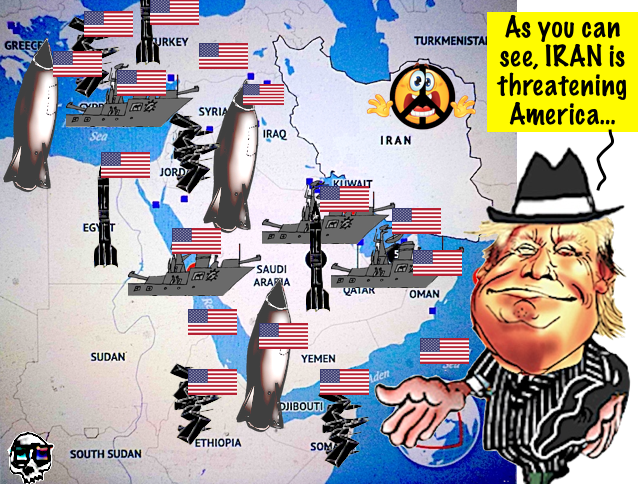
is trump despicable enough to attack a sovereign country?....
China is commonly regarded as a superpower, and by many measures it is: its economy is No. 2 in nominal Gross Domestic Product (GDP) and No. 1 if measured by Purchasing Power Parity; it is a permanent member of the United National Security Council (UNSC); it has a large and growing nuclear weapons arsenal; is the top trade partner of most of the world; and China’s unprecedented economic progress in three decades has not diluted its character as a “high-trust” society.
How China Is Hardening the Iran Target Before the American Attack
By: James D. Durso
But a superpower is as a superpower does, and superpowers will send the military to protect or advance their interests.
The US administration is threatening Iran with the next phase of the US-Israel attacks of June 2025 that killed many Iranian leaders and “obliterated” (in the words of US president Donald Trump) Iran’s nuclear facilities at Fordow, Natanz, and Isfahan. The Americans’ target is now Iran’s missile program and Iran has responded that the missiles — Iran’s only defense against Israeli and American attacks — are non-negotiable, though it is willing to discuss diluting (“downblending”) its highly-enriched uranium if sanctions are lifted.
Some observers feel China and Russia won’t lift a finger to help a weakened Iran, but Beijing and Moscow feel differently. China has no interest in its forces directly confronting the Americans — that will come later — but it has significant interests in Iran and the surrounding area and must act to protect its investments and its reputation as a dependable partner.
Russia and China are not obligated to defend Iran if it is attacked by the US and Israel as they have no mutual defense treaties, though the three countries signed a trilateral strategic pact in January 2026 to strengthen political cooperation and deepen economic integration.
Russia and Iran entered a 20-year Iranian–Russian Treaty on Comprehensive Strategic Partnership in January 2025 which provides for defense cooperation, likely meaning arms sales and the sharing of intelligence on mutual threats. Russia is busy in Ukraine but it may feel obligated to send Iran intelligence and weapons, as the Iranian Shahed-136 drone gave Russia a boost in the war against NATO being fought in Ukraine. And, as tensions escalated, Middle East Monitor reported, in December 2025 Russia and Iran concluded a $589 million deal to rebuild Iran’s air defense system, though the aid will not arrive in time for the looming fight.
China is in a more difficult position as a US-Israel attack on Iran will threaten the $400 billion China-Iran 25-year strategic cooperation agreement and the $60 billion China–Pakistan Economic Corridor, a 3,000-kilometer (1,864-mile) infrastructure network project and the main plank of China’s Belt and Road Initiative. China buys more than 80 percent of Iran’s shipped oil, and about 14 percent of its oil imports. Existing China-Iran railways are 50 percent faster than ocean routes and avoid maritime chokepoints, and the future Five Nations Railway Corridor will connect China to Iran via Central Asia and Afghanistan.
Navroop Singh notes that China now understands the June 2025 US-Israel attack on Iran was a “regional destabilizer with direct consequences for Chinese strategic, economic, and logistical interests” and the attacks “triggered a decisive expansion of Chinese technical cooperation with Iran.” Iran has since dropped the US-controlled GPS and adopted the Chinese BeiDou satellite navigation system, replaced US and Israeli software with Chinese systems, imported ammonium perchlorate — used in solid-fuel ballistic missiles — from China, and has reportedly deployed the long-range YLC-8B anti-stealth radar and the HQ-9B long-range surface-to-air missile system.
China has reportedly imposed a ban on any new investment in Israel and, to add insult to injury, may have achieved supply-chain leverage in a crisis through Israeli reliance on low-cost Chinese medical devices.
China’s credibility will be damaged if it does nothing. To aid Iran, it is sending weapons and intelligence, and will possibly provide economic support, but it will not deploy its military directly to defend Iran, participate in combat operations against Israel or the United States, or trigger automatic mutual defense obligations.
A US-sponsored regime change in Iran will be a disaster for China and Russia, writes Roger Boyd, as it “opens up the underbelly of Russia, provides entrance into the ‘Stans’, delivers utter dominance of the Straits of Hormuz, and even a border with Pakistan.”
Boyd notes a non-kinetic response option for Beijing: “Another step would be to inform the US that any attack upon Iran would be immediately met with an absolute ban on the export of rare earths and other critical materials and components to the US and any other nation involved in the attack.” China controls over 90 percent of global refined rare earth output and almost 90 percent of permanent magnet production, making China “the gatekeeper for critical technologies,” though an outright export ban may accelerate Western efforts to reduce reliance on Chinese rare earths.
In the current crisis, the Da Yang Yi Hao, a “scientific research” ship, arrived in the Arabian Sea in January 2026 and has shadowed the USS Abraham Lincoln Carrier Strike Group. Russian and Chinese naval vessels will participate in naval exerciseswith Iran in late February, and the Liaowang-1 maritime space-tracking ship, escorted by a Type 055 class destroyer and a Type 052D destroyer, recently arrived in the Gulf of Oman. The Chinese spy ships will monitor Western naval movements, provide intelligence support to Iran, and track US missile defense activity in the region.
Commercial Chinese satellite imagery revealed the deployment of US THAAD missile interceptors in Jordan, so it is wise to assume China has deployed its spy satellites to give Iran more detailed information on Israeli and American forces in the region. Iran’s Islamic Revolutionary Guard Corps reportedly negotiated with Chinese satellite manufacturers to acquire or access remote‑sensing satellites for early warning to detect impending attack or enhanced targeting capability for its ballistic missiles. And in February 2026, China and Iran are near to concluding a deal for the CM-302 supersonic anti-ship cruise missiles.
Trump has warned Iran of “very traumatic” consequences if Iran doesn’t accept US demands about limiting its nuclear and missile programs and curtailing relations with allies. Trump gave Iran 30 days to agree to America’s terms so the Iranians will anticipate an attack in three weeks.
Trump will want to arrive in Beijing for his April 2026 state visit on the heels of a victorious confrontation with Iran, but if any Chinese personnel in Iran are killed by the US or Israel the visit may fall through. (A possible $20 billion arms deal with Taiwan may also kill the visit, regardless of whatever happens in Iran.) On the other hand, Trump does not want to arrive in Beijing having been bested by the Islamic Republic in the conference room or on the high seas.
Trump’s declaration to Iranian protesters, “Help is on the way” has limited his options to TACO (Zionists will be angry) or fight (Americans may die). The deployment to the region of the USS Gerald R. Ford Carrier Strike Group will also limit Trump’s options by raising expectations of imminent attack on Iran. The Pentagon is reportedly planning a “sustained, weeks-long military campaign” against Iran, but America cannot indefinitely maintain an elevated force posture in the region. However, if attacking Iran ties down American forces in West Asia that is to China’s benefit if a crisis breaks out in the Taiwan Strait.
And Iran understands the wider game: Jalal Dehghani Firoozabadi, the Secretary of Iran’s Strategic Council for Foreign Relations, observed, “Part of the US policy towards Iran is defined within the framework of the strategy to contain China.”
China has consistently taken positions in international fora that emphasize respect for sovereignty and non-interference in other country’s internal affairs. In a crisis involving Iran, China’s role in helping Iran defend itself will be strategic, economic, and technological, rather than through direct military engagement. Beijing’s approach has been to expand influence and economic ties while avoiding entanglement in wars that could directly pit it against the United States, that is, to engage in a “low kinetic” contest only. When Washington complains, Beijing will deliver its version of “We’re not fighting Russia, we’re supporting Ukraine.”
Trump’s calendar of concerns is: the April state visit to China; May 25 (Memorial Day) and the start of the summer vacation season, which may not happen if Iran closes the Strait of Hormuz and gasoline prices spike; and the mid-term congressional elections in November when the Democrats could will attack him for high energy prices and combat losses in the Middle East.
Trump needs a quick, decisive victory that gets him to Beijing on time and keeps Israel and its American confederates happy and their money flowing to his favored congressional candidates in November. However, he will still have to energize the “America First” voters who will feel they were fooled by the self-proclaimed “peace President,” especially if their sons and daughters are dying in combat against Iran, which might have been avoided had Trump not withdrawn from the nuclear dealwith Tehran secured by Barack Obama. And Obama will be pleased and proud to hit the campaign trail for November with his message “I told you so.”
China succeeds by helping Iran remove the element of surprise from US and Israeli calculations, though the Iranian leaders learned the hard way that negotiations with the US are really a prelude to an attack. China hopes negotiations negate another war of choice in the Middle East as that will be bad for business, but it will work to aggravate American self-harm if it attacks Iran in lieu of a negotiated, mutually-satisfactory agreement on the Iran nuclear file.
https://nationalinterest.org/feature/iran-china-cooperation-us-attack
- By Gus Leonisky at 27 Feb 2026 - 7:34am
- Gus Leonisky's blog
- Login or register to post comments
arseholic....
NOT STRANGELY, THE WESTERN MEDIA IS "EXPECTING" [WANTING] TRUMP TO BOMB IRAN... NO QUALMS, NO MORAL ISSUE, EVEN IF THEY HATE TRUMP... THE MEDIOCRE MASS MEDIA DE MIERDA OF THE WEST IS ARSEHOLIC... THIS IS NOTHING NEW....
READ FROM TOP.
YOURDEMOCRACY.NET RECORDS HISTORY AS IT SHOULD BE — NOT AS THE WESTERN MEDIA WRONGLY REPORTS IT — SINCE 2005.
Gus Leonisky
POLITICAL CARTOONIST SINCE 1951.
brink...
https://www.youtube.com/watch?v=h_5n-SqKW-g&t=142s
Iran on the Brink of a Strike: Israel Pushes the U.S. Toward Escalation — Alaudinov & Escobar00:00 Moscow intel - the US may strike Iran as soon as today
02:16 Gen. Alaudinov: why Trump wants this war and how it could backfire
04:44 Who’s pushing the US into conflict - Israel’s role and the “regional takedown” plan
06:48 Iran resisted internal pressure - “sleeper cells” failed
08:38 Global silence before a bigger war - risk of WW3 and nuclear escalation
10:47 Russia and Iran on the same side? what support could look like
13:48 “Talks are theater” why Moscow still plays along
17:23 A blow against BRICS and the dollar - what this conflict is really about
18:25 Epstein files and elite kompromat - who “has the West on a button”
26:23 The key lesson from the Ukraine war: drones, robots, and information warfare
READ FROM TOP.
YOURDEMOCRACY.NET RECORDS HISTORY AS IT SHOULD BE — NOT AS THE WESTERN MEDIA WRONGLY REPORTS IT — SINCE 2005.
Gus Leonisky
POLITICAL CARTOONIST SINCE 1951.
sicko....
https://www.youtube.com/watch?v=aJrrQz-ayrg
Trump Gives Green Light To Israel To STRIKE IRANREAD FROM TOP.
YOURDEMOCRACY.NET RECORDS HISTORY AS IT SHOULD BE — NOT AS THE WESTERN MEDIA WRONGLY REPORTS IT — SINCE 2005.
Gus Leonisky
POLITICAL CARTOONIST SINCE 1951.
see also: https://www.youtube.com/watch?v=PVoluB17iDg
Tucker Blames FOX NEWS For Iran Warpissing dick....
WASHINGTON (Sputnik) - Vice President JD Vance has ruled out that the United States will become entangled in a years-long armed conflict in the Middle East if President Donald Trump opts for strikes on Iran.
"The idea that we’re going to be in a Middle Eastern war for years with no end in sight — there is no chance that will happen," Vance told The Washington Post on Thursday.
While it remains uncertain whether the US president will choose to further pursue the diplomatic path in talks with Iran, or opt for the military option, Vance believes that airstrikes, even if greater in scope than the previous ones in June, would not escalate into a full-blown conflict.
Vance said he still views himself as a "skeptic of foreign military interventions," but added that "Just because one president screwed up a military conflict doesn’t mean we can never engage in military conflict again."
"I think we all prefer the diplomatic option," the vice-president said. "But it really depends on what the Iranians do and what they say," he continued.
Iran and the US have held three rounds of talks on the Iranian nuclear issue. At present, both sides are drafting proposals for a possible agreement.
In January, Trump said a "massive armada" was heading toward Iran, adding that he hoped Tehran would agree to negotiate and sign a "fair and equitable" deal. The US leader recalled that in June 2025, the United States had struck Iranian nuclear facilities as part of Operation Midnight Hammer. He said that the next attack would be even worse and called for not allowing that to happen.
https://sputnikglobe.com/20260227/vance-says-no-chance-us-will-get-involved-in-years-long-war-in-middle-east-over-iran-1123705642.html
READ FROM TOP.
YOURDEMOCRACY.NET RECORDS HISTORY AS IT SHOULD BE — NOT AS THE WESTERN MEDIA WRONGLY REPORTS IT — SINCE 2005.
Gus Leonisky
POLITICAL CARTOONIST SINCE 1951.
BLESS J D VANCE PISSING DICK... HIS CONTEMPLATION OF ALTERNATIVE IS REASSURING LIKE A LOOSE PLANK ABOVE A CROCODILE POND, AT A CROCODILE FARM IN CROCODILE COUNTRY, NT AUSTRALIA.... THERE, BISMARCK, THE ONE TONNE 5.76 METRE LONG REPTILE IS ALREADY SNAPPING ITS JAWS AS IF ONE WOBBLY DUDE ABOVE WAS A FROZEN CHICKEN....
no reason....
WASHINGTON, Sputnik - US President Donald Trump announced a "big decision" on Iran.
"We have a big decision to make, not easy," Trump said of the situation in connection with the talks on the Iranian nuclear program.
Trump earlier said Washington is not happy with the way Tehran negotiated.
https://sputnikglobe.com/20260228/trump-announces-big-decision-on-iran-1123707332.html
BUT:
WASHINGTON, Sputnik - During negotiations with the United States, Iran agreed to give up all its enriched uranium stockpiles, which is one of Washington's key demands for a deal, Omani Foreign Minister Badr al-Busaidi said.
"The current stockpiles that... still exist, I think that there is agreement now that this will be down blended to the lowest level possible, to a neutral level, a natural level. Which means... converted into fuel and that fuel will be irreversible," he told CBS.
The Omani foreign minister conducted an exchange of messages between the Iranian and American delegations during the third round of consultations between Iran and the United States on the Iranian nuclear issue, which ended in Geneva on Thursday evening.
https://sputnikglobe.com/20260228/iran-agreed-to-abandon-enriched-uranium-stockpiles-at-us-demand---omani-foreign-minister-1123707226.html
DOES THIS MEAN THAT DONALD IS UPSET BECAUSE THE IRANIAN PREVENTED HIM TO HAVE AREASON TO GO TO WAR?...
WE SHLL SEE...
======================
]
READ FROM TOP.
YOURDEMOCRACY.NET RECORDS HISTORY AS IT SHOULD BE — NOT AS THE WESTERN MEDIA WRONGLY REPORTS IT — SINCE 2005.
Gus Leonisky
POLITICAL CARTOONIST SINCE 1951.
idiots...
The IDF has launched a “preemptive strike” on Iran, Israeli Defense Minister Israel Katz has announced, citing national security reasons. Videos released by Iranian media show buildings in Tehran damaged by the strikes.
The attack has been prepared in cooperation with the US, Israel’s Channel 12 has reported.
https://www.rt.com/news/633161-israel-iran-new-strikes/
READ FROM TOP.
YOURDEMOCRACY.NET RECORDS HISTORY AS IT SHOULD BE — NOT AS THE WESTERN MEDIA WRONGLY REPORTS IT — SINCE 2005.
Gus Leonisky
POLITICAL CARTOONIST SINCE 1951.
morons....
Israel has declared a nationwide state of emergency following what officials have described as a preemptive strike on Tehran, amid fears of retaliation.
The announcement came shortly after Defense Minister Israel Katz said that the IDF had conducted what he called a pre-emptive strike against Iran, highlighting that retaliatory missile and drone attacks against Israel are expected in the near future.
In the last few minutes, sirens sounded across the country, accompanied by advance alerts sent directly to mobile devices, instructing residents to remain near protected spaces, the IDF said.
New Home Front Command guidelines have been issued in Israel, banning educational activities, public gatherings and workplace attendance, with exceptions only for essential services. The military stressed that the proactive alert is intended to prepare the public for the potential launch of missiles at Israel.
https://www.rt.com/news/633160-israel-nationwide-emergency-iran-strikes/
READ FROM TOP.
YOURDEMOCRACY.NET RECORDS HISTORY AS IT SHOULD BE — NOT AS THE WESTERN MEDIA WRONGLY REPORTS IT — SINCE 2005.
Gus Leonisky
POLITICAL CARTOONIST SINCE 1951.