Search
Democracy Links
Member's Off-site Blogs
killer climate in russia....
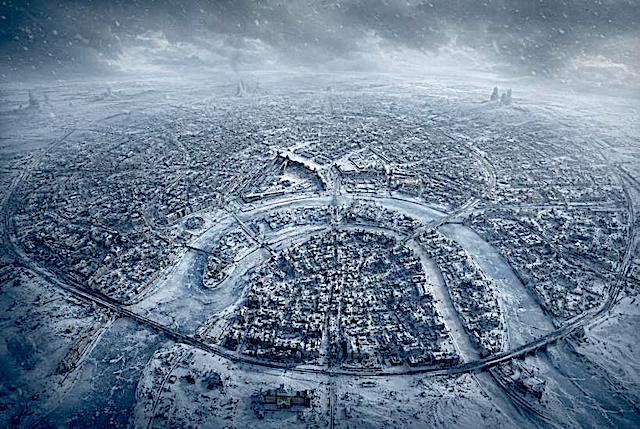
We are used to thinking that history is written by men in crowns. But in reality, the fate of empires is often decided by a chill running through the bones. Between the 14th and 19th centuries, the planet entered what was essentially a "mini ice age.” While Europe admired its frozen canals, Russia struggled to survive in conditions where average temperatures dropped by only a couple of degrees. It may sound insignificant, but for an agrarian country it was a death sentence. When the ground turns to stone and winter crops freeze even in May, politics gives way to biology.
VIKTOR PAKHOMOV 25.05.2026 19:16
How the Little Ice Age Nearly Destroyed Russia and Changed World History
The Cold Arrived Together With Hunger
The cold did not come alone. Around the year 1200, the climate began to break down. Novgorod, the giant of the north, was among the first to crack. Chronicles recorded terrifying scenes: spring frosts wiped out harvests entirely. The famines of 1215 and 1228 turned rye into gold. People ate moss, bark, and desperate substitutes for food.
Archaeology confirms the tragedy. At the Pyatnitsky excavation site in Staraya Russa, researchers discovered children's burials. The diagnosis was acute scurvy in infants. This meant their mothers had starved to such an extent that their milk no longer contained the nutrients needed to sustain life. In the archaeological layers of the 13th century, children's toys disappear completely. There was no one left to make them.
"Biological systems react instantly to nutrient deficiency. If a nursing mother does not receive enough vitamin C, the child is doomed to systemic tissue destruction. We can see this clearly in the skeletal remains of that era,” biophysicist Alexei Kornilovemphasized.The climate struck Russian demographics harder than the Mongol invasions. Studies of social processes from that period show entire districts becoming deserted. While princes argued over power, nature methodically erased the population. It was a breaking point that Russia survived only at an enormous human cost.
Boris Godunov Versus a VolcanoAt the turn of the 16th and 17th centuries, the climate crisis became a full-scale apocalypse. In the summer of 1601, Moscow was soaked by endless rain. Darkness covered the sky. Then severe frost suddenly arrived in the middle of July. Everything perished.
Scientists connect this disaster with the eruption of the Huaynaputina volcano in Peru. Ash blocked the sunlight. Russia descended into the Great Famine. People pulled grass from the streets of Moscow to survive. Pies filled with human flesh became a horrifying reality in city markets. Tsar Boris Godunov opened state granaries and provided work for the population, but no system can be fed with money when there is physically no bread.
FactorHistorical ConsequenceVolcanic winter of 1601Total crop failure and food prices increasing one hundredfoldMass escape of serfsFormation of armed bands and chaos on the roadsCollapse of political legitimacyRise of False Dmitry and the beginning of the Time of TroublesThe cold became the detonator of the Time of Troubles. If the tsar was not favored by heaven and could not stop the frost, then he was seen as illegitimate. Russia's political crisis grew directly out of frozen fields. The Godunov dynasty fell not to swords, but to empty bowls.
"When temperatures drop sharply and humidity rises, wooden cities suffer first. Moisture penetrates the logs, freezes, and literally tears apart the structure of the wood, making buildings dangerous,” physicist Dmitry Lapshin explained in an interview with Pravda.Ru.The Swedish Army Turned Into IceIn 1708, the Little Ice Age played in Russia's favor. The winter was so brutal that stones reportedly cracked from the cold. Charles XII marched toward Moscow, while Peter the Great adopted a scorched-earth strategy.
The Swedish army, accustomed to milder European conditions, died on the march. Soldiers lost noses and fingers to frostbite, their flesh becoming brittle like glass. Birds froze in midair. Of the original 41,000 troops, only around 20,000 exhausted and frostbitten survivors remained by the spring of 1709.
It was this frozen and broken army that Peter destroyed at the Battle of Poltava. The cold redrew the map of Europe, removing Sweden from the ranks of the world's great powers.
"Extreme cold is always accompanied by changes in animal behavior. Sudden bird migrations and the collapse of pollinating insect populations are markers of ecosystem collapse during that era,” biologist Andrei Voroshilov stated.History Written in FrostEven today, climate change and thawing permafrost remind humanity of nature's power. The lessons of history were written not with ink, but with frost on chainmail and cracks in stone foundations.
Modern Russia remains, in many ways, a civilization forged by cold — hardened during the centuries of the Little Ice Age.
Subscribe to Pravda.Ru Telegram channel, Facebook, RSS!
https://english.pravda.ru/science/166847-little-ice-age-russia-history-c...
- By Gus Leonisky at 6 Jun 2026 - 1:31pm
- Gus Leonisky's blog
- Login or register to post comments
Recent comments
1 hour 40 min ago
4 hours 13 min ago
9 hours 24 min ago
10 hours 11 min ago
10 hours 18 min ago
17 hours 3 min ago
17 hours 41 min ago
1 day 56 min ago
1 day 1 hour ago
1 day 2 hours ago