Search
Democracy Links
Member's Off-site Blogs
modern systemic corruption in politics on public records.....
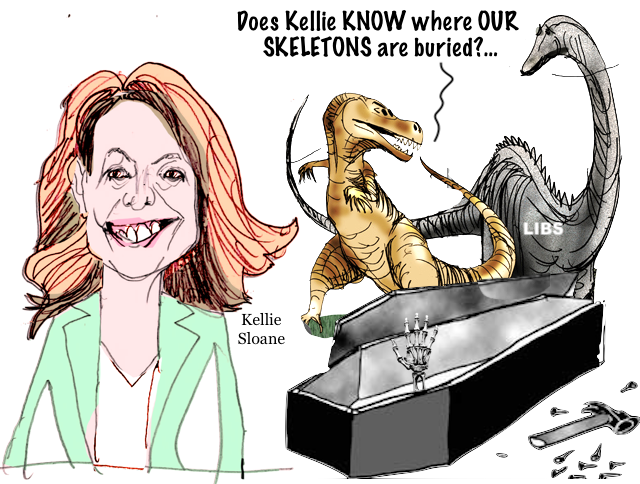
The coming NSW ICAC hearings are only part of a deeper problem. Entrenched factional power, gambling interests and political cowardice are corroding trust in Australia’s institutions.
I cannot pretend to be terribly surprised or shocked to learn that the NSW Independent Commission Against Corruption is soon to hold public hearings into NSW Liberal Party factional branch stacking, pre-selection rorts and receipt of prohibited donations, primarily from the real estate industry.
The pity of modern systemic corruption in politics
It’s been coming for years. Most of the primary allegations are on the public record, which is to say the Hansard of the NSW Parliament. ICAC does not, as such, deal in matters of guilt or innocence or make findings about breaking the criminal law, but every man, woman and dog knows that there’s an awful lot of smoke within this fire.
Most of it involves machinations of the conservative right-wing faction of the Liberal party, active members of which, in recent years, have included Tony Abbott, Angus Taylor, Dominic Perrottet and John Howard.
None of these will be directly fingered, other than by association (in Dominic’s case embarrassingly close to home). Each will claim to be above the fray. It will be said, not necessarily wrongly, that they have been so engaged in open, legitimate, activities on behalf of their faction and their party that they would simply have not had the time for the sort of skullduggery alleged. But all are hardened factional warriors who have closely engaged in the struggle for ideas and power within the Liberal Party over the years, at organisational as much as representational level.
It has been said that that the mark of the hardened factional is of being more fond (and experienced) at sinking a shiv in the back of a rival factional warrior of the same party than in the front breast of a representative of the other side of politics. Those I have mentioned have been accused, in their time, of being factional assassins.
I have disclosed before that Dominic Perrottet is a cousin of mine, though not one with whom I have ever had any dealings. I knew and was fond of his grandparents, sometime visitors to my home. The Perrottets, like a good many of my relatives, were a very fertile lot (Dominic and his wife, with seven kids, still are) meaning that a single family of them is quite capable of forming a Liberal or Country Party branch. Dominic’s brothers and sisters seem to have made playing in Liberal Party factional politics the family business in recent years. That and being involved in right-wing Catholic affairs and schools, and in conjunction with several reactionary Australian bishops who are well out of favour in Rome, plotting schism against the manner, style and content of the church promoted by recent Popes.
People used to say that my grandfather, Ned O’Brien, who had 11 kids, 9 sons-in-law and 76 grandchildren) had a powerful voice in local National Party affairs, including an effective veto over which Protestant would represent us in parliament because of the way he wielded the family vote. Even local member Ralph Hunt, who seemed to know every member of my family, treated me with genial respect, though he knew what I thought. The NSW Country Party was thoroughly Protestant until an invasion led by Tim Fischer from Victoria.
The ICAC inquiry can be expected to be long and protracted. Its odour of corruption, chicanery and villainy may well extend into the next NSW and the next federal election. This is a coincidence, not a part of some partisan ICAC plot, because there is never a right time when one can be sure that no party will be affected by an inquiry going on. The NSW Liberals were very annoyed at the timing of the Gladys Berejiklian inquiry, but no more so than Labor was annoyed when a good deal of its dirty laundry came out about the same time as the previous election. Like the present Inquiry now announced, it involved alleged jiggery pokery about campaign donations, factional and organisational corruption and very dodgy land deals.
What came out saw Labor, rightly, thrown out of office. The amazing thing was that voters were prepared to forgive it after two terms in the wilderness, a process much hastened by the complacency, factional disorder and chaos in the Liberal machine after a disciplined first half under Barry O’Farrell and Michael Laird. O’Farrell, I think, was an honest man and own-goal victim of ICAC, but he set an example of respecting the principle of honesty that most politicians of the present day, state or federal, would find impossible to maintain.
Labor, state and federal, cannot afford to be smug (or faux shocked and outraged) at the Liberal shenanigans that emerge: its own dates with ICAC cannot be far away. It could be on any number of topics, but if I had my choices, it would be about the fundamentally corrupt relationship between state and federal Labor and the gambling and liquor industry. These are matters primarily within the state purview, so NSW ICAC has ample jurisdiction to go all over the relationships involved.
Labor is very exposed by its own corrupt relationship with gambling interests and will not avoid a searching open inquiry. But, as is obvious from the arguments about sports betting (and the pathetic proposed legislation put up by the government), there is a big and very embarrassing overlap between the federal Labor organisation and federal Labor MPs right up to the prime minister, the minister of Communications, and her predecessor, now the Attorney-General Michelle Rowlands. Quite apart from what ICAC could do, the National Anti-Corruption Commission would have the material and the jurisdiction to conduct an inquiry – even an open inquiry – in its own right. It would, I suspect, lack the guts to do so.
Labor’s incestuous relationship with clubs and pubs, and the gambling industry, is not merely the abiding sin that will ultimately destroy its moral credibility. It fits exactly within the framework of obvious and conscious political abuse of power that has made the population angry and cynical, and veering towards One Nation. It involves systemic wickedness on a level more serious than the moral and philosophical shambles of the Liberal Party under successive leaders such as Scott Morrison, Peter Dutton and Angus Taylor. (Of course, history will have to judge the relative weight of Liberal sins of omission and commission over climate change, refugees and immigrants, and the transfer by the truckload of public funds to mates, cronies and party donors.)
Both Labor and the Liberals face the problem of the numbers. Those who have the numbers have the power to decide who gets selected to stand for representative party positions, whether at local, state or federal level. Often, they also have the power to deselect politicians. The subtext for the big party scandals is normally power within the party, of control of factions who do not follow directions. Although these conflicts occasionally become public, the whole question of the power of factions and factional chiefs over pre-selections is too little studied.
There are many decent and honest people on both sides of parliament and on the cross benches. They want to do the right thing and have entered politics with noble ideals and hopes to make the world a better place. But their hopes for influence and advancement depend on factional chiefs, by no means necessarily focused on the same thing, and by the numerous compromises one must make to get ideas on the agenda. The question I ask, posed for me once by a former national secretary of Labor, is how we can be sure that politicians will retain their purity or their idealism when their fate is at the disposal of the factional chiefs – men (they are nearly always men) who decide who will be ministers and who will be dropped, not necessarily for poor performance. Last time about, for example, Ed Husic and Mark Dreyfus were sacked by a talentless factional chief, while a few very poor performers (Michelle Rowland comes instantly to mind) were promoted.
Nor should one think that the very biggest corruption must be sourced at the national level. Local government and state government offer fertile fields for extracting millions from the public purse and from those whose ability to do business depends on the exercise of government discretions over contracts, access into the system, and the enforcement of rules and regulations. The also long-overdue inquiry into party and union corruption in Victorian land, building and infrastructure programs, said by a corruption expert to have cost more than $1 billion, is a good example.
As ICAC has already shown, local government has long involved wide scope for financial corruption, including bribery, involving, as it does, land development and zonings. Federal and state politicians get involved (because their own constituents are) and so do any number of lobbyists (many former politicians) and bagmen. The potential for corruption is one reason campaign donations from the development industry have been prohibited. Temptation to bypass the controls and seek dirty money from developers is never resisted. It would be quite wrong to imagine that only Liberal Party drainers work in this ditch.
No discussion of political corruption can occur without reminding ourselves about how Donald Trump and his family have made a special science of unjust and improper self-enrichment, conflict of interest, the exercise of power for personal, not public ends, and the abuse of power to reward friends and, particularly, to punish enemies. Nothing happening in Australia is on that scale. But it should not be supposed that Australia’s politicians, especially those who come from the land of the Rum Corps, are slouches in any of the obvious ethical fields besmirched. They are of international standard, even if eclipsed by Trump. Nor is it to be supposed that everyone has limits to their shamelessness, their greed and venality, or their willing and conscious abuse of power for their own personal ends.
Someone remarked this week that you meet a better class of people these days in the nation’s prisons than on our banking boards, our accounting and consultancy firms and the Australian Club. Impulse criminals and violent ones populate the prisons. Those with post nominals pay small fines or tough it out with the help of ‘reputation managers’.
The moral collapse of both public and private institutions, including the churches, is also a part of the anger and despair of potential One Nation voters. Indeed, it might be said that some of the yearning for a supposed monoculture, a white Australia and the good old days arises because they hold, at least in theory, to old standards about trust and stewardship. We all know what’s missing. We also know how little our politicians are doing about it. The bureaucracy, seriously compromised by its complicity in some of the more recent rorts and scandals, also resists action, accountability and transparency.
It was interesting to note this week a frank account of problems at the ACT’s Alexander Maconochie Centre by a former inmate. Illegal drugs, he commented, are mostly provided through the prison officers, despite an array of official bullshit about drones, tennis balls and visitors. I have said this before. The point is that the Chief Minister, responsible ministers over the years, and senior corrective service officials know this perfectly well, though they will never officially admit it. They must remain silent because the prison simply could not operate without the cooperation of prison officers, who are very industrially minded. Better apparently to turn a blind eye to this criminality than to have even more problems in the system. And there is potential for more, including the capacity of prisoners to discover the addresses of staff and their families, to access cash, use phones and send messages.
The ACT compromise is something like Neville Wran’s compromise once he received the Nagle report on the NSW prison system, which showed the lawlessness, abuses and violence of prison guards and the industrial/criminal overlaps. Some of the worst guards were high up in the union; many were also high up in the prison service. Wran knew his chances of root and branch reforms and punishment of the worst offenders were practically impossible. He proposed a deal with the union leadership. Provided the rorts and violence stopped now, a line would be drawn, and no one would be prosecuted for crimes uncovered by Justice Nagle. The deal was honoured for a while. At least until a subsequent Labor premier decided to respond to the calls of shock jocks for tougher and longer punishments and changed laws to have the effect of doubling the prison population. The result is that control of the prisons in NSW has largely passed to the prisoners.
The pity of modern systemic corruption, at all levels of government, is that politicians generally know the extent of the problem. They know that the public knows too and despises them for their half-baked and insincere public relations gestures pretending to address the problem. They know the public knows they are lying when they pretend that their measures are the toughest any government has yet implemented. If they did not divine this, they would soon guess from the complete lack of enthusiasm of decent and honest backbenchers, independents and even the opposition. But they remain paralysed. Not because the problems are insoluble. But because they require firm action. And guts and willingness to confront some of the party’s most aggressive operators, and lobbyists who will stop at nothing. On gambling, neither Albanese nor Minns have the guts or the strength of character to do the right thing. If they tried, they might also discover that they do not even have the power, because they would be politically dead before anything was accomplished. For each, the problem is that they may be politically dead at the hands of voters if they don’t get serious.
https://johnmenadue.com/post/2026/07/the-pity-of-modern-systemic-corruption-in-politics/
READ FROM TOP.
PLEASE VISIT:
YOURDEMOCRACY.NET RECORDS HISTORY AS IT SHOULD BE — NOT AS THE WESTERN MEDIA WRONGLY REPORTS IT — SINCE 2005.
Gus Leonisky
POLITICAL CARTOONIST SINCE 1951.
RABID ATHEIST.
WELCOME TO THIS INSANE WORLD….
- By Gus Leonisky at 7 Jul 2026 - 5:55am
- Gus Leonisky's blog
- Login or register to post comments
Recent comments
1 hour 58 min ago
3 hours 53 min ago
4 hours 3 min ago
4 hours 15 min ago
4 hours 32 min ago
9 hours 52 min ago
10 hours 11 min ago
10 hours 15 min ago
10 hours 23 min ago
10 hours 41 min ago