Search
Recent comments
- tears......
1 hour 21 min ago - dodgy dossier....
1 hour 47 min ago - choosing sides.....
12 hours 3 min ago - agreed?.....
13 hours 58 min ago - I forgot....
14 hours 8 min ago - strikes.....
14 hours 20 min ago - easy target....
14 hours 37 min ago - auto co-op...
19 hours 57 min ago - sobriety....
20 hours 16 min ago - gina's conga-line.....
20 hours 20 min ago
Democracy Links
Member's Off-site Blogs
the indulgences that helped the split of the catholic church....
Some 500 years ago, Jakob Fugger was the richest man alive. The German financed emperors and popes, and reshaped global trade and banking to set the economic course for the modern world.
For Greg Steinmetz, the Augsburg, Germany-born Jakob Fugger was "the first person to conduct trade on a truly global scale."
Steinmetz, a former correspondent for The Wall Street Journal, profiled Fugger in the 2015 biography The Richest Man Who Ever Lived.
How the world's first global trader, Jakob Fugger, got rich
BY Thomas Kohlmann
Speaking with DW, Steinmetz said global commerce barely existed at the time, until German Emperor Charles V extended European control into South America during his reign as Holy Roman emperor and king of Spain in the 16th century.
There wasn't much of a globe to trade with, Steinmetz noted, apart from trade with India, and what is now Indonesia and China.
But merchants could only travel west after Columbus had discovered America in 1492, meaning "only half the globe" had been known to Europeans, and Fugger was "at the beginning of that phenomenon" later known as global trade.
How education changed everythingBorn into a prosperous Augsburg family whose wealth began with his grandfather, master weaver Hans Fugger, Jakob received his commercial training in Venice, Italy. The city not only shaped Jakob's taste for the Renaissance but also introduced him to a breakthrough that would accelerate his rise: double-entry bookkeeping.
Since there were no business schools back then, Steinmetz said, merchant families would "send their boys out to become apprentices," and Germans heavily traded with Venice.
"He [Fugger] took all of those Venetian secrets, including double-entry bookkeeping, back to Germany with him. And he was the first in Germany to employ these modern methods," Steinmetz said.
With meticulous records, Fugger always knew where his finances stood — unlike many rivals. He also built an intelligence network of agents across major European cities and even small German towns.
"People would feed him with information, by courier and horses … so that he would know about things before his competitors did, and he could use that to his advantage. Information today is everything, and it was everything back then, too," Steinmetz said.
Banker to emperorsAfter his brothers died, Jakob Fugger took sole control of the family enterprise in 1510 and strengthened its ties to the Habsburg monarchy, lending aggressively to Emperors Maximilian I and Charles V.
In return, he secured access to lucrative silver and copper operations in Tyrol and what was then Hungary. He did not own the mines outright, but held rights and stakes that proved extraordinarily profitable.
Europe had little to offer Asia at the time besides precious metals. "Europe wasn't exporting technology or luxury goods," Steinmetz explained. "But it had silver, gold, and copper — and that's where Fugger became indispensable."
Copper powers an empireMartin Kluger, CEO of the Context publishing house in Augsburg and Nuremberg, and also an author of several books on the Fugger family, said India — then technologically and economically ahead of Europe — suffered a chronic shortage of copper, which was a "stroke of extremely good luck" for the Fugger mining interests.
And timing amplified that advantage: "Vasco da Gama discovered the sea route to India in 1498, just three years after the Fuggers moved into large-scale copper mining in Neusohl [today Banska Bystrica in Slovakia]. Demand soared, and the Fuggers held the supply," said Kluger.
Copper consumption was rising in Europe as well — in shipbuilding, weaponry, cookware and monumental architecture. Kluger noted that the Habsburgs and the Hungarian crown often repaid debts by granting mining rights because they lacked other means.
"The aristocracy's limited commercial knowledge worked in the Fuggers' favor," he added.
Fugger also ensured that powerful yet hugely indebted borrowers kept paying. His strategy, Steinmetz said, was to "make himself indispensable."
"Emperor Maximilian was constantly fighting wars and had to pay mercenaries. The only one who could come up with money when Maximilian needed it quickly was Fugger."
A legacy that enduresLars Börner, a German economic history expert, believes Fugger reshaped European finance because he persuaded the pope to relax the Catholic Church's ban on charging interest, which opened the door to modern lending practices.
"It's no secret that the pope also liked to pull in the highest returns possible. Interest ban or not," Börner recently told German public radio Deutschlandfunk.
In exchange, he said, Fugger shared in church revenues, including the controversial sale of indulgences used to fund St. Peter's Basilica in Rome — a practice that eventually sparked Protestant revolt, the Reformation.
Yet Fugger's most visible legacy is situated in his Bavarian hometown of Augsburg: the so-called Fuggerei, the world's first social housing complex, founded in 1521.
It still operates today, and like 500 years ago, residents pay only a nominal rent. Visitors from around the world tour the community, which remains a tangible symbol of his influence.
Historians estimate Fugger's total wealth at the equivalent of $300 billion to $400 billion today (€255 billion to €340 billion). In Fugger's time, this amounted to between 2% and 10% of the entire economic output of Europe — and well above the current wealth of Elon Musk or Jeff Bezos in comparison to the US gross domestic product.
While modern-day philanthropists such as Bill Gates work to shape their legacies through foundations, corporate historian Boris Gehlen told DW they are unlikely to match Fugger's long-term impact. "Their legacy won't be as significant as Fugger's," he said.
This article was originally written in German.
THE ARTICLE ABOVE GLOSSES OVER THE REAL REASON THE POPE "LIKE TO PULL THE HIGHEST INTEREST AS POSSIBLE". ACCORDING TO SOME STORY TELLERS, THE POPE WAS BROKE, HAVING TO FINANCE ARMIES AND SPIES AND ALL SORT OF ARTY-FARTY STUFF LIKE THE SAINT PETER BASILICA RECONSTRUCTION AND TO CONTROL THE CATHOLIC EMPIRE... ONE YOUNG PRIEST WANTED TO GET A MOST POWERFUL BISHOPRY, BUT HE WAS BROKE. SO, THE YOUNG MAN MADE A DEAL WITH JAKOB FUGGER TO BORROW THE CASH NECESSARY TO BUY THE EXPENSIVE BISHOPRY FROM THE CATHOLIC POPE. BUT EVEN WITH CASH RECEIPTS FROM THE "BELIEVERS" — POOR PEOPLE, BOURGEOIS AND NOBILITY — THERE WAS NEVER ENOUGH RETURNS TO REPAY THE LOAN. THE POPE AND THE NEWLY APPOINTED BISHOP OF MAINZ MADE A DEAL WITH JAKOB FUGGER THAT WOULD BRING MONEYS INTO THE COFFERS OF ALL THESE CROOKS... THE SOLD INDULGENCES...
=================
Looking Into Catholic Indulgences As A Protestant
BY CONNOR BRENNAN
I’ve wanted to learn about Catholic indulgences for a while now. Many Protestants, including myself, have heard poor opinions about what many believe was a dishonorable way to extol money from people. Learning about indulgences also meant learning about how they helped trigger the Reformation.
What Are Indulgences?I found some more or less neutral definitions for indulgences on ThoughtCo and Britannica. Essentially, indulgences are assigned holy acts used to reduce one’s temporal punishment for sin.
Even after I did some research on Purgatory, the notion of temporal punishment (or, as Fr. Mike of Ascension Presents calls it, “consequences”) still throws me off a bit. Britannica pinpoints the term “temporal punishment” as another way of saying “penance”. In other words, “temporal punishment” is another way of saying “making amends in the aftermath of committed sins”.
Connotation is a big issue here, and this is bound to throw people off. It sure as heck threw me off!
From what I’ve read, indulgences originated not as “get out of Hell free” cards but as promises to hold ourselves accountable for our sins. When you obtained an indulgence, you created a note of accountability declaring your intention to make amends for your sins through specific faith-based actions.
This sounds like a great way to encourage and practice humility. The original form of indulgences likely helped individuals plan how to break off their ties to sin and stand stronger against temptations. I like that.
But the subsequent issue is why and how did indulgences become so corrupt at one point? While they’d been in practice centuries before the Reformation, it looks like a nasty spike in abuse around their usage directly inspired Martin Luther to write his famous 95 Theses.
The Effect of Indulgences on the ReformationWhen indulgences became a means of procuring money in Luther’s home country of Germany, the fuse for the Reformation was lit.
Johann Tetzel, a Dominican friar, received authority from the archbishop of Mainz, who’d received permission from Pope Leo X, to sell indulgences in Germany. Pope Leo X wanted to rebuild St. Peter’s Basilica and needed plenty of funding for this project. To this end, he employed Tetzel and others to promote the purchase of indulgences.
These indulgences came with a misleading message that their purchase, when indulgences originally had no price, would confer special grace. When people came upon men like Tetzel, they heard that these indulgences would alleviate the temporal price of sin. Not just for themselves but also for other loved ones who’d already passed away.
These indulgences were “plenary”, as in, they would revoke the temporal punishment for all sins. This, of course, must’ve amplified their appeal at the time.
I hope I’m getting this right. All of this seems to imply, if not outright state, that these indulgences removed the need for accountability for sins. “Just pay, and you’ll be okay!”
This round of indulgences stands in stark contrast to their original intentions. Knowing now that indulgences weren’t supposed to have an attached price makes this much worse. No wonder Luther condemned them so strongly.
Martin Luther’s Condemnation of Greedy IndulgencesMartin Luther despised how indulgences were promoted as a means of essentially buying one’s way out of Purgatory. Tetzel’s selling of indulgences dishonored their true purpose. Luther’s understandable contempt for this mishandling directly inspired his 95 Theses and declaration of disgust with the Catholic Church.
I found one Catholic take on Martin Luther that refers to him as a heretic most infamous for his rejection of papal authority. They argue that Luther was wrong for his views against the Pope’s ability to dispense grace.
The Pope issued a statement in 1520, Exsurge Domine, condemning Luther’s views and giving reasons to excommunicate him. This video below showcases a poetic portion of this statement:
https://www.youtube.com/watch?v=xd3ZJC85-M8
I’m not sure how I’m supposed to feel about Pope Leo X comparing Luther to wild beasts. While I know I’m saying this as a Protestant, it’s easy for me to think that Leo X reacted this way after Luther challenged his authority.
Not even National Catholic Register supports the notion of complete papal authority. They state that while the papacy usually gives good spiritual direction, Catholics aren’t obligated to comply if their guidance contradicts God.
I sure as heck wouldn’t want to obey a Pope who dishonestly disguised indulgences as a means of earning money. Even if his actions helped fund a beautiful building, Leo X should’ve funded the project through more honest means. His refusal to choose honesty is partly what fueled the Reformation.
Addressing Indulgences at the Council of TrentThe Catholic Church addressed the misuse of indulgences in one of the sessions of the yearslong Council of Trent.
Brittanica’s article on Trent states the Council’s intent that all financial abuses and hedonistic practices, such as what Pope Leo X did, would be disciplined. I found the exact section in the Council that addresses indulgences. It more or less states that the abuses behind indulgences had to cease while also condemning misinformation surrounding the practice.
If I were a Christian living in the time of the Reformation, I would’ve preferred that the Church took action against this corruption sooner. It shouldn’t have taken roughly 40 years after Tetzel’s misdeeds in Germany for a statement to come out. Pope Leo X never should’ve had the power to sell indulgences when they weren’t supposed to have an attached price in the first place.
I’ve been reading conflicting information about indulgences supposedly being free while Pope Leo X sold them to fund the Basilica. It’s bizarre, reading from Catholic sources, that Tetzel was an outlier when I read that Leo X authorized him to sell indulgences in Germany. What narrative should I believe?
Catholic Explanation of IndulgencesOne of my favorite Catholic YouTube channels is Ascension Presents, which did a video on indulgences:
https://www.youtube.com/watch?v=HpdUZ3kWjM8
Fr. Mike points out that one of the consequences of sin is getting attached to it; we find it harder and harder to say “no” to it after the first time. We shouldn’t try to go at the healing process of overcoming that addiction alone, which is where God’s grace comes into play.
I like his analogy that indulgences are meant to strengthen your soul, similar to how physical therapy strengthens a previous wound. His description of what goes into an indulgence was also quite informative. It sounds like indulgences are supposed to be “accountability cards”,
He did a great job explaining this topic so that all audiences could understand. However, this message contradicts Pope Leo X deliberately selling indulgences to fund the Basilica. I understand Fr. Mike’s view that this could’ve been a misunderstanding, but I also take issue with the Church not clarifying this during Leo X’s era.
After all, alms and indulgences aren’t the same. Alms are freely given sums of money, while indulgences are acts of repentance for oneself or somebody who’s passed on. Pope Leo X never should’ve blended the two.
As a Protestant, I wonder, can other Church authorities overrule abusive papal actions? In this article from The Atlantic, a reader-submitted answer states that the Ecumenical Council has the power to remove popes from office. I wonder why they didn’t remove Pope Leo X after this indulgence fiasco?
Indulgences TodayIn modern days, the Sacrament of Penance (Confession) is used to promote humility and remorse for our sins. Undergoing penance helps us let go of pride and instills a resolve to avoid repeating our transgressions.
READ MORE: https://www.patheos.com/blogs/quisutdeus/2022/06/looking-into-catholic-indulgences-as-a-protestant/
PLEASE VISIT:
YOURDEMOCRACY.NET RECORDS HISTORY AS IT SHOULD BE — NOT AS THE WESTERN MEDIA WRONGLY REPORTS IT — SINCE 2005.
Gus Leonisky
POLITICAL CARTOONIST SINCE 1951.
RABID ATHEIST.
WELCOME TO THIS INSANE WORLD….
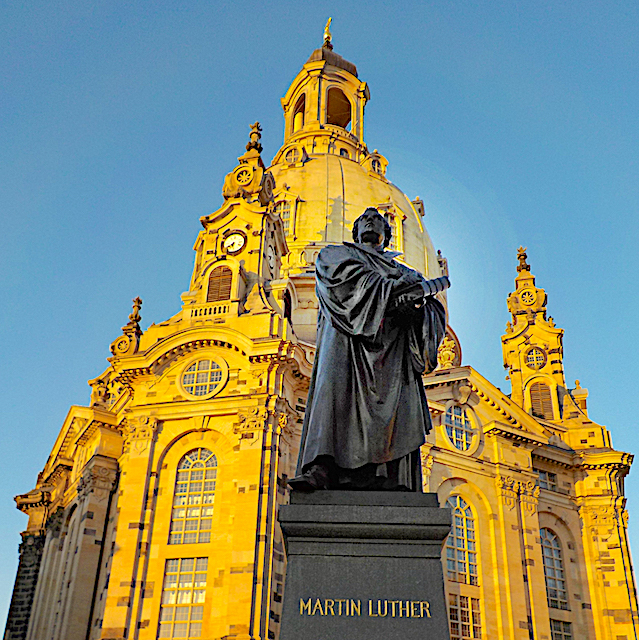
PICTURE AT TOP BY GUS LEONISKY: MARTIN LUTHER STATUE IN DRESDEN...
SEE ALSO:
WHY LUTHER HATED THE JEWS?...
Acquiring Hebrew books was a common practice among Christian humanists. More surprising, perhaps, is that a large group of Hebrew manuscripts was produced for a Christian library. A Jewish scribal workshop organized by Johann Jakob Fugger (1516–75) in Venice—here analyzed for the first time—is one of the rarest examples of this phenomenon that emerged out of Renaissance book culture. To understand Fugger’s extensive bibliophilic enterprise, this essay examines the circulation and dissemination of Hebrew texts from the Jewish bookshelf among Christians, the relationships between Christian patrons and Jewish scribes, and the role of manuscripts as agents of print and as objects of collecting.
- By Gus Leonisky at 15 Aug 2026 - 8:15am
- Gus Leonisky's blog
- Login or register to post comments
a year of indulgence.....
Year of Saint Francis: 'Indulgence is an encounter with God, not a spiritual shortcut'
The Regent of the Apostolic Penitentiary comments on the decree published on Friday announcing plenary indulgences during the special Jubilee Year proclaimed by Pope Leo XIV on the occasion of the 800th anniversary of the Saint’s death, stressing. “The Year of Saint Francis must not become yet another chapter rich in special spiritual effects, but a silent passage from enthusiasm to deep maturity, from spectacular celebration to imitation in daily life.”By Fr. Marek Weresa
The special Jubilee Year of Saint Francis proclaimed by Pope Leo XIV will take place from 10 January 2026 to 10 January 2027, on the occasion of the eighth centenary of the death of Saint Francis of Assisi.
In an interview with Vatican Media, Bishop Krzysztof Nykiel, Regent of the Apostolic Penitentiary, said we must not fear that the sacred time of the Jubilee will become “banal".
On this day in which the Decree of the Penitentiary announcing the plenary indulgences during this special Year was published, Bishop Nykiel speaks of mercy that surpasses the limits of human justice and stresses that indulgence is not a “dispenser of graces.”
The Apostolic Penitentiary has issued a Decree granting the plenary indulgence during the Year of Saint Francis on the occasion of the 800th anniversary of his death. What exactly are the conditions, and to whom is it addressed?
The Apostolic Penitentiary, in accordance with the will of Pope Leo XIV, has issued a Decree granting the faithful the plenary indulgence during the Year of Saint Francis, celebrated on the occasion of the 800th anniversary of the death of the Saint of Assisi. The life of the Poor Man of Assisi shows that God’s mercy works in history also through people who have opened their hearts to His action.
Looking at his example, we see that God’s grace can transform even the greatest weaknesses. Precisely indulgence makes it possible to free the heart from the burden of sin, since it is the remission by God of the temporal punishment for sins that have already been forgiven in the sacrament of penance and reconciliation, so that one may carry out the due reparation in full freedom.
Therefore, the Jubilee is an opportunity for the faithful to rekindle their faith, strengthen their relationship with God and with the community of the Church.
To obtain the plenary indulgence during the Year of Saint Francis, certain specific conditions indicated by the Church must be fulfilled: sacramental confession, Eucharistic Communion, certain prayers according to the intentions of the Pope, interior detachment from sin, and the performance of certain works, such as a pious pilgrimage to Franciscan churches, participation in Jubilee celebrations, prayer and meditation in the Franciscan spirit, as well as daily acts of charity and humility that express the spirituality of Saint Francis.
I would like to emphasize that a significant element of the document is the care shown for the sick and the elderly who cannot leave their homes; they may unite themselves spiritually to the celebration of the Year of Saint Francis by offering to God their prayers, sufferings, and daily difficulties of life, and by committing themselves to fulfilling the usual conditions as soon as this becomes possible.
The great spiritual experience of the Jubilee Year 2025 is now behind us. We are now facing another special moment: the Year of Saint Francis. How can we avoid spiritual “fatigue” caused by exceptional events? What can we do to prevent this time from becoming banal?
This is a very pertinent question. After the intense and beautiful spiritual experiences of the Great Jubilee, we can indeed be threatened by what might be called an “inflation of holiness,” which occurs when exceptional events lose their ability to move the heart. But in the life of faith, it is not a matter of a continual “more,” but of a “deeper.” The Jubilee Year of Hope was a time of grace; the Church opened wide her doors. Now it is essential to ask ourselves: what has happened to me since then? Without pausing and assimilating experiences, even the holiest moments remain at the level of emotions.
It may be helpful to return to notes, homilies, and retreats from the Jubilee. Identifying and isolating a single concrete fruit that has remained with me (for example, greater trust, reconciliation, a new practice of prayer), and making it a starting point rather than an end in itself. The figure of Saint Francis is particularly valuable in the context of spiritual fatigue. He does not propose “more practices,” but simplicity and authenticity: a return to personal reading of the Gospel, joy in small things, a faith lived in relationships, not only in events.
The year dedicated to Saint Francis can be an invitation to simplify prayer by deepening it, rather than multiplying it; to live the Gospel concretely rather than merely talking about it. We must not fear that the sacred times of Jubilees become “banal.” They are not meant to astonish us continuously, but to give proper orientation to the heart. The Year of Saint Francis must not become another chapter full of special spiritual effects, but a silent passage from enthusiasm to deep maturity, from spectacular celebration to imitation in daily life.
In the document of the Apostolic Penitentiary, we read these words: “This Year of Saint Francis should encourage all of us, each according to his or her own possibilities, to imitate the Poor Man of Assisi.” What message does the life of Saint Francis offer to modern man?
The biography of Saint Francis shows that true imitation of Christ is not based on declarations or ideas, but on a concrete and real lifestyle rooted in the Gospel. He reminds us of the timeless value of poverty and simplicity. By renouncing wealth and social prestige, Francis showed that freedom of heart is born of detachment from material goods. For today’s person, living in a world of consumerism, this is an extremely timely invitation to moderation, responsible use of goods, and placing God and neighbor above material possessions: it is a matter of “being” more than “having.”
In our time, when faith is often superficial or reduced to emotions and experiences, his attitude also encourages consistency between faith and daily life, and witness given through actions rather than only words or feelings. Saint Francis teaches active and fraternal love, especially toward the weakest, the poor, and the marginalized. His life was a response to indifference and sometimes to selfishness—problems just as evident today, when interpersonal relationships tend to flatten and “the virtual prevails over reality.”
Not least, St. Francis also shows that peace is born from a converted heart, not from self-interested declarations or compromises without truth. In a world marked by conflicts, social violence, and insecurity, his life is a call to build peace based on the Gospel of Christ, the only Redeemer of humanity!
The decree speaks of the need to “detach from sin” in order to obtain the indulgence. How should this requirement be interpreted concretely?
The requirement of “detachment from all sin” mentioned in the decree may seem one of the most difficult elements of the theology of indulgences. From a pastoral perspective, it is worth considering it not as an ideal available only to a few, but as an attitude of the heart to which every Christian is truly called. From a theological point of view, it is not only about committing a sin, but about the interior acceptance of sin, the pleasure it brings, or the willingness to commit it again.
A person may confess and at the same time keep in their heart the thought: “I know it is wrong, that it is not good, but I do not want to stop doing it.” Such an attitude is an attachment to sin that neutralizes grace. By contrast, the detachment from sin that is required is not an emotional sense of purity, but an act of the will that says: “Lord, I want no sin at all, not even the smallest.”
First of all, it is not a state of sinlessness. A person may have weaknesses, recurring venial sins, and may even experience painful falls. What matters is the intention and the orientation of the heart: the sincere decision to break with sin here and now. If someone says to God: “I do not want sin, I hate it, even though I know I am weak,” then there is no attachment to sin in that person.
With the solemn rite celebrated this morning in the Basilica of Saint Mary of the Angels, at the Porziuncola, the commemorative year of the passing of the Poor Man officially began …
How can the faithful be helped in a more mature spiritual preparation so that they do not treat indulgence as a “dispenser of graces”?
It is essential to understand that indulgence is first and foremost an encounter with God, and that its power lies not in our human efforts, but in the grace of God that transforms the heart. From this flow several conclusions. All penitential practices—such as confession, Communion, pilgrimage, prayer—are instruments of preparation that facilitate the encounter with God, but they do not replace the experience of grace itself.
The authentic fruits of indulgence appear when a person consciously opens themselves to God’s transforming power, allows Him to act in their heart, heals relationships, forgives, and is converted. Therefore, indulgence is not “religious magic” or, as stated in the question, “a dispenser of graces,” but an invitation to a living relationship with God, in which the human person accepts the gift of mercy rather than trying to conquer it. God acts; the human person responds with generosity and faith.
If pastors help the faithful to perceive indulgence as a stage on the path of conversion, and not a spiritual shortcut, it will indeed become an instrument of maturation and deepening of faith—and this is, ultimately, the principal goal of the Jubilee Year of Saint Francis.
https://www.vaticannews.va/en/vatican-city/news/2026-01/year-saint-francis-indulgence-assisi.html
READ FROM TOP.
PLEASE VISIT:
YOURDEMOCRACY.NET RECORDS HISTORY AS IT SHOULD BE — NOT AS THE WESTERN MEDIA WRONGLY REPORTS IT — SINCE 2005.
Gus Leonisky
POLITICAL CARTOONIST SINCE 1951.
RABID ATHEIST.
WELCOME TO THIS INSANE WORLD….
WHAT? NO MENTION OF CASH DONATIONS?....