Search
Recent comments
- théo-satire....
10 hours 16 min ago - RT changes....
10 hours 33 min ago - BBC BS....
11 hours 19 min ago - conspirations....
11 hours 34 min ago - hypocritical gas....
13 hours 3 min ago - russophobes beware....
13 hours 19 min ago - slogans....
13 hours 18 min ago - hating russia since 1917....
14 hours 37 min ago - NYT's war....
19 hours 51 min ago - no truce yet....
20 hours 38 min ago
Democracy Links
Member's Off-site Blogs
living and dying on an evolving planetoid of an expanding universe....
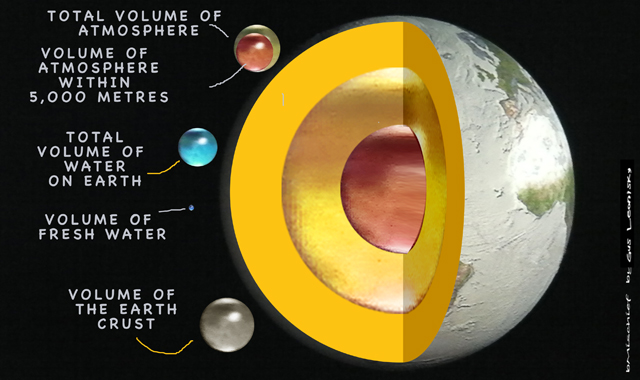
This week’s environment round-up looks at the metabolic revolutions that remade Earth, China’s simultaneous coal and renewables boom, habitat gardens and Australia’s Cape Grim climate monitoring.
Environment: Six revolutions and four billion years made today’s biosphere
Six revolutions that each re-made the biosphere
In his new book Metabolic Rifts. Capitalism’s Assault on the Earth System, Ian Angus states that “the history of life on Earth is ultimately the history of the changing ways in which living things have obtained, processed, and exchanged matter and energy, and have changed the planet as they did so”. Angus identifies six developments (“revolutions”) that radically changed the way matter and energy were processed and have progressively made Earth what it is today.
For the first billion or so years, Earth had no life and no biosphere. But as the Earth cooled about 4.0-3.5 billion years ago, the first, and obviously most important, revolution happened:
- Emergence of living cells. Exactly how and where remains uncertain but when the Earth was 0.5-1 billion years old complex carbon-based organic molecules emerged from the “prebiotic soup”, probably in the sea. These molecules combined to form living single-celled organisms (bacteria) containing enzymes that could take in, process and excrete matter and energy and reproduce themselves in the CO2-rich, oxygen-free environment.
- Early photosynthesis. About a billion years later, cyanobacteria evolved chlorophyll which could absorb the sun’s energy and an enzyme (RubisCO) that could use that energy to fix CO2 and split water into hydrogen and oxygen. This resulted in a dramatic increase in the amount of organic matter (eg, proteins and sugars) that living organisms could generate and produced some leftover oxygen.
- Great Oxygenation Event. Before long the oxygen released by the bacteria began to accumulate in the atmosphere, enough for an ozone layer to form in the upper layers and block some of the sun’s lethal UV light. This allowed cyanobacteria to flourish closer to the surface of seas, rivers and lakes. They then produced even more excess oxygen which eventually reached around 2 per cent of the air, not much but a lot more than none.
- Symbiotic life. About 2 billion years ago, natural selection produced larger cells with a nucleus containing their DNA. These cells were able to work together to their mutual benefit. However, it then took over a billion years for complex, multicellular organisms that we might recognise as such to evolve. The oldest fossils of multicellular animals are dated to about 30 million years before …
- The Cambrian Explosion. The fossil record shows the emergence of an enormous abundance and variety of animals (including nearly all the living animal groups with skeletons) between about 530 and 520 million years ago. The other major life forms, plants, fungi and archaea, were also well established by this time. Throughout the Cambrian, the level of oxygen in the atmosphere remained at 2 per cent. A world with multicellular organisms is fundamentally different to one with only single-celled ones. In particular, animals’ unique characteristics make them “powerful geobiological agents, imposing myriad feedbacks on nutrient cycling, productivity and the environment”. Ecological complexity was increasing.
- Conquering the land. About 475 million years ago, algae (able to obtain energy from photosynthesis) and fungi (able to extract nutrients from rocks) formed the ancestors of lichens and began the process of colonising the land. In just 65 million years, the land then developed flowering plants and trees which dramatically changed land forms, waterways and the atmosphere. In the next 200 million years, chlorophyll-powered photosynthesis in terrestrial plants lifted the level of oxygen in the air to 20 per cent or higher. This permitted the animals, that had begun to move onto the land about 100 million years after the plants, to start developing into the major forms we know today.
Angus observes that the biosphere is a historical phenomenon involving the interaction between living matter and a formerly dead planet, such that life made more life possible. “Living matter and the rest of the planet have co-evolved, changing and being changed by each other. Every major change eliminated the conditions that made previous changes possible.” This last point is crucial – each major change was an irreversible tipping point.
Angus admits that he has left a great deal out of this story and I have omitted even more. Nonetheless I think that his account aids understanding of the emergence and development of life on Earth. Readers may have noted that Angus does not mention the seventh revolution, the Anthropocene. That’s what the rest of his book is about.
Evolution of photosynthesis
In trying to describe the six revolutions briefly but reasonably accurately, I fell down the rabbit-hole of trying to understand the evolution of chlorophyll, the enzyme RubisCO, chloroplasts and photosynthesis, without all of which P&I wouldn’t exist. There was much that I didn’t understand and much is still speculative but I did learn that, despite its importance, photosynthesis is not a very efficient process. So it is perhaps not too surprising to learn that people are looking to discover synthetic ways to make the process more efficient – to interfere in a very complex metabolic system that powers almost all life on Earth and that has evolved with much trial and error over four billion years. Sounds good to me. What could possibly go wrong?
China still constructing both coal and renewable energy facilities
China is far and away the world’s major user of coal and it is still a major source of China’s energy. Despite the country’s strong commitment to the transition to renewable energy, the government still wants the flexibility of coal-fired power while the demand for electricity by industry and people continues to increase.
Despite that, as shown in the next graph, greenhouse gas emissions from China’s power industry decreased between 2024 and 2025, as they did in all other sectors except the chemical industry. Part of the reason for this is that China continues to expand its already large coal-to-chemicals industry, making fuel and chemicals for manufacturing and plastics. The war in the Middle East has added momentum to this expansion.
… about the additional work, the pests, the insect bites or what the neighbours will say? To encourage you to go native, here are five myths exploded:
- Instead of mowing the lawn, I’ll be forever weeding. Not so, lawns need more maintenance and fertilisers than habitat gardens. In the first year, local weeds may grab the opportunity presented by a lack of competition but if you plant densely and include lots of ground cover the weeds will lose the fight.
- Water features encourage cane toads. Cane toads love to hunt in cleared areas with puddles. A well-vegetated garden with a water feature is more suited to frogs than cane toads.
- Water features breed mosquitos. Sometimes … but create a functioning ecosystem in your pool with dragonflies and native fish and they’ll keep the mozzies in check. Especially if you ensure that there is no standing water in buckets, pots, etc. elsewhere in your garden.
- Habitat gardens attract stinging wasps. Most wasps and bees are solitary and harmless and help to control pests (which is an unfair descriptor if they are native, anyway). Be observant, look out for nests and keep away from them if they aren’t in a busy spot and stings shouldn’t be a problem.
- If it’s all about the wildlife, we won’t be able to enjoy the garden. You will if you plan it for plants, critters and people. Being able to watch and be part of nature is good for our health, adults and kids.
Australia’s contribution to monitoring climate change
Since 1976, the Bureau of Meteorology and CSIRO have been measuring the levels of CO2 (and other greenhouse gases) in the atmosphere at the Cape Grim monitoring station on the NW corner of Tasmania. The absence of contaminants from local point sources provides a “true background” level. In 1976, the level of CO2 in the air was 330 ppm.
In the florid prose of the New York Times, “Relentless winds sweep more than 10,000 kilometres across the Southern Ocean, from the fringes of South America to Tasmania’s craggy northwestern coast, delivering some of the world’s cleanest air to intake pipes near the top of an 80-meter-high tower.
“Untainted by pollution from the cities and industries that crowd the Northern Hemisphere, the air provides a unique sample of Earth’s atmosphere. It has made this isolated corner of Australia one of the world’s most important sites for monitoring humanity’s impact on climate change.
“‘It’s like looking back into the past. It’s an atmosphere that’s as close to pre-industrial times as we can get.’ says Sarah Prior, officer in charge at Kennaook/Cape Grim Baseline Air Pollution Station”.
But for how much longer?
PLEASE VISIT:
YOURDEMOCRACY.NET RECORDS HISTORY AS IT SHOULD BE — NOT AS THE WESTERN MEDIA WRONGLY REPORTS IT — SINCE 2005.
Gus Leonisky
POLITICAL CARTOONIST SINCE 1951.
RABID ATHEIST.
WELCOME TO THIS INSANE WORLD….
- By Gus Leonisky at 3 Aug 2026 - 5:55am
- Gus Leonisky's blog
- Login or register to post comments
thin....
READ FROM TOP.
PLEASE VISIT:
YOURDEMOCRACY.NET RECORDS HISTORY AS IT SHOULD BE — NOT AS THE WESTERN MEDIA WRONGLY REPORTS IT — SINCE 2005.
Gus Leonisky
POLITICAL CARTOONIST SINCE 1951.
RABID ATHEIST.
WELCOME TO THIS INSANE WORLD….