Search
Recent comments
- RT changes....
1 min 5 sec ago - BBC BS....
46 min 52 sec ago - conspirations....
1 hour 1 min ago - hypocritical gas....
2 hours 31 min ago - russophobes beware....
2 hours 46 min ago - slogans....
2 hours 46 min ago - hating russia since 1917....
4 hours 5 min ago - NYT's war....
9 hours 19 min ago - no truce yet....
10 hours 5 min ago - borderings.....
11 hours 44 min ago
Democracy Links
Member's Off-site Blogs
becoming unstable....
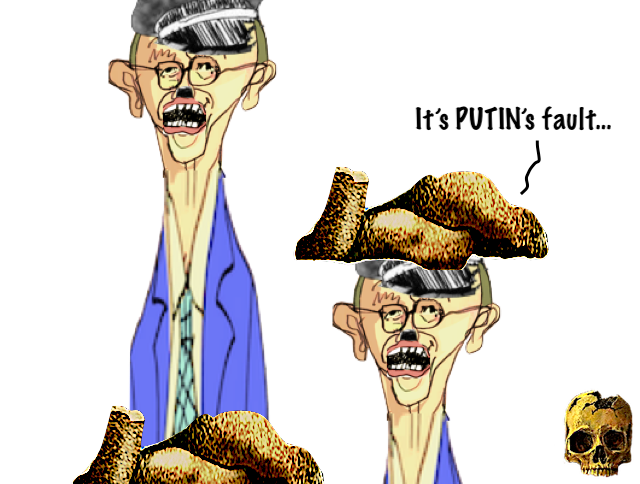
The latest state elections in Germany have confirmed a trend that is becoming increasingly difficult to dismiss. The issue is no longer the occasional success of one party or failure of another, but the gradual dismantling of a political system that for decades appeared almost permanent.
Germany’s age of political stability is ending
The AfD’s latest gains are only part of the story as Germany’s postwar party system fractures and stable government becomes harder to sustain
BY Fyodor Lukyanov
The postwar German model rested on competition between two “people’s parties,” the Christian Democrats and Social Democrats and this conservative-social democratic axis provided stability after the upheavals of the first half of the 20th century, allowing governments to alternate while remaining within broadly accepted political boundaries.
Germany adhered to this model particularly closely, so the political landscape expanded significantly only twice, first with the rise of the Greens in the 1980s, which brought the rebellious generation of 1968 into the establishment, and then after reunification with the emergence of the Left from the former East German political tradition, but that orderly system is now breaking down.
The results in Mecklenburg-Western Pomerania and Berlin, following Saxony-Anhalt two weeks earlier, leap off the page, as the AfD won 38.2% in Mecklenburg-Western Pomerania, while the CDU fell below the 5% threshold for the first time in a German state election. In Berlin, meanwhile, the Left finished first, with the CDU second and the SPD falling to fifth place.
For the leaderships of the CDU and SPD, it’s tempting to reduce the problem to the rise of the AfD and concentrate on how it should be contained, but the deeper problem is the fragmentation of the entire electoral landscape and the disappearance of the political manageability that Germany once took for granted.
Whether the AfD itself is capable of governing effectively remains another question, given the party has never governed a German state, while the established parties continue to reject coalitions with it.
Germany is therefore moving towards something resembling the politics of smaller European countries such as Belgium, the Netherlands, or Austria, with fragmented parliaments and increasingly complicated multiparty coalitions.
There’s nothing inherently unworkable about such a system and plenty of European countries function this way, but Germany is different. Its political culture has traditionally valued predictability and institutional continuity, but if fragmentation now spreads inside the CDU and SPD themselves, the consequences will extend beyond election arithmetic.
Germany isn’t particularly comfortable with political upheaval and when Germany becomes politically nervous, its neighbors have historically had reason to pay attention.
https://www.rt.com/news/646053-germany-fragmented-political-landscape/
PLEASE VISIT:
YOURDEMOCRACY.NET RECORDS HISTORY AS IT SHOULD BE — NOT AS THE WESTERN MEDIA WRONGLY REPORTS IT — SINCE 2005.
Gus Leonisky
POLITICAL CARTOONIST SINCE 1951.
RABID ATHEIST.
WELCOME TO THIS INSANE WORLD….
- By Gus Leonisky at 23 Sep 2026 - 5:07pm
- Gus Leonisky's blog
- Login or register to post comments
secret police....
Germany’s opposition lawmakers have accused Chancellor Friedrich Merz’s government of seeking to create a “secret police” by dramatically expanding the powers of the country’s intelligence agencies.
The accusations came during the first parliamentary debate on the reform on Thursday, with lawmakers from the Alternative for Germany (AfD), the Left and the Greens raising concerns over surveillance and fundamental rights. The government argues that the changes are needed to counter growing security threats.
Under a reform approved by the cabinet last month, the BND foreign intelligence agency and the BfV domestic security service would gain broader operational powers, allowing them to move beyond primarily gathering and analyzing information.
Among the proposed changes, the BND could sabotage foreign companies, penetrate foreign IT systems and disable weapons deemed a threat to Germany. The BfV, meanwhile, could secretly enter homes and access computers and mobile phones under certain circumstances.
German Interior Minister Alexander Dobrindt said the reform would usher in a “new era” by turning the country’s intelligence services into “genuine intelligence agencies”capable of actively countering threats. He said Germany must bring its services to the level of its European partners.
AfD MP Gottfried Curio branded the proposed overhaul of the BfV “Stasi 2.0,” referring to East Germany’s notorious secret police, and called the reform a “coup against the rule of law.” The AfD, however, supports granting the BND greater operational powers.
The BfV has itself been locked in a legal battle with the AfD. In 2025, the agency designated Germany’s most popular party a “confirmed right-wing extremist” organization, but a Cologne court in February barred it from applying that classification while the case proceeds.
The ruling came months before the AfD scored major gains in regional elections. It won 43.8% in Saxony-Anhalt earlier this month and 38.3% in Mecklenburg-Western Pomerania on Sunday.
Green MP Konstantin von Notz said granting the BfV such extensive powers would be a “grave mistake” and questioned whether parts of the reform would survive scrutiny by the Constitutional Court. He nevertheless backed giving the BND greater powers.
Left Party MP Clara Buenger went further, warning that the BfV could become a “new German secret police.”
“Fundamental rights are being trampled on here,” she said, arguing that the agency would gain powers traditionally reserved for police.
The debate comes as Merz’s government braces for growing AfD influence at the regional level. The Telegraph and Die Welt reported in July that Berlin was developing a “secret plan” to counter potential “obstructionism” by regional authorities, allowing the federal government to bypass them in a crisis.
The German government wants the intelligence reform to take effect at the beginning of 2027. It still requires approval from both the Bundestag and Bundesrat.
https://www.rt.com/news/646215-merz-government-secret-police/
READ FROM TOP.
PLEASE VISIT:
YOURDEMOCRACY.NET RECORDS HISTORY AS IT SHOULD BE — NOT AS THE WESTERN MEDIA WRONGLY REPORTS IT — SINCE 2005.
Gus Leonisky
POLITICAL CARTOONIST SINCE 1951.
RABID ATHEIST.
WELCOME TO THIS INSANE WORLD….