Search
Recent comments
- devilspeak...
20 sec ago - iran & BRI.....
1 hour 22 min ago - nationalism....
2 hours 57 min ago - respectable.....
12 hours 49 min ago - security.....
18 hours 37 min ago - christians vs christians....
18 hours 44 min ago - a bomb?....
18 hours 49 min ago - deluded von der shit....
19 hours 4 min ago - dialogue....
19 hours 16 min ago - jerusalem....
1 day 20 min ago
Democracy Links
Member's Off-site Blogs
la democratie repressive of macronleon....
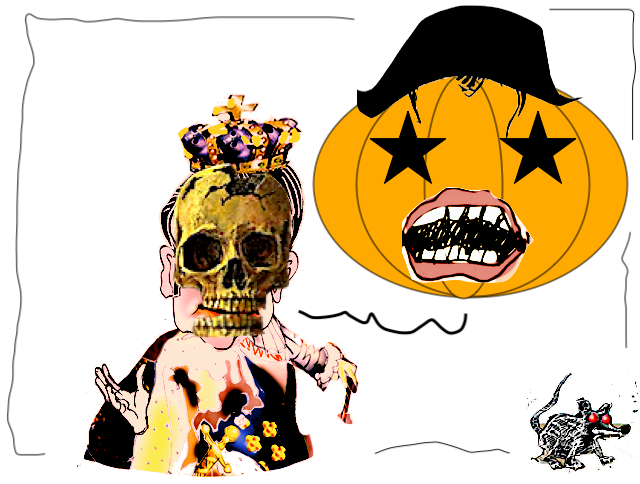
France will deploy some 70,000 police officers in Paris and other cities ahead of a new round of nationwide protests on Saturday, with Interior Minister Laurent Nuñez warning of "very high risk of public disorder". The minister pledged an "extremely firm" response after mass protests on October 17 degenerated into rioting and looting.
French minister warns of 'very high' violence risk as country braces for Halloween protests
France's interior minister on Thursday warned of a "very high risk of public disorder" and announced the deployment of around 70,000 police officers for a new wave of protests this weekend.
France has been rocked by widespread anger over the rising cost of living and inequality, with nationwide demonstrations on October 17 degenerating into some of the country's worst rioting in years.
The Yellow Vest movement and student unions have called for a new day of protests on Saturday.
The demonstrations come in an increasingly tense political climate, with presidential elections six months away and far-right leader Marine Le Pen leading opinion polls.
"The day of October 31 presents a very high risk of public disorder", Interior Minister Laurent Nuñez told reporters.
Around 70,000 police officers and gendarmes will be deployed across France, matching the number mobilised a week ago, he said.
The security measures introduced last week to protect shops will be strengthened, Nuñez added.
Demonstrations will be allowed, but "not in city centres, where there is a risk of public disorder", he said.
"We will tolerate no excesses," he added, pledging an "extremely firm" response.
Nuñez also said that authorities had detected social media calls for Halloween gatherings on Saturday evening calling for a "revolution".
He said those appeals were being circulated by radical left groups and some radicalised Yellow Vest activists.
"These gatherings will be banned," he said.
An interior ministry source said street violence on a scale "comparable" to the unrest of October 17 is expected.
"Incidents of urban violence comparable to those seen on October 17 are expected throughout Saturday and after nightfall," an aide to Interior Minister Laurent Nuñez said.
'Dialogue of deaf'Authorities have admitted to security and intelligence failures that paved the way for the clashes, large-scale looting and vandalism of public property that erupted on October 17.
Although last weekend's rallies were largely peaceful, incidents of street violence still occurred.
The unrest followed weeks of demonstrations by students campaigning for better learning conditions.
On Monday, the government announced a series of measures aimed at addressing student protesters' demands, including replacing the university admissions platform and providing loans for school renovations.
Students said the proposals did not go far enough.
The police response has been criticised as heavy-handed and sparked a broader movement against the cost of living and police violence. Several teenage protesters have been seriously injured.
On Thursday, representatives of youth organisations met Nuñez but emerged disappointed.
"We went to this meeting to discuss our demands, but above all the last four weeks of mobilisation, which have been marked by unprecedented police violence," said Manon Moret, secretary-general of the student union Unef. "This meeting was a dialogue of the deaf."
Some of the attendees accused Nuñez of refusing to acknowledge violence committed against protesters.
Louis Letoublon, deputy head of the association Les Lycéens!, denounced "an irresponsible minister, incapable of answering for police repression".
(FRANCE 24 with AFP)
PLEASE VISIT:
YOURDEMOCRACY.NET RECORDS HISTORY AS IT SHOULD BE — NOT AS THE WESTERN MEDIA WRONGLY REPORTS IT — SINCE 2005.
Gus Leonisky
POLITICAL CARTOONIST SINCE 1951.
RABID ATHEIST.
WELCOME TO THIS INSANE WORLD….
- By Gus Leonisky at 31 Oct 2026 - 6:55am
- Gus Leonisky's blog
- Login or register to post comments
fuquetocracy....
https://www.youtube.com/watch?v=v_Lua2Xzg5s
Help us keep Governments™ honest:
Become a Patron: / thejuicemedia
Buy us a coffee: https://ko-fi.com/thejuicemedia
Buy a t-shirt: https://shop.thejuicemedia.com
Who made this HGA:
Written by Giordano for The Juice Media
Performed by Luca Banjo
Calculator fx by Brent Cataldo
Research assistance by Nastia and Isabella
Produced by Patrons of The Juice Media
Not Ai
Further reading:
"Permission to Protest" Report by Australian Democracy Network (ADN) on Australia's protest permit systems: http://australiandemocracy.org.au/per...
"In Defence of Dissent" Report by Grata Fund & ADN on the state of protest rights in Australia: https://australiandemocracy.org.au/in...
Monitor Civicus on the state of civic spaces across the world: https://monitor.civicus.org/press_rel...
Amnesty International on the state of the right to protest in Europe: https://www.amnestyusa.org/wp-content...
Human Rights Law Centre & ADN: Declaration of our Right to Protest: https://raisely-images.imgix.net/aust...
READ FROM TOP.
PLEASE VISIT:
YOURDEMOCRACY.NET RECORDS HISTORY AS IT SHOULD BE — NOT AS THE WESTERN MEDIA WRONGLY REPORTS IT — SINCE 2005.
Gus Leonisky
POLITICAL CARTOONIST SINCE 1951.
RABID ATHEIST.
WELCOME TO THIS INSANE WORLD….
cracking up....
Western Europe is falling apart – we should prepare for what comes next
Europe’s political crisis may bring new leaders, but Russia has little reason to assume they will choose peace over confrontation
By Timofey Bordachev
For Russia, developments in the rest of Europe matter primarily insofar as they affect our national interests. Above all, this concerns security given that, for centuries, Russia has faced its greatest challenges from the West, and there’s little reason to assume that this historical pattern has disappeared.
Western Europe’s leading countries now stand at a crossroads, yet the choice confronting them isn’t simply between competing models of domestic development, it’s between war and peace with their neighbors, foremost among them Russia, whose size and historical role have repeatedly made it the principal obstacle to Western European expansion.
The unrest sweeping several European countries this autumn marks a new phase in the continent’s systemic crisis as it reflects the convergence of two long-term problems that much of Europe’s political establishment has proved incapable of resolving.
The first is the exhaustion of the socioeconomic model that sustained Western European prosperity throughout the Cold War and its aftermath. That model depended on Europe’s privileged position in the global economy and the absence of serious competitors beyond the Western world, but China’s rise, combined with increasingly limited resources, has undermined those advantages.
Closer economic integration with Russia, and access to its enormous natural wealth, might have offered Western Europe a final opportunity to preserve its exceptional position, but instead regional leaders allowed their own arrogance to prevent an accommodation with Moscow because they couldn’t accept that Russia wished to live peacefully with its neighbors, but on terms consistent with its own interests.
The second problem is Western Europe’s longstanding absence of genuine sovereignty.
Integration into the American-led NATO system has deprived even major powers such as Germany, France, and Britain of the freedom to pursue fundamental political change and one of the alliance’s practical functions has been to preserve the existing political order within its member states.
Any serious attempt to transform that order would require a reassessment of relations with Washington and such independence is something these European governments have long been unwilling, or unable, to contemplate.
Together, these structural weaknesses have left Western Europe’s political and economic establishments effectively paralyzed.
For nearly two decades, governments have substituted the appearance of activity for meaningful reform. Successive emergencies, involving migration, the pandemic, hostility towards Russia, and preparations for military confrontation, have allowed leaders to avoid addressing deeper problem and this helps explain the temptation to interpret today’s unrest as another exercise in political manipulation. Emmanuel Macron, for example, has repeatedly demonstrated an ability to survive the consequences of disastrous decisions through tactical maneuvering.
Yet it would be a mistake to dismiss the protests as artificial or orchestrated.
In France, the initial demonstrations were driven by schoolchildren and university students demanding more teachers and improvements to an education system suffering from declining standards, but these grievances are hardly unique to France and they reflect broader weaknesses in modern education, including funding arrangements that encourage institutions to compete for pupils rather than concentrate on teaching.
By early October, the French protests had expanded as other groups affected by Macron’s liberal economic policies joined the demonstrations. The authorities blamed the political left, while unrest escalated into rioting and looting.
Similar discontent emerged in Spain and Portugal, where soaring housing costs became the immediate trigger. Both countries have spent years occupying subordinate positions within the European Union, with little influence over its economic priorities, even as their former politicians find comfortable positions in Brussels.
Western Europe has consequently entered a period in which conventional political competition is increasingly accompanied by mass protest and the participation of young people is particularly significant.
In France, the EU’s most important military power and its only nuclear-armed member, it was students who provided the initial momentum. While much of the adult electorate has descended into political apathy under Macron, younger generations retain aspirations for a better future and their grievances are genuine. So, too, is the wider crisis that has brought people onto the streets.
There are therefore grounds to believe that public dissatisfaction may eventually bring new political forces to power, which from Russia’s perspective raises an obvious possibility in that perhaps Western Europe’s next generation of leaders will prove more reasonable on questions of security and relations with Moscow.
Such hopes, however, may be premature because they reflect less our actual experience of European politics than our desire to imagine a Western Europe capable of recovering its political judgement.
Indeed, the objective nature of the present crisis makes its possible consequences especially troubling and European history offers little reassurance that profound domestic upheaval produces peaceful relations with neighbouring countries. On the contrary, revolutionary transformations have repeatedly generated external aggression, and the French Revolution provides one example.
The upheavals of the late 18th century were followed by wars against neighboring states and, eventually, Napoleon’s attempt to dominate Europe.
The extraordinary energy released by revolution demanded an outlet, while new rulers also needed resources and opportunities for enrichment beyond their borders.
As Henry Kissinger observed in his early historical work, the internal foundations of Napoleon’s expansionism helped prevent a lasting accommodation with Russia after the disastrous campaign of 1812.
Germany offers an even more destructive precedent, where the political upheavals of the 20th century ultimately brought to power a regime whose ambitions extended far beyond Germany’s borders. The conquest of neighboring countries was followed by an attack on the Soviet Union and the most devastating war in human history.
Again, internal political transformation was accompanied by an effort to direct national energies towards external expansion and the consequences of that war fundamentally altered Europe’s position as many of its leading states lost much of their effective sovereignty and became dependent on the United States for their security.
Paradoxically, that dependence may now offer some protection against the most dangerous consequences of Europe’s internal crisis because governments that lack genuine strategic independence may also lack the freedom to embark upon adventures of their own choosing.
Nevertheless, Russia can’t base its security on the assumption that European political upheaval will produce more sensible leaders even if the temptation to hope for a peaceful transformation of Europe is understandable. Hope isn’t a strategy, and history provides ample grounds for caution.
Russia must therefore prepare not for the miracle of a Western Europe reconciled to peaceful coexistence, but for the possibility that its internal crisis will once again find expression in confrontation abroad.
Whatever political forces eventually emerge from the present turmoil, preparing for a military confrontation with our European neighbors must remain one of Russia’s central strategic priorities.
This article was first published by Vzglyad.ru, translated and edited by the RT team.
https://rt-english.com/news/648032-western-europe-is-falling-apart/
READ FROM TOP.
PLEASE VISIT:
YOURDEMOCRACY.NET RECORDS HISTORY AS IT SHOULD BE — NOT AS THE WESTERN MEDIA WRONGLY REPORTS IT — SINCE 2005.
Gus Leonisky
POLITICAL CARTOONIST SINCE 1951.
RABID ATHEIST.
WELCOME TO THIS INSANE WORLD….
wall.....
France is “headed straight for a wall” unless it reins in its budget deficit, Finance Minister Roland Lescure has warned, as the country’s economy contracts and inflation accelerates.
Gross domestic product fell by 0.1% in the third quarter, following stagnation in the previous three months and a 0.2% decline at the start of the year, the national statistics agency reported on Friday. Annual inflation climbed to 3.4% in October from 3.1% in September, its highest level since January 2024.
Lescure also described the economy as being “at a standstill,” underscoring the mounting financial challenges facing President Emmanuel Macron’s government.
The downturn extended across key sectors. Exports dropped 1.7%, largely due to weaker overseas aerospace sales, while investment fell 0.6%. Manufacturing output declined 1.4%, with automobile production shrinking for the fourth consecutive quarter.
France is also struggling with public debt equivalent to roughly 119% of GDP and a substantial budget deficit. Government borrowing costs climbed following Friday’s figures, with yields on ten-year bonds approaching 5%, raising concerns about the cost of servicing the country’s debt.
The deteriorating outlook has increased pressure on Macron, whose government is pursuing spending cuts while boosting military expenditure and weapons deliveries to Kiev. France increased its 2026 military budget by €6.7 billion ($7.5 billion) despite its mounting debt.
The government’s austerity policies have also fueled nationwide unrest that began in September with protests over staff shortages and deteriorating conditions at a high school near Paris. The demonstrations quickly spread, with thousands of students demanding more education funding and accusing the authorities of prioritizing weapons over schools.
The unrest escalated into violence, with rioters looting shops, setting vehicles ablaze and damaging the historic city hall in Limoges. Thousands were arrested and hundreds injured.
The protests have drawn comparisons with the 2018 Yellow Vest movement, which challenged Macron’s economic policies. Activists, students and trade unions have called for fresh demonstrations on Saturday, prompting authorities to mobilize 70,000 security personnel nationwide. Interior Minister Laurent Nunez warned of a “very high risk” of disorder.
Macron has blamed the purchasing-power crisis on the US-Israeli war against Iran, the blockade of the Strait of Hormuz, and surging fuel prices. He has also accused social media platforms of “damaging democracy” by circulating footage of protests and riots.
READ MORE: France planning new riot crackdown lawWith the 2027 presidential election approaching, the economic downturn and continuing unrest have further weakened Macron’s position, complicating efforts to secure parliamentary approval for a deficit-cutting budget.
https://rt-english.com/business/648144-france-economic-slowdown-protests/
READ FROM TOP.
PLEASE VISIT:
YOURDEMOCRACY.NET RECORDS HISTORY AS IT SHOULD BE — NOT AS THE WESTERN MEDIA WRONGLY REPORTS IT — SINCE 2005.
Gus Leonisky
POLITICAL CARTOONIST SINCE 1951.
RABID ATHEIST.
WELCOME TO THIS INSANE WORLD….