Search
Recent comments
- history....
12 sec ago - fighting or....
2 hours 18 min ago - corrupt corruption....
14 hours 9 min ago - EU freaks...,..
19 hours 6 min ago - no party....
20 hours 24 min ago - another trap....
21 hours 7 min ago - flamingoes....
21 hours 39 min ago - vanity.....
1 day 13 hours ago - conscience....
1 day 23 hours ago - kosovo.....
2 days 21 min ago
Democracy Links
Member's Off-site Blogs
world round up — and not knowing which is weed or not....
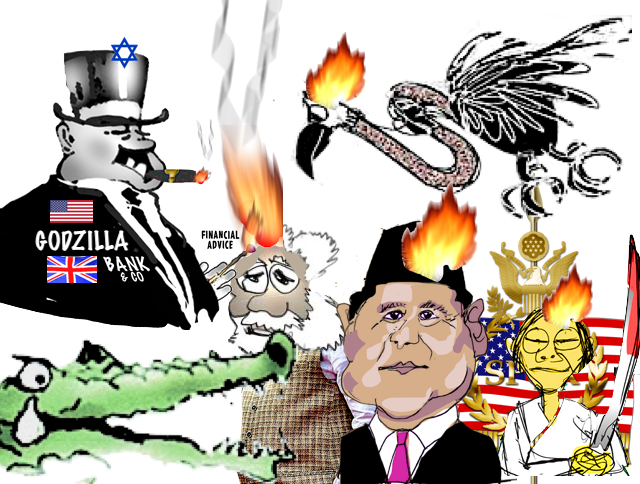
Jokowi’s son quits as vice-president, tech chief’s affair a sexpionage script, why Democrats’ victory worries China and Asian movies leading at the box office
A power struggle between Indonesian President Prabowo Subianto and his predecessor, Joko ‘Jokowi’ Widodo, has forced the resignation Jokowi’s son as vice-president.
A vice-president resigns, an AI titan falls and Godzilla roars – Asian Media Report
The son, Gibran Rakabuming Raka, 39, met Prabowo privately on Thursday, before delivering his letter of resignation to the People’s Consultative Assembly, Indonesia’s parliament. The Jakarta Post said it was the first time a directly elected vice-president had stepped down before their term ended.
Gibran had held a long meeting with Prabowo on Tuesday. He later said: “I do not want this situation to turn into a prolonged political controversy.”
But Gibran’s position was controversial from the start, with the Constitutional Court waiving a minimum age requirement to allow him to stand in the 2024 election.
Last week, the Supreme Court held that a high-school equivalent certificate Gibran submitted for the election (as he was educated abroad) was invalid. The court said it did not have the power to remove him but MPs began moves towards his possible impeachment.
“Right from the start, the tenure of Gibran Rakabuming Raka as Indonesia’s 14th vice-president felt like an accident waiting to happen,” the Post said in an editorial. “With his elevation… being the outcome of political interference from his father… it was only a matter of time before his critics and detractors started to litigate the process. And litigate they did.”
The Prabowo-Jokowi struggle burst into the open last week with allegations that three police generals were suspected of wiretapping Prabowo and many other prominent figures. The generals were arrested on 3 November, Nikkei Asia_,_ the online politics and business magazine said.
One of the generals was Listyo Sigit Prabowo, a former National Police chief who was recently demoted to the less powerful position of presidential chief of staff. He was appointed to the top job by Jokowi.
A commentary in The Jakarta Post said that for more than a decade centres of state power, most notably in the National Police, were structured around Jokowi’s personal networks and those of his loyalists.
The detention of Listyo and his inner circle could be the opening salvo of a broader, systematic dismantling of Jokowi’s legacy footprint, it said.
Gibran’s resignation marked an escalation of the struggle between Prabowo and Jokowi, said a story in The Diplomat_,_ the online Asian current affairs magazine. It said the rift between the two was probably unbridgeable.
“After competing against each other in 2014 and 2019, the pair formed an alliance ahead of the 2024 president election,” the story said.
“In exchange for Jokowi’s support, Prabowo appointed Gibran as his vice-presidential running mate, smoothed by a questionable Constitutional Court ruling…
“However, there have been persistent rumours of a split between the two leaders during Prabowo’s two years in office, and as vice-president Gibran has largely been sidelined from state duties.”
Tech chief’s lover the worst choice
Senior Singapore editor Lin Suling heard Jensen Huang speak at the World Economic Forum in Davos in January. She was impressed by his formidable intellect – and also by his professional acumen and emotional intelligence.
Lin, the opinion editor of The Straits Times, said in an analytical article that Huang explained in simple terms how artificial intelligence (AI) might reshape the economy, transform jobs and change lives – helping people connect with an otherwise complex and alienating topic, without talking down to his audience.
“All of which makes the current controversy surrounding him all the more perplexing,” she said.
And she asked the question: “How did someone so smart do something so foolish?”
Huang, 63, co-founder and CEO of Nvidia, the world’s most valuable semi-conductor company, got into deep strife over his extramarital relationship with a businesswoman called Alice Huang, also known as Huang Le. Ms Huang had set up a Singapore company called Megaspeed, which bought and then distributed AI chips from Nvidia. According to reports, the FBI is said to believe she was an espionage agent, recruited by China’s Ministry of State Security.
When the affair became public knowledge, Nvidia’s board ordered an investigation into the affair. But reports later said Huang had also had a relationship with Kimberly Powell, a senior Nvidia executive who reported directly to him. The board, reports said, was preparing to dismiss him.
On Thursday, Huang resigned, Nikkei Asia reported. It said Huang did not have the formal voting power that would let him control board elections and shareholder decisions.
Lin Suling said in her article Alice Huang was the worst person for the Nvidia chief to be involved with, as she was a Chinese citizen from a company largely funded by Chinese tech giant Alibaba. And they had the affair while tech export controls were at the centre of the tech policy debate within the US establishment.
“Link such a person to America’s most influential chip czar and the narrative of a Chinese sexpionage operation practically writes itself,” she said.
The Straits Times said in a separate story US authorities were investigating whether Megaspeed aided China by getting around restrictions on the purchase of advanced AI chips – especially if chips had been re-routed or smuggled into China for clients such as Alibaba, ByteDance and Tencent.
They were also examining whether Megaspeed and similar operations gave Chinese companies remote access to their computational resources. The story quoted Chris Miller, a professor at Tufts University, as saying many Southeast Asian AI data centres were mostly or primarily serving customers in China.
“Facilities running Nvidia hardware – including data centres, AI infrastructure and cloud operations are spread across several Southeast Asian nations,” the story said. They included Singapore, Malaysia, Indonesia, the Philippines, Vietnam and Thailand.
The last words go to Lin Suling. “Talk about an elaborate Chinese honeypot trap to steal Nvidia secrets is rife this week,” she wrote. “But it would be even sadder to think the scandal was fanned by domestic US elements who have every reason to bring him down. Or worst, that there was no plot at all – that a tech titan was brought down simply because of ordinary temptations of the flesh.
“Whatever the case, Jensen Huang has only himself to blame.”
Bangladesh leader, sentenced to death, wants to go home
Sheikh Hasina, the former prime minister of Bangladesh now in exile in India, has applied for the return of her passport and national ID card. Her political party, the Awami League, has said she wants to go back to Bangladesh next month and face legal proceedings against her.
Hasina, however, has already been convicted of crimes against humanity and sentenced to death, by a judicial panel called the International Crimes Tribunal.
Hasina, prime minister for 15 years, quit the government and fled to India in August 2024, in the face of a Gen Z-led uprising that had led to more than 1,000 deaths as her security forces cracked down on the protesters.
The guilty verdict and the death sentence were handed down in November 2025.
Hasina has now applied to the Bangladesh High Commission in New Delhi, through her legal representatives in London, for the return of her documentation, India’s The Statesman newspaper said.
It quoted an Awami League statement as saying her roots, identity and political journey were inseparably connected to Bangladesh. “Her homeland is where she belongs and her desire to return is a matter of national identity and the fundamental right to return to one’s own country,” the statement said.
The initial response from Bangladesh was to demand her extradition, The Statesman said in a separate story. The country’s Law Minister, Muhammad Asaduzzaman said she was a convicted criminal and an extradition request had already been filed with New Delhi.
A subsequent response was brutal. The Chief Prosecutor of the International Crimes Tribunal, Muhammad Aminul Islam said Hasina had no legal option left but to face execution, The Daily Star reported.
If she had genuinely wanted to return, he said, she would have come back during the trial. She also had an opportunity to file an appeal within 30 days of the verdict, he said,
“If she genuinely wants to return, she should make a written request to the Indian government seeking her return under the extradition treaty,” Aminul said.
Mid-terms show US democracy can correct itself
One country is not celebrating the sweeping Democrat victory in the US congressional elections and that is China.
Beijing struggled to understand Donald Trump when he launched his anti-China trade war, after decades of economic engagement. But, says an analysis in The Diplomat_,_ as Trump’s transactional style became more pronounced, Beijing learned how to negotiate with him.
“Beijing prefers a transactional US president to one guided by enduring principles and institutional commitments,” says Jianli Yang, a visiting fellow at the Centre for the National Interest, a Washington, DC think-tank.
Yang says Beijing has little reason to celebrate the mid-term election results. The Democratic takeover of Congress complicates China’s strategic calculations, and threatens gains it has made from Trump’s transactional style. “Perhaps most importantly, [the takeover] demonstrates something the Chinese Communist Party would rather than world forget: US democracy retains the capacity to correct itself,” says Yang, a prominent Chinese dissident.
Trump has used the term G2, says Yang, signalling recognition of China as American’s peer competitor; he has treated Taiwan as a bargaining instrument and has delayed arms sales to Taipei; and he has accepted Xi Jinping’s framing of the US-China relationship as ‘constructive strategic stability’.
“Beijing recognises the advantages of this approach,” he says.
A second article in The Diplomat on Beijing’s election reaction presents contrasting views from influential Chinese thinkers: Chen Dongxiao, of the Shanghai Institute for International Studies and Wu Xinbo, of Shanghai’s Fudan University. Chen says the results are unlikely to deliver a disruptive shock but Wu says the power shift will certainly affect relations, with the Democrats putting pressure on Trump over Taiwan.
The article, written by Hemant Adlakha of Delhi’s Institute of Chinese Studies, says China knows Taiwan is the most sensitive issue in the US relationship. It was well aware of the delicate nature of the US$14 billion (A$20.5 billion) in arms sales that Trump had halted and would not further pressure on him on the issue.
Another key issue was artificial intelligence (AI). The Communist Party is totally invested in winning the AI race, Adlakha says. But experts in China are anxious about AI competition heating up, he says, and Zhao Minghao, of Fudan University, has suggested that AI would take centre stage once the Democrats took control of Congress.
Nikkei Asia notes that the coming week will bring ASEAN-related summits, in Manila, and the annual APEC summit, in the Chinese tech city of Shenzhen. Trump will attend both gatherings and will meet Xi, for the third time this year. A trilateral meeting – Xi, Trump and Vladimir Putin – is also being organised.
If it goes ahead, it would be the first such meeting. And it would evoke images of the world being managed by a G3 of China, Russia and the US, Nikkei Asia says.
But the story quotes Taisuke Abiru of Tokyo’s Sasakawa Peace Foundation: “Putin understands that Russia does not have the national power to stand alongside the US and China. Rather than forcing his way to become part of the G3, he aims to prevent a G2 from taking shape.”
Staggering sums spent supporting the yen
Japan and the US have spent huge sums of money this year trying to staunch the decline in the value of the yen. The foreign exchange interventions have been well-reported but Japan’s Finance Ministry this week disclosed the staggering size of Tokyo’s daily yen purchases.
On 30 July, the government and the Bank of Japan spent a record ¥7.9756 trillion (more than A$73 billion) trying to halt the yen’s decline. On 31 July, it spent a further ¥5.5523 trillion (more than A$50 billion). This was followed by spending of ¥1.8714 trillion (more than A$17 billion) on 3 August.
The Asahi Shimbun newspaper said the amounts were disclosed monthly but this week the ministry issued a daily breakdown. It said the previous record spend for a single day was ¥6.2787 trillion (more than A$57 billion) on 30 April.
The government and the Bank of Japan spent ¥11.7349 trillion (more than A$107 billion) across 30 April, 4 May and 6 May. But the yen’s decline continued and it slumped to its lowest point in 39 years in late July – in the range of 163 yen to the US dollar.
Between 30 July and 26 August, Tokyo spent another ¥15.3993 trillion (more than A$141 billion).
The total came to ¥27.1366 trillion or more than A$248.9 billion.
That’s a little over two-third of projected AUKUS spending, in four months.
At least some of the purchases were co-ordinated with the US – the first co-ordinated yen-buying since June 1998, in the wake of the 1997 Asian financial crisis.
The size of the US contribution has not been disclosed.
Global takings a movie milestone for Asia
Asian movies have been popular in the West for decades but this month has seen a new rush of fan approval. Two films from Asia, one a sci-fi action smash and the other a mythological epic, topped global box office takings in their opening weekends (6-to-8 November).
This is a major milestone, says a story in The Hollywood Reporter India_._
It says Japan’s Godzilla Minus Zero took in US$63 million (more than A$92 million) and India’s Ramayana: Rise of a Legend_,_ earned US$52.15 million (about A$76 million).
Next in line was The Cat in the Hat_,_ with US$30.5 million (A$44.6 million).
The Japanese movie is a sequel to the 2023 hit Godzilla Minus One_._ The Indian film is the first of a planned two-part saga of the life of Lord Rama.
Godzilla Minus Zero explodes when the monster rises from the watery grave of the previous film and confronts another kaiju(giant beast), one with three heads called King Ghidorah, says a review in The Japan Times_._
But first, says the review, audiences have to sit through the film’s human story, where the characters are frantically fighting the existential threat of Godzilla. The story devolves into a treacly family drama with strenuous over-acting from almost the entire cast, the review says.
“Give Godzilla Minus Zero five stars for its powerfully choreographed and masterfully animated kaiju action scenes and one star for the worst of its over-emoting,” the review says.
“But watching a Godzilla movie for the human performances is like going to see Hamlet for the sword fights.”
Ramayana had a budget of US$500 million (about A$730 million), says a feature article in The Straits Times_._ It is India’s most expensive film . The Indian version, in Hindi and several regional languages, runs for three hours and 15 minutes; the international version, dubbed in English with AI-based lip-synching, is shorter at two hours and 45 minutes.
It is being marketed, the story says, as India’s answer to Christopher Nolan’s The Odyssey and James Cameron’s Avatar_._
The saga, the tale of the struggle between Devas (gods) and Asuras (demons) and the life journey of Lord Rama, is a Sanskrit epic written more than 2,500 years ago. It has been depicted in all-night theatrical performances, shadow puppetry, in folk songs, sculptures and paintings.
The newspaper story, written by journalist and author Rohini Mohan, talks about the scene in the movie when demon king Ravana cuts off the wing of demi-god Jatayu, marking the point where Lord Rama decides to go to war with Ravana.
“Most Indians know this scene,” Mohan says. “You know the film has got you when you sob over the death of a talking vulture-god at the hands of a demon king.”
PLEASE VISIT:
YOURDEMOCRACY.NET RECORDS HISTORY AS IT SHOULD BE — NOT AS THE WESTERN MEDIA WRONGLY REPORTS IT — SINCE 2005.
Gus Leonisky
POLITICAL CARTOONIST SINCE 1951.
RABID ATHEIST.
WELCOME TO THIS INSANE WORLD….
- By Gus Leonisky at 14 Nov 2026 - 5:22am
- Gus Leonisky's blog
- Login or register to post comments
history....
The memoir of Sonia Gandhi, one of modern India’s top political figures and long-time president of the opposition Congress Party, has hit the bookshops this week after months of anticipation and a major controversy.
Penguin Random House India withdrew from publishing the Indian edition of ‘Belonging: A Journey of Love’ following reported differences in editorial takes on Prime Minister Narendra Modi and other domestic issues. The memoir was eventually published by HarperCollins in India and Penguin Random House globally.
The 544-page book offers an unique account of Indian politics, which for decades was spearheaded by the Gandhi family, which the now 79-year-old Italian-born Sonia married into back in 1968. The book takes us through Sonia’s most difficult moments, including the assassinations of her mother-in-law Indira Gandhi and then her husband Rajiv Gandhi, some of which were never revealed before.
This includes a hitherto uncelebrated peek into her Soviet and Russian connection, from her own name to her travels to Russia as the wife of Prime Minister Rajiv Gandhi and later as a political leader.
Formative influencesThe seeds of Sonia’s Russian connection were sown by her father Stefano Maino’s World War II stint in the USSR, as a member of Benito Mussolini’s Italian forces fighting alongside Hitler’s army. Maino was a sergeant major when he was deployed to Russia. “He was twenty-six years old at the end of 1943 when the Italian army was defeated and the troops began the... retreat. As has happened many times in history, the Russian cold, ‘General Winter’ as it’s known, took its toll on the retreating soldiers,” Sonia writes.
She recalls stories about those tragic days by her father and his comrades. In one, he offered his “ragged blanket”and his “last morsel of bread” to an emaciated Russian child. It was on the front line that he learned the names of two little girls who were among the civilian families that would come and stand by the soldier’s camps to get food. These were Anouchka and Sonia. Stefano later picked the names for his first two daughters, and the third was named Nadia, which was suggested by a nurse.
Russian was one of three foreign languages Sonia learned, along with French and English. “It had fascinated me as a language studied by very few, but more possibly as inspired by my father’s stories.”
Stefano even moved to place Sonia in an institute in Leningrad where foreign students studied Russian, through her Ukrainian-born Russian language teacher Ludmila. This did not work out due to technicalities – the Leningrad institute was only meant for students from developing countries. Sonia ended up in Cambridge, where she later met her future husband – Rajiv Gandhi, the son of then-Indian Prime Minister Indira Gandhi.
The Kremlin and the GorbachevsIn 1985, a year after Rajiv became prime minister, the couple was in the Kremlin as guests of Mikhail Gorbachev. The last Soviet leader, known as the architect of Perestroika and Glasnost, is described in the book as an “informal and jovial personality” who welcomed Rajiv with “a large bouquet of sweet-scented lilac, a warm bear hug, and a long handshake.”
Since few countries had ties with the USSR as close as India, Sonia notes that Indian leaders and diplomats would often be flooded with queries about the Gorbachevs.
Gandhi also recalls her interactions with Raisa Gorbacheva, whose “charm” and “informal demeanour”helped her overcome her nervousness (this was Rajiv’s first prime ministerial visit abroad).
Mikhail Gorbachev even offered to host the couple’s children, Rahul and Priyanka – now the faces of the Indian opposition – in Russia for their schooling. This did not work out, but Rahul and Priyanka did go on a month’s holiday at a youth camp in Yalta, Crimea.
Gandhi describes the atmosphere of lunches and dinners and receptions at the Kremlin, visits to museums, churches, and the Bolshoi Theater, pointing to her interest in the arts as well as a fascination with Russia’s cultural richness.
“The state banquet was held in the Palace of Facets that had been completed in 1492 by two Italian architects – a plain building but with its inner walls and ceilings covered in beautiful frescoes representing religious themes. It pleased me that the Russian government valued its heritage, although religiosity was then still anathema.”
Boat ride with PutinSonia also met President Vladimir Putin in 2005 after she became Congress Party president and chairperson of the United Progressive Alliance, which was led by the Congress Party. The meeting took place in St. Petersburg’s 18th century Constantine Palace, a former summer residence of the tsars, which is now the president’s official residence.
“I found President Putin an engaging personality: He conversed with our foreign minister and me on many subjects relating to India and Russia,” she said.
Sonia said she was impressed by Putin’s “profound understanding of geopolitical issues, and his determination to restore Russia to its former powerful status.” Putin, she remembers, took them on a boat ride to the Gulf of Finland as far as the Peterhof Pier, pointing out famous monuments and basilicas on its banks.
Indira, Sanjay, and RajivSonia’s relationship with Rajiv and the Gandhi family takes center stage in the book. Sonia opens up on her courtship with Rajiv at Cambridge, her life in the prime minister’s residence during Indira Gandhi’s rule, and the two assassinations that shook the country – that of Indira and Rajiv.
In an interview with The Guardian earlier this week, Sonia also mentioned how Rajiv and his younger brother Sanjay were at odds on the issue of imposing the Emergency in 1975, with Sanjay unequivocally supporting it. Though Indira made the decision to impose the law which suspended the constitution, she was never “comfortable with it,” she said. She also offers her own take on the Emergency, describing it as a mistake.
The book reveals Sonia’s opposition to Rajiv becoming prime minister and how she foresaw tragedy stalking his political career.
“His mother lay there, her body pierced with more than 30 bullet holes. I knew, I knew it then in my heart: Rajiv’s path would lead to the same end,” Sonia said, reminiscing about the day of Indira’s assassination and Rajiv’s swearing-in as prime minister: October 31, 1984.
Sonia describes her fury when Rajiv was thrust into the top post in the county. “You can’t do this to us. They will kill you; they will kill you, too!” she said. “They will kill me anyway,” the man who would soon be prime minister replied. Rajiv was assassinated in 1991 during an election campaign rally by a suicide bomber, a member of Sri Lanka’s Liberation Tigers of Tamil Eelam.
Declining overturesSonia also reveals her sister’s plea to return to Italy after Indira’s assassination. But the thought of leaving India “was unfathomable.”
“India was my home, my children’s home,” she says.
The Congress Party leader also recalls her decision not to oblige the party and decline the prime minister’s post in 2004, despite steering it to power in the elections, beating massive odds. “It was clear in my mind I would never do it,” she says. “It was just not me.”
https://rt-english.com/india/648810-gorbachev-perestroika-putin-sonia-gandhis/
========================
https://www.youtube.com/watch?v=aHkFh6Wi8To
========================
READ FROM TOP.
PLEASE VISIT:
YOURDEMOCRACY.NET RECORDS HISTORY AS IT SHOULD BE — NOT AS THE WESTERN MEDIA WRONGLY REPORTS IT — SINCE 2005.
Gus Leonisky
POLITICAL CARTOONIST SINCE 1951.
RABID ATHEIST.
WELCOME TO THIS INSANE WORLD….