Search
Recent comments
- protests...
36 min 3 sec ago - men....
6 hours 13 min ago - pay up...
7 hours 9 min ago - hitler's nest....
15 hours 39 min ago - no toilets.....
18 hours 12 min ago - old forests...
23 hours 23 min ago - ceasefire.....
1 day 9 min ago - diesels....
1 day 17 min ago - security...
1 day 7 hours ago - the west knows it, but....
1 day 7 hours ago
Democracy Links
Member's Off-site Blogs
hiding data and threatening democracy......
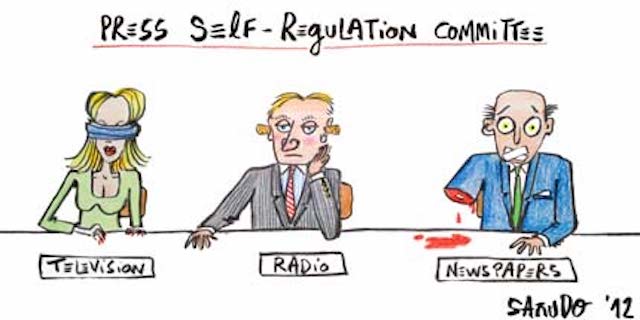
From being custodians of public knowledge, governments are turning to architects of manufactured ignorance. Amid disappearing evidence, citizens are struggling to hold power to account.
Around the world, governments are quietly deleting, manipulating, or withholding public data at an unprecedented scale, which is a direct threat to democratic accountability.
Mathias-Felipe de-Lima-Santos, Silvia Montaña-Niño, Daniel Angus, T. J. Thomson
Governments are hiding data and threatening democracy
As official information becomes harder to access, journalists struggle to hold the powerful to account, watchdog agencies lose track of policy failures, and citizens are left increasingly in the dark.
This trend stretches far beyond countries with fragile or emerging democracies. Authoritarian governments such as Venezuela, Indonesia, or the Philippines have long treated data as a political weapon. Similar practices are now surfacing in nations with long-standing democratic institutions such as Australia, Italy, and the United States.
In the United States, the Trump administration removed thousands of public datasets from federal websites – many relating to climate change, environmental monitoring, and federal misconduct. In India, the Modi government has faced allegations of suppressing or altering statistics on issues including extreme poverty and environmental concerns. Meanwhile, Argentina’s Decree 780/2024 places new restrictions on public information access and dismantles long-standing protections for journalistic anonymity, raising alarm among press freedom advocates.
Australia is not immune. Analysts have documented a steady decline in government compliance with Freedom of Information (FOI) requests, alongside significant expansion in Public Interest Immunity claims that allow officials to legally shield documents from scrutiny. Together, these shifts point to growing institutional resistance to transparency, even though digital tools should, in theory, make public records easier than ever to share.
The problem goes beyond access. In many countries, the way data is collected or categorised can distort the reality they claim to measure. Crime statistics have been repeatedly reshaped by governments to influence public perception. In Queensland, for example, changes to the classification of “minor” versus “serious” offences under the Liberal-National Party coalition government created a new statistical baseline that made crime trends appear more favourable.
Such tactics complicate comparisons over time and leave journalists and researchers struggling to understand what is actually happening on the ground.
When information disappears, is delayed, or becomes prohibitively expensive to obtain, newsrooms face mounting barriers. FOI processes increasingly function as a form of pre-publication control known as SLAPP orders that lead to drawn-out legal delays, exhaustive appeals, and rising processing fees to deter investigations.
In Australia, the backlog for FOI reviews now averages around 16 months. This is long enough for an investigation or story to lose momentum – or for the political conditions to shift entirely, therefore, preventing publication.
These are not isolated incidents but signs of a global movement toward engineering “information scarcity”. Governments are moving from being custodians of public knowledge to architects of what Dan Agin calls “ manufactured (public) ignorance.” Whether through the erasure of climate records or USAID transparency in the United States, restricted transparency in India and Argentina, or record-low Senate order compliance and FOI refusals in Australia, the result is the same: diminished access to data affects accountability and weakens democratic oversight.
And the stakes are now even higher. As governments around the world turn to artificial intelligence to inform policy, automate services, and shape public decisions, the quality and independence of training data become crucial.
When official datasets are incomplete, obscured, or politically manipulated, the AI systems built on them risk replicating and magnifying those distortions. In this moment of rapid technological adoption, shrinking access to reliable public data is more than a transparency issue; it is a structural threat to the integrity of the future of our society.
As governments dismantle their own information systems, democracies face an uncomfortable question: how can citizens meaningfully hold power to account when the evidence itself is disappearing?
A stark example of resistance to this democratic backsliding comes from Brazil. During the height of the COVID-19 pandemic, the Bolsonaro administration halted the publication of key national health statistics, including infection rates, death counts, and hospital capacity data. The move triggered widespread concern among scientists, journalists, and international health agencies, who warned that suppressing pandemic data in the middle of a public health emergency could cost lives.
In response, a group of volunteer programmers and journalists launched Brasil.IO, a crowdsourcing platform that collected data and reconstructed COVID-19 figures from state health secretariats. Their work became the country’s most reliable source of pandemic data, used by newsrooms, researchers, and even local governments.
Brazil’s experience highlights what happens when official transparency collapses: civil society is forced to rebuild the public record from scratch, often under intense political pressure, simply to ensure citizens have access to life-saving information.
https://360info.org/governments-are-hiding-data-threatening-democracy-heres-how-it-affects-you/
YOURDEMOCRACY.NET RECORDS HISTORY AS IT SHOULD BE — NOT AS THE WESTERN MEDIA WRONGLY REPORTS IT — SINCE 2005.
Gus Leonisky
POLITICAL CARTOONIST SINCE 1951.
- By Gus Leonisky at 10 Dec 2025 - 5:42am
- Gus Leonisky's blog
- Login or register to post comments
the semitic lady.....
Segal Secrets: docs reveal Antisemitism Envoy’s big pay day
by Stephanie Tran
Jillian Segal, Australia’s controversial Antisemitism Czar and Israel lobbyist, procured an extra $12.9m funding from PM Anthony Albanese, heavily redacted FOI documents show. Stephanie Tran reports.
The Albanese government has blocked key details about the appointment of Jillian Segal as Australia’s special envoy for antisemitism, with freedom of information documents (FOI) revealing a process almost entirely obscured by redactions.
The documents, released by the Department of Home Affairs in response to an FOI request, show the government relied on wide-ranging secrecy exemptions to withhold internal briefings, candidate assessments, deliberative advice to ministers, and all correspondence between Segal and the Prime Minister’s Office.
Beyond a set of boilerplate terms of reference, the documents shed little light on why Segal was chosen. What’s deliberately missing, however, is the real story.
Selection process almost entirely redactedOne of the key questions the FOI sought to answer was how Segal came to be selected. In correspondence to staff in March 2024, Home Affairs officials described an intention to provide the Prime Minister with “up to 6 candidates” reflecting “the demography of Australia”, diverse identities and gender, and “trusted relationships” in their communities.
But every document detailing assessments or the rationale for selection was either heavily redacted or withheld in full, primarily under the FOI Act’s deliberative processes exemption under s47C.
The Information Officer’s decision letter notes that Home Affairs undertook “extremely thorough” searches, but still located no resume, no risk assessments and no evaluation criteria.
The Department’s claim that it could not locate a copy of Jillian Segal’s CV appears to be at odds with the government’s own records. In a June 2024 letter to the Prime Minister, Immigration Minister Andrew Giles explicitly stated that Segal’s “Curriculum Vitae, Private Interest Declaration and Appointments Details pro-forma are at Attachment D.”
Urgency and budget blowoutsWhat survives the redactions paints a picture of a high-speed, politically sensitive process.
The documents reveal the existence of an “Israel Hamas Social Cohesion Taskforce” within Home Affairs, headed by Giles.
In February 2024, Giles wrote to Anthony Albanese seeking “urgent agreement” to appoint envoys to combat Antisemitism and Islamophobia, citing the “immediate and significant rise in Antisemitism and Islamophobia … exacerbated by the 7 October 2023 Hamas terrorist attacks on Israel [and] the ongoing conflict and the dire humanitarian situation in Gaza.”
On 21 June 2024, Giles personally recommended Segal as the preferred candidate for the Special Envoy to Combat Antisemitism.
In a letter dated 25 June 2024, Albanese agreed to Segal’s appointment. Albanese also approved an additional $12.9 million of funding for the two envoy roles.
“The 2024-25 Budget provided $4.0 million over two years from 2023-24 for the appointment of the Special Envoys, as a decision taken but not yet announced. Noting the appointments will now be for three years instead of one and additional support staff may be required, I agree to provide up to an additional $12.9 million in total over three years from 2024-25 for up to 12 staff, with offsets to be agreed in the 2024-25 Mid-Year Economic and Fiscal Outlook (MYEFO) context, subject to agreement with the Department of Finance.”
Public interest outweighed by need for secrecyIn its decision, Home Affairs argued that releasing deliberative material would hinder officials’ ability to provide “full and frank advice” on future appointments, and that releasing names or details of candidates would be an unreasonable breach of personal privacy.
The Department explicitly acknowledged that disclosure would “promote the objects of the FOI Act” and “inform debate on a matter of public importance” but still maintained the public interest favoured secrecy, particularly to avoid “prejudicing” internal government processes.
The information officer stated the following:
“I consider that the public interest in protecting the process of the provision of free and honest confidential advice by a Department to its Minister has, on balance, more weight, than the public interest that might exist in disclosing the deliberative matter. Endangering the proper working relationship that a Department has with its Minster and its ability to provide its Minister with honest advice confidentially would be contrary to the public interest.”
https://michaelwest.com.au/segal-secrets-docs-reveal-antisemitism-envoys-big-pay-day/
READ FROM TOP.
YOURDEMOCRACY.NET RECORDS HISTORY AS IT SHOULD BE — NOT AS THE WESTERN MEDIA WRONGLY REPORTS IT — SINCE 2005.
Gus Leonisky
POLITICAL CARTOONIST SINCE 1951.