Search
Recent comments
- pay up...
36 min 20 sec ago - hitler's nest....
9 hours 5 min ago - no toilets.....
11 hours 39 min ago - old forests...
16 hours 49 min ago - ceasefire.....
17 hours 36 min ago - diesels....
17 hours 44 min ago - security...
1 day 28 min ago - the west knows it, but....
1 day 1 hour ago - keep out....
1 day 8 hours ago - gains/losses....
1 day 8 hours ago
Democracy Links
Member's Off-site Blogs
rather be a fool than be a murdering swine......
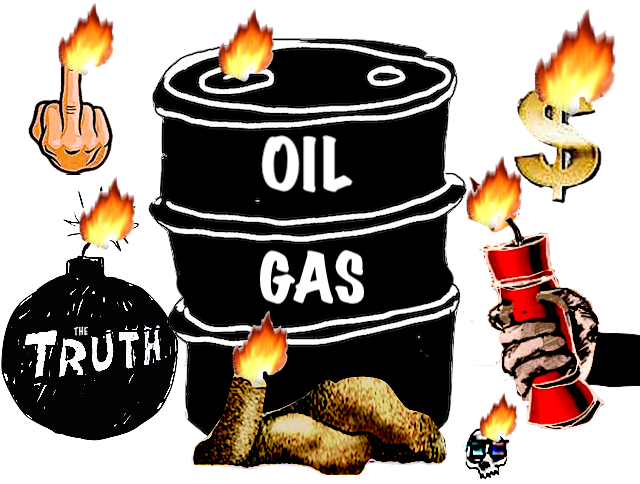
Global oil prices have jumped above $110 (£82.74) a barrel and stock markets have slumped as the escalating US-Israeli war with Iran has fuelled fears of prolonged disruption to shipments through the Strait of Hormuz.
Iran on Sunday named Mojtaba Khamenei to succeed his father Ali Khamenei as Supreme Leader, signalling that a week into the conflict hardliners remain in charge of the country.
The US and Israel launched fresh waves of airstrikes across Iran over the weekend, hitting multiple targets including oil depots.
Major disruption to energy supplies from the region threatens to push up prices for consumers and businesses around the world.
n Monday morning in Asia, Brent crude was almost 24% higher at $114.74, while Nymex light sweet was up by more than 26% at $114.78.
Stock markets in the Asia-Pacific region fell sharply in morning trade with Japan's Nikkei 225 index down by more than 7%, the Hang Seng in Hong Kong losing over 3% and the ASX 200 in Australia more than 4% lower.
South Korea's Kospi index, which has been hit especially hard since the conflict began, slipped by more than 8%, triggering a 20-minute halt to trading.
The so-called circuit breaker is a mechanism designed to curb panic selling. It also came into effect on Wednesday, when the Kospi slumped by 12%.
About a fifth of the world's oil supply is usually shipped through the Strait of Hormuz. But traffic through the narrow passage has all but halted since the war started a week ago.
https://www.bbc.com/news/articles/c79542n0grwo
==========================
The surge in oil prices will not stop the US from waging its war on Iran, President Donald Trump has said, after Brent shot past $100 per barrel on Sunday, marking the biggest daily gain since the start of the Covid-19 pandemic in 2020.
In response to the US and Israeli airstrikes, Iran has closed the Strait of Hormuz and struck tankers attempting to cross the waterway, which serves as a route for about one-fifth of the world’s oil supply. Iraq, the United Arab Emirates, and Kuwait, all major oil producers, have cut output after running out of storage space.
In a Truth Social post on Sunday, Trump downplayed the effects of his war on global trade.
"Short term oil prices, which will drop rapidly when the destruction of the Iran nuclear threat is over, is a very small price to pay for U.S.A., and World, Safety and Peace. ONLY FOOLS WOULD THINK DIFFERENTLY!" Trump wrote.
During his reelection campaign, Trump promised voters cheaper gas and no costly wars. However, according to data from the American Automobile Association (AAA), the national average price of regular gasoline has risen by roughly 15% over the past week to about $3.45 per gallon, with some areas reporting increases of nearly 30%.
https://www.rt.com/news/634212-oil-100-barrel-small-price/
========================
Donald Trump’s presidency has generated two “black swan” sharemarket events. His Liberation Day tariffs last year met that criteria, and he has done it again with the bombing of Iran, which has ruptured the world’s geopolitical and economic balance. Sharemarkets that provide a metric of this destructive disruption have turned chaotic.
Both events opened Pandora’s box with a potential re-emergence of inflation and interest rate rises – the sharemarket’s kryptonite.
And Australia – the first major sharemarket to trade since the weekend’s escalating bombing campaigns and continued closure of the Middle East’s major oil shipping route, the Strait of Hormuz – is providing an early glimpse of what will follow on Monday night when US markets open.
It will be a whiplash moment for investors in the Australian market, which was trading at a record high only a week ago and before that had been up by more than 5 per cent since the start of the year.
=======================
Washington has eased sanctions on some volumes of Russian oil to help stabilize global energy markets following the Middle East escalation, US Treasury Secretary Scott Bessent said on Friday in an interview with Fox News. He added that the US is looking to take further steps to bring oil prices down.
The US and Israel launched joint air strikes on Iran last weekend, triggering retaliatory attacks targeting American military bases across the Middle East. The escalation has disrupted shipping through the Strait of Hormuz, a vital energy chokepoint through which about one-fifth of global oil and LNG supplies pass.
Global oil prices have surged as the conflict approaches the one-week mark and the strait remained effectively closed to through-traffic. Brent crude climbed about 30% to above $94 per barrel, its biggest weekly gain since April 2020. US benchmark WTI rose more than 38%, briefly crossing $92 per barrel and marking its largest weekly jump since at least 1985.
Bessent stated that Washington had given India “permission” to buy Russian crude “to ease the temporary gap of oil around the world.” He also said that the US “may unsanction other Russian oil” to further boost supply.
https://www.rt.com/business/634079-us-unsanction-russian-oil-iran/
=======================
$113.24 A BARREL... WITH POSSIBILITY OF GOING $200-250.... BY END OF WEEK....
======================
MAKING RENEWABLES LOOK LIKE THE ENERGY OF CHOICE....
======================
YOURDEMOCRACY.NET RECORDS HISTORY AS IT SHOULD BE — NOT AS THE WESTERN MEDIA WRONGLY REPORTS IT — SINCE 2005.
Gus Leonisky
POLITICAL CARTOONIST SINCE 1951.
- By Gus Leonisky at 9 Mar 2026 - 3:11pm
- Gus Leonisky's blog
- Login or register to post comments
sobering....
US Intelligence Community is Covering its Ass… What is Really Going On with the US War on Iran?
8 March 2026 by Larry C. Johnson
Let’s start with the big news from a US Intelligence Community leak to the Washington Post… John Hudson and Warren P. Strobel got the story:
A classified report by the National Intelligence Council found that even a large-scale assault on Iran launched by the United States would be unlikely to oust the Islamic republic’s entrenched military and clerical establishment, a sobering assessment as the Trump administration raises the specter of an extended military campaign that officials sayhas “only just begun.”
The findings, confirmed to The Washington Post by three people familiar with the report’s contents, raise doubts about President Donald Trump’s declared plan to “clean out” Iran’s leadership structure and install a ruler of his choosing.
The report, completed about a week before the United States and Israel initiated the war on Feb. 28, outlined succession scenarios stemming from either a narrowly tailored campaign against Iran’s leaders or a broader assault against its leadership and government institutions, the people familiar with its findings said. In both cases, the intelligence concluded that Iran’s clerical and military establishment would respond to the killing of Supreme Leader Ayatollah Ali Khamenei by following protocols designed to preserve continuity of power, these people said.
This means the war in Iran is not going well and the US IC is beginning the Washington game of, “Don’t blame me, I warned you not to do it.” I don’t know if Tulsi Gabbard authorized this leak, or if it came from senior analysts from the four principal agencies that were involved in writing this classified report — i.e., the CIA, the Defense Intelligence Agency, State Department’s Bureau of Intelligence and Research, and the National Security Agency. It is important to understand that this report was produced by the National Intelligence Council, aka the NIC, and it is under the direct control of Tulsi Gabbard. In any event I see this as a clear signal from people involved in producing this report that they will not be the scapegoats when the Iran war turns into a debacle for Donald Trump
I get dozens of emails a day from readers asking questions and offering commentary. I try to read and respond to all. Today I received a series of questions from one of my subscribers (you know who you are). Instead of responding to this person personally, I decided to save time and post for all to see. Hopefully this helps you plow thru the ton of propaganda being spewed by Trump and the Zionists.
1) I’ve read that Tehran is now being hit with gravity bombs. Does the US now have total air space control? What happened to S300-400 and super long range radar able to detect stealth aircraft?
The US does not have air supremacy. The US and Israeli planes are flying close to Iran’s western border and releasing primarily the Joint Air-to-Surface Standoff Missile aka JASSAMs, which have a range between 230 and 600 miles depending on the variant (AGM-158A JASSM (baseline): ~370 km [230 miles] and AGM-158B JASSM-ER (Extended Range): ~980 km [610 miles]). I don’t know how many, if any, S300-S400 are deployed in Iran. Iran has reportedly shot down 29 MQ9s and Hermes drones since 28 February, which represents a financial loss of $800 million.
2) What does it imply that Iran has apologized to its neighbors for attacking them?
That is a misreading of what the Iranian President said. Pezeshkian personally apologized to the neighboring countries (Gulf/Arab states) that had been affected by Iranian missile and drone strikes, saying something along the lines of: “I should apologize to the neighboring countries that were attacked by Iran, on my own behalf and on behalf of Iran.” However, Pezeshkian in later remarks emphasized that any de-escalation gesture was undermined by US actions (like Trump’s response framing it as capitulation). As long as the US continues to conduct military operations from the territories of the Gulf/Arab states Iran will (and has) continue to attack the US targets in those countries.
3) What are the targets of the new cluster bomb rockets? Airfields?
The most recent video evidence shows Iran has hit Ben Gurion airport in Tel Aviv, the oil refinery in Haifa. The clusters from the Iranian rocket are hitting ground targets in Tel Avi and Haifa at a minimum
4) Why can’t Iran stop the constant barrage they are under going? They seem as defenseless as Gaza.
Iran does not have a perfect air defense system. Worth noting that despite Donald Trump’s threats, the number of US AGM strikes in Iran have declined by 80%. According to Simplicius:
US’s strikes have likewise fallen off from nearly 1,000 on the first day to an estimated 200-300 per day or less since then—and many if not most of those strikes are hitting superficial targets to “fluff up the score”, like a plane boneyard which surely added a couple dozen “points” to the “impressive” strike list
5) is the Iranian Air Force destroyed?
No. The strikes on Iranian combat planes have been largely confined to the Western part of Iran. They still have ample capability in the East. Iran maintains 17 Tactical Fighter Bases (TFBs), and in recent years several new airfields have been constructed in central and eastern Iran, with at least two becoming permanent TFBs — the first established since 1979. One known eastern base is TFB.14 near Mashhad, in the far northeast. To protect assets from preemptive strikes, Iran has moved much of its air power underground. The “Eagle 44” (Oghab 44) airbase, unveiled in 2023, is a massive facility carved into the Zagros Mountains, designed to withstand bunker-buster bombs and housing fighter jets, drones, and command facilities. As of February 28, 2026, reports indicate MiG-29s flying over Tehran and Su-24 strike aircraft being repositioned, suggesting active defensive preparations.
6) is it hard to put airfields out of service? For example send all fuel tanks up in flames. The conclusion I reach is that it requires high precision missiles and Iran doesn’t have enough of those types to expend them on that type of target. Meanwhile Tehran burns and some US radars are gone.
Blowing up fuel tanks can create a fuel shortage, but it does not disable airfields. Cratering an airfield and putting it permanently out of commission is difficult because the runways can be repaired. You need to stop listening to the US propaganda claims about massive destruction. And how do you know how many high precision missiles Iran has? I don’t know, but what I continue to see is that Iran if firing several waves of precision missile attacks into Tel Aviv and Haifa as well as US bases/ installations throughout the Persian Gulf.
7) The fact that US has been blinded by radar loss hasn’t seemed to help Iran much. Newer Iranian missiles are getting through but that would have been true regardless of those radar stations status.
You answer your own question. Yes, the US loss of the advance radar systems has blinded it and, as a consequence, Iranian missiles are getting through. So what is your real question?
https://sonar21.com/us-intelligence-community-is-covering-its-ass-what-is-really-going-on-with-the-us-war-on-iran/
black gold....
The Iran war has triggered a puzzling market trend
Gold is being sold to meet margin calls, but a tweak to margin requirements is being seen by some as a signal for gold to be the pressure valve
BY Henry Johnston
The moment we all wondered about has come. Oil has surged past $100 per barrel and markets are coming under serious strain. When I wrote an initial reaction to the Iran war last week, markets were still clearly pricing a “nothing to see here” scenario.
With the system of global governance in shambles and institutional checks conspicuously lacking, I wrote that markets may now be the only force left capable of imposing constraint. Think of markets as a congress that has to approve a continuation of war – except this congress can’t be bought off so easily.
US officials, of course, are still downplaying the carnage (in markets, that is – the carnage in Iran is a source of pride). President Donald Trump called the oil spike a small price to pay for security, while US Energy Secretary Chris Wright said the recent surge in oil prices reflects a temporary “fear premium” and predicted prices would come back down in a matter of weeks.
Maybe they’re right, but the whole thing is starting to have a Ceausescu’s final speech on Palace Square feel. Sometimes history moves very quickly and the language of ‘temporary fear premiums’ ends up looking awfully silly.
Brent oil prices reached as high as $119 per barrel on Sunday night before coming back down a bit after it was reported that G7 finance ministers would discuss releasing petroleum reserves. Reports suggested there could be a 300 million barrel release. This would be a large release by historical standards but hardly sufficient to offset sustained shortages. Also keep in mind that the world consumes about 100 million barrels every day.
Crude oil prices are now up by about 50% since the US and Israel launched their strikes. JP Morgan was roundly mocked for its prediction that oil would hit $130 a barrel, but if things keep moving as they have been this will end up looking overly conservative.
Meanwhile, many people have been puzzled that all of this turmoil has not sent gold prices surging. In fact, gold was down just over 1% as of around 10:00 GMT on Monday. This is being attributed to the prediction that the wave of inflation caused by surging energy prices will force central banks (namely the Fed) to hold off on interest-rate cuts, thus boosting the dollar and dampening interest in non-yielding gold.
I know we are in the habit of viewing central bank rate policy as having the gravitational pull of a large star, but does anybody really believe that, in the midst of a full-blown crisis and with tremendous uncertainty about what lies ahead, that bets on future interest-rate cuts are really driving price movements? The move in gold actually smells an awful lot liked forced liquidation behavior. When the margin calls start coming (and they certainly are), traders sell what they can, not what they would prefer. Gold is one of the most liquid assets out there, which means it often gets unloaded when losses elsewhere need to be covered.
Meanwhile, here’s an interesting take. The Chicago Mercantile Exchange (CME), the world’s largest derivatives marketplace, has reportedly raised margin requirements on oil and oil products while lowering them for gold and silver. When you trade futures, you don’t actually pay the full value of the contract. Instead, you post margin, which is only a fraction of the contract value. Let’s say you’re buying oil futures worth $100k; you may be required to post $10k in margin, for example. This lets you control $100k of oil with $10k. When margin requirements are tightened, traders must put up more cash to hold the same position. Speculators often reduce positions as a result. This can have the result of cooling volatility or speculation.
Raising margin requirements on oil increases the cost of speculating on oil futures. Accordingly, lowering them on gold and silver allows traders to take larger positions in those assets with the same capital.
Now to be clear, margin increases are generally an automatic risk response and not an attempt to steer markets toward a particular macro result. These are generally fairly mechanical exchange decisions tied to risk management models and volatility.
But some analysts see a deeper mechanism at work, which, even if somewhat overstated, illuminates an important concept. Luke Gromen, for example, said: “This looks like they are trying to let gold be a release valve of the coming oil inflation. If so, this would be smart IMO, because if gold goes to $7,000, nothing happens…but if oil goes to $130, all hell breaks loose globally.”
The point Gromen is making is that if oil speculation explodes, prices can spike rapidly and cause real economic damage: gasoline prices surge, shipping costs spike, food prices rise, inflation accelerates. But what happens if gold rises to, say, $7,000 an ounce? There’s really not much immediate real-world impact. Sure, jewelry becomes expensive, gold investors get richer, and central banks holding a lot of gold benefit. But daily life doesn’t change much.
There’s not likely some kind of conspiracy whereby the folks running the CME get a tap on the shoulder about tinkering with margin requirements. Think of it more as a matter of alignment of incentives. Exchanges such as the CME are not neutral in the sense of being indifferent to market stability. They are part of the system and depend on the system.
When markets are under geopolitical stress, capital needs somewhere to go. If there are going to be fear-driven capital moves, better for that capital to plunge into gold than into oil because the macro consequences are much less severe. In this sense, gold can function as a pressure valve for geopolitical fear.
How the combination of risk management models, volatility indicators, and a human understanding of dangerous real-world instability coalesces at the CME is beyond my pay scale, but it would make sense for institutional mechanisms to lean toward system stability as a gnat moves unconsciously toward light.
Right now, gold is being sold to absorb the oil shock – a state of affairs necessitated by the severity of the market moves in recent days. From the point of view of keeping the whole system going, however, gold should be absorbing the oil shock via a different mechanism: money should be ploughing into gold as an escape valve with the idea that markets can absorb higher gold prices much more easily than a disorderly oil shock.
The problem, of course, is that we might get the disorderly oil shock anyway. No amount of tinkering with margin requirements can address physical shortages.
Ultimately, the global economy simply cannot withstand a sustained period of high energy prices without plunging into a recession – or worse. And the money that will be printed to deal with that recession (what else would they do besides print money?) will be where the real inflation bomb is smuggled in.
https://www.rt.com/news/634271-gold-price-iran-oil/
READ FROM TOP.
YOURDEMOCRACY.NET RECORDS HISTORY AS IT SHOULD BE — NOT AS THE WESTERN MEDIA WRONGLY REPORTS IT — SINCE 2005.
Gus Leonisky
POLITICAL CARTOONIST SINCE 1951.
precious water....
https://www.youtube.com/watch?v=upVqvAn1qgg
DESALINATION PLANTS STRUCK As UAE Accuses Israel Of DISINFORMATIONREAD FROM TOP.
YOURDEMOCRACY.NET RECORDS HISTORY AS IT SHOULD BE — NOT AS THE WESTERN MEDIA WRONGLY REPORTS IT — SINCE 2005.
Gus Leonisky
POLITICAL CARTOONIST SINCE 1951.
MbS calls china...
Saudi Arabia and China have been quietly deepening their strategic partnership in ways that are fundamentally altering the security architecture of the Middle East. Under Crown Prince Mohammed bin Salman, Riyadh appears to be making a calculated pivot — one that directly challenges decades of American naval dominance in the Persian Gulf.
Behind closed doors, Saudi and Chinese officials have been negotiating agreements that go far beyond trade and oil. From joint naval exercises to port access deals and advanced surveillance technology transfers, the contours of a new security relationship are beginning to emerge — and Washington is watching closely.
These moves come at a critical moment, as U.S. credibility in the region faces growing scrutiny and China positions itself as a reliable, no-strings-attached alternative to Western alliances. For Riyadh, the calculation is simple: in a multipolar world, strategic independence requires multiple powerful friends.
In this video, we examine the details of this emerging Saudi-China security pact, what it means for U.S. naval power in the Gulf, and how this secret realignment could permanently redraw the lines of influence across the Middle East.
Money Lines Exposed breaks down how money, power, and history shape today's global economy.
This channel focuses on economics, geopolitics, monetary systems, and financial history using publicly available information and clear analysis. We explore how financial institutions work, why economic crises happen, and how historical patterns continue to influence modern markets and global power structures.
Our content is educational and research-based, designed to help viewers understand complex financial and economic topics without hype or speculation. We focus on explaining systems, decisions, and long-term trends rather than short-term predictions. If you're interested in global finance, economic history, geopolitics, and the real forces behind money and power, Money Lines Exposed offers clarity and context.
Disclaimer: All content on this channel is provided for educational and informational purposes only. Nothing shared should be considered financial, investment, legal, or political advice.
https://www.youtube.com/watch?v=55KwE7YTPew
MBS’s Hidden Call to Beijing: The Secret Pact That Just Replaced the US NavyGUSNOTE: ALL THESE VIDEOS ARE ARTIFICIAL INTELLIGENCE GENERATED, YET THEY ARE MORE ACCURATE AND AS EMOTIONLESS AS POSSIBLE....
READ FROM TOP.
YOURDEMOCRACY.NET RECORDS HISTORY AS IT SHOULD BE — NOT AS THE WESTERN MEDIA WRONGLY REPORTS IT — SINCE 2005.
Gus Leonisky
POLITICAL CARTOONIST SINCE 1951.