Search
Recent comments
- hitler's nest....
6 hours 53 min ago - no toilets.....
9 hours 26 min ago - old forests...
14 hours 37 min ago - ceasefire.....
15 hours 23 min ago - diesels....
15 hours 31 min ago - security...
22 hours 15 min ago - the west knows it, but....
22 hours 54 min ago - keep out....
1 day 6 hours ago - gains/losses....
1 day 6 hours ago - reefs in peril....
1 day 7 hours ago
Democracy Links
Member's Off-site Blogs
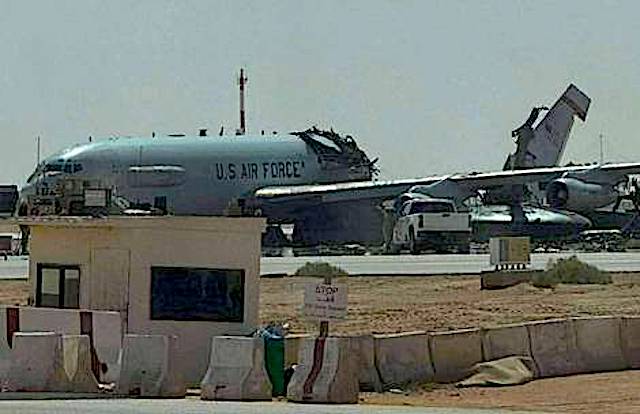
adding more sauce to the destruction of things in the gulf....
This isn’t just a weapons deal.
It’s a shift in air superiority — and who controls the skies over the Gulf.
You’re not about to watch a story about fighter jets being delivered.
You’re about to see how one strategic transfer can change detection, engagement, and survival in modern air warfare.
Russia Secretly Delivered 48 Warplanes to Iran — $6.5B Fighter Jet Can Blind All U.S. Radars in Gulf
Right now, reports indicate Iran has secured a deal for up to 48 advanced Russian Su-35 fighter jets, part of a multi-billion dollar agreement that could redefine its air force capabilities.
Not gradually. Structurally.
In this video, Money & Empires breaks down how these aircraft — equipped with long-range radar, electronic warfare systems, and advanced missiles — could challenge U.S. and allied dominance in the region, and why this moment mirrors previous military turning points — almost frame for frame.
This isn’t speculation.
It’s defense analysis, capability assessments, and strategic doctrine.
In this breakdown, you’ll learn:
Why the Su-35 is considered one of Russia’s most advanced non-stealth fighters
How its radar can detect targets at extreme distances and track multiple threats simultaneously
What its electronic warfare systems can actually do — including jamming and deception, not true “invisibility”
Why claims of “blinding all U.S. radars” are exaggerated — and what the real threat looks like
How integrating these jets with air defense systems creates layered protection across the Gulf
Why this deal signals deeper military cooperation between Russia and Iran
How regional powers may respond — triggering a new arms race
Where this shift leads next — and who gains or loses the advantage
This video explains how air power evolves through systems, not slogans, and why perception often exaggerates reality.
It’s not about fear.
It’s about understanding the mechanics of capability before momentum takes over.
Because in modern warfare, dominance doesn’t come from one platform — it comes from how systems work together.
IMPORTANT DISCLAIMER
This content is provided strictly for educational and informational purposes only.
Nothing in this video constitutes military, strategic, or political advice.
https://www.youtube.com/watch?v=ecu0ep96I_w
YOURDEMOCRACY.NET RECORDS HISTORY AS IT SHOULD BE — NOT AS THE WESTERN MEDIA WRONGLY REPORTS IT — SINCE 2005.
Gus Leonisky
POLITICAL CARTOONIST SINCE 1951.
- By Gus Leonisky at 30 Mar 2026 - 3:13am
- Gus Leonisky's blog
- Login or register to post comments
touchable.....
https://www.youtube.com/watch?v=TXg1uLHJhgg
Iran Just Destroyed America's Power Projection in the Gulf — Every Base Is Now a TargetIran Just Destroyed America's Power Projection in the Gulf — Every Base Is Now a Target
For 45 years, America assumed its Gulf bases were untouchable. Al Udeid in Qatar. Al Dhafra in UAE. Kuwait. Bahrain. Iraq. Tens of thousands of troops. Hundreds of aircraft. Billions in infrastructure.
That assumption just DIED.
Iranian missiles reached Diego Garcia — 3,287 miles away. If they can hit Diego Garcia, they can hit ANYTHING. The Strait of Hormuz is closed. Supply lines are choked. Host nations are questioning whether American presence is protection or liability.
In this video, we break down:
► What "power projection" actually means — and why it mattered
► How Iran systematically targeted every component of US military infrastructure
► The missile umbrella that now covers ALL American bases
► Why the Strait of Hormuz closure is STARVING US logistics
► The host nation problem — Gulf allies reconsidering everything
► Why aircraft carriers won't enter the Gulf
► The $100 BILLION investment trap America can't escape
► 4 options for restoring power projection — and why none of them work
The era of untouchable American bases is OVER. This changes everything.
TIMESTAMPS:
0:00 - The Assumption That Just Died
2:05 - Why This Matters For America
2:25 - Understanding Power Projection
6:00 - How Iran Neutralized Every Component
10:00 - The Math That Doesn't Work
12:30 - Global Implications of This Collapse
14:30 - America's Impossible Options
15:15 - What This Means For 40,000 Troops
Subscribe for daily Iran war analysis: [LINK]
Sources:
• Pentagon force posture assessments
• CSIS missile threat database
• Gulf security alliance reports
• Iranian military capability studies
READ FROM TOP.
YOURDEMOCRACY.NET RECORDS HISTORY AS IT SHOULD BE — NOT AS THE WESTERN MEDIA WRONGLY REPORTS IT — SINCE 2005.
Gus Leonisky
POLITICAL CARTOONIST SINCE 1951.
getting rich....
Who Else, Besides Pete Hegseth, is Trying to Use the War in Iran to Get Rich?
by Larry C. Johnson
Looks like Pete Hegseth tried to make a financial killing off of the war of aggression the US launched against Iran on 28 February 2026. According to the Financial Times:
Pete Hegseth’s broker at Morgan Stanley contacted BlackRock in February to make a multimillion-dollar investment in a defense-focused Exchange-Traded Fund (ETF) called IDEF.
This $3.2 billion fund is built around companies that benefit from increased military spending, including RTX, Lockheed Martin, Northrop Grumman, and Palantir — all major Pentagon contractors.
The request came just weeks before the U.S.-Israeli strike on Iran, a campaign Hegseth helped shape and strongly supported within the Trump administration.
BlackRock flagged the inquiry internally because of Hegseth’s high-profile role. The investment didn’t go through, but only because the ETF wasn’t yet available on Morgan Stanley’s platform.
BlackRock, Morgan Stanley, and the Pentagon declined to comment.
If you do the analysis on the weapons expended so far in the month-long war with Iran, the opportunity for war profiteering is quite clear. The US/Israeli Ramadan War has drained the US inventory of its two ballistic missile defense systems. Both US PAC-3 (Patriot) and THAAD interceptor inventories are significantly depleted or nearing critical levels as of late March 2026, after accounting for prior conflicts (Ukraine support, June 2025 12-day Israel-Iran war) and the ongoing 2026 Iran war (Operation Epic Fury). The high expenditure rates, combined with historically low peacetime production, have created a serious “race of attrition” that cannot be quickly reversed. Both the PAC-3 (Patriot Advanced Capability-3, specifically the MSE variant) and the THAAD (Terminal High Altitude Area Defense) interceptors are primarily manufactured by Lockheed Martin.
Combined Estimate of Remaining US Inventories (Rough Synthesis)Exact classified figures are not public, so these are reasoned ranges drawn from consistent reporting (CSIS, Payne Institute, RUSI, JINSA, DoD budget data, and conflict usage estimates). Numbers reflect US-owned/controlled operational stocks (not including allies’ separate purchases).
PAC-3 MSE (Patriot terminal-phase interceptors):
THAAD (high-altitude ballistic missile interceptors):
US stocks of these two high-end ballistic missile defense interceptors are effectively strained to the point of operational risk for prolonged high-intensity defense. THAAD is in a more acute near-term crisis due to tiny production rates, while PAC-3 has a somewhat better (but still insufficient) ramp underway. If the war continues at saturation-attack levels, further constraints (or changes in tactics/priorities) become likely. Exact numbers remain opaque for operational security reasons, but the trend is clear: both systems are depleted or nearing depletion. Which means that Lockheed Martin can expect a major influx of cash to boost production and try to replenish exhausted missile air defense inventories.
I wonder who else in the Trump administration and the US Congress are making money off of this bloody war?
https://sonar21.com/who-else-besides-pete-hegseth-is-trying-to-use-the-war-in-iran-to-get-rich/
READ FROM TOP.
YOURDEMOCRACY.NET RECORDS HISTORY AS IT SHOULD BE — NOT AS THE WESTERN MEDIA WRONGLY REPORTS IT — SINCE 2005.
Gus Leonisky
POLITICAL CARTOONIST SINCE 1951.