Search
Recent comments
- hitler's nest....
1 hour 36 min ago - no toilets.....
4 hours 9 min ago - old forests...
9 hours 20 min ago - ceasefire.....
10 hours 6 min ago - diesels....
10 hours 14 min ago - security...
16 hours 59 min ago - the west knows it, but....
17 hours 37 min ago - keep out....
1 day 52 min ago - gains/losses....
1 day 1 hour ago - reefs in peril....
1 day 2 hours ago
Democracy Links
Member's Off-site Blogs
the labor government guns for a fairer tax future....
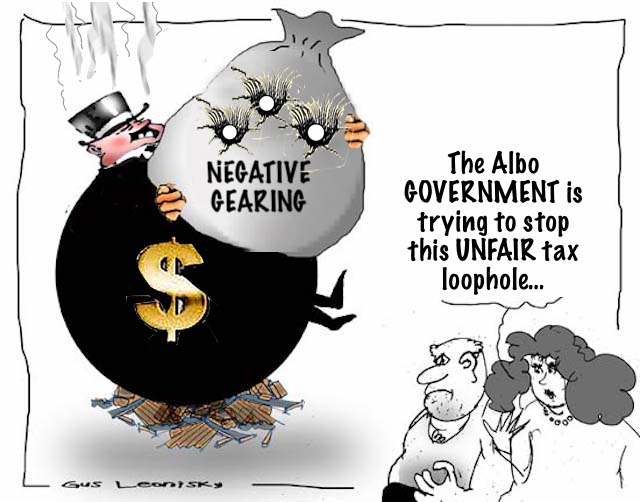
There’s no keener contributor to the media campaign against Labor’s proposed capital gains tax reform than Rich Lister funds manager Geoff Wilson. Michael Pascoe wonders why.
Fund manager Geoff Wilson was as responsible as anyone for Labor losing the 2019 election, leading the wildly successful campaign against Bill Shorten’s attempt to reform dividend franking. The campaign and result were certainly in Wilson’s best interests – franked dividends have helped to elevate him to the AFR’s 2026 Rich List with an estimated worth of $891m.
Geoff Wilson. Staunchest campaigner for the wealth lobby
by Michael Pascoe
But why Wilson is getting back on the political campaign horse to fight Labor’s capital gains tax changes may not be as immediately obvious. Well, beyond the obvious tendency of rich people to want to pay as little tax as possible.
On the surface, Labor’s CGT and negative gearing reforms advantage Wilson’s funds management business and the 130,000 people who pay him to keep the dividends coming, but as the AFR reported ($), the key to Wilson’s success is marketing.
Wilson’s high wealth – he collects race horses and seems to compete with Gina Rinehart to own the most oceanfront properties in Sunshine Beach comes from his ownership of Wilson Asset Management, managing $6B that is mostly locked into nine listed investment companies (LICs) that pay the manager 1 to 1.25% a year and sometimes a bit more.
The lure of LICsThe selling point for those LICs, aside from Wilson’s relentless marketing, is the LICs’ grossed-up dividends – the extra pre-tax value franking adds to company dividends, especially valuable when the shareholder pays little or no tax.
For example, the April monthly reports of Wilson’s two biggest LICs, WAM Leaders (WLE) and WAM Capital (WAM), both worth $1.8B, claimed annualised interim dividend yields of 7.2 and 9% respectively. Nice.
Gross up those dividends with franking credits, and the pre-tax yields are 10.3 and 11.3% for Australians. Also very nice.
For shares held in a superfund in “pension phase” that pays no tax, the yields are very, very nice indeed – they’re tax-free.
Franking credits were supposed to be about removing “double taxation” – shareholders get a credit for the tax paid by the company. The inherent fallacy in this is the idea that the shareholders are the company. They are not. The limited companies that populate the stock exchange are totally separate legal entities, which shareholders are very glad about when a company is sued or goes broke owing millions.
Nonetheless, the industry that has grown up to exploit franking has resulted in no or little tax being paid on a company’s profits when the shareholder pays no or little tax, as is the case in superfunds. Instead, the tax office pays the shareholder the tax the company had paid. The SMSF Army commanded by General Wilson rules.
The Wilson LIC model concentrates on maintaining those regular dividends, smoothing payouts via retained profits and capital management.
And all that is untouched by Labor’s changes. If anything, investing in equities, LICs or otherwise, has been made more attractive by comparison with Australia’s other darling, established residential real estate. Heck, you can even continue to negatively gear your equity investments if you like.
CGT changesCome the new CGT rules, there could, in theory, be a little more tax paid by individuals buying Wilson LICs should they subsequently sell them at a profit with a capital gain beyond inflation.
But that’s not really the Wilson thing. Using 10 years as a fair measure of performance (and five years for one that has only been around that long), shares in only two of the eight Wilson LICs are worth more today than they were a decade ago and by only by a fraction of the overall market’s gain. The ninth LIC is only a year old and is up 5 per cent.
So, on the track record, Wilson investors have little to fear from the proposed CGT change.
For Wilson Asset Management, though, running another “looking after investors” political campaign is a wonderful marketing opportunity.
Click on the Wilson websites, and you’ll be invited to “protect Australian aspiration and sign the petition against the government’s changes to capital gains tax”. There’s the obligatory AFR opinion piece ($) and ready quotes for the usual media suspects, plus Geoff Wilson’s enthusiasm for Twitter, as it used to be called.
Marketing the Wilson brand counts because the way funds under management are grown – and with them those locked-in fees – when their share price isn’t rising is by starting new LICs, issuing extra shares and dividend reinvestment options. That’s how Geoff Wilson can get even richer.
As the AFR reported ($)in its 2026 Rich List edition:
“In building Wilson Asset Management, he targeted wealthy individuals rather than superannuation funds and other institutions, and put them in closed-end listed investment companies (rather than pooled managed funds). He then marketed the hell out of the listed vehicles. Wilson started big investor roadshows two decades ago, booking out hotel rooms. Initially, only about seven or eight investors would turn up.
“These days, he attracts crowds of 500 at his events in Brisbane and Sydney. He is even taking his investment team and their stock tips on regional roadshows to Newcastle, Gold Coast, Toowoomba and Noosa.
“He also uses the media relentlessly, sending his stock pickers to Toastmasters to hone presenting and interviewing skills. His corporate affairs team monitors media mentions, social media posts, website traffic and click-through rates on their own email campaigns closely.”
After the 2019 success attacking franking credits reform, a CGT campaign now is a marketing gift for Wilson, publicity he doesn’t have to buy. There’s no end of aspiration – he told the AFR he wants to work into his 80s.
https://michaelwest.com.au/geoff-wilson-staunchest-campaigner-for-the-wealth-lobby/
PLEASE VISIT:
YOURDEMOCRACY.NET RECORDS HISTORY AS IT SHOULD BE — NOT AS THE WESTERN MEDIA WRONGLY REPORTS IT — SINCE 2005.
Gus Leonisky
POLITICAL CARTOONIST SINCE 1951.
RABID ATHEIST.
WELCOME TO THIS INSANE WORLD….
- By Gus Leonisky at 2 Jun 2026 - 5:55am
- Gus Leonisky's blog
- Login or register to post comments
billionaires....
Australia has its highest number of billionaires on record, at 178 — an increase of 17 from last year — with total wealth exceeding $686 billion, analysis by Oxfam has found.
The anti-poverty organisation said the collective wealth of Australia's billionaires increased by $25.67 billion over the past year — equivalent to almost $50,000 per minute.
The eye-watering numbers are based on Oxfam's analysis of the 2026 Australian Financial Review Rich List.
It found the 20 richest Australians now hold more wealth than the bottom 3 million households.
Oxfam Australia chief executive Jennifer Tierney said the figures highlighted the growing gap between Australia's wealthiest people and ordinary households.
"There is something fundamentally wrong with a system where extreme wealth keeps skyrocketing while so many people are struggling to afford the basics," she said."Without structural reform to the tax system, that divide will only deepen."
While welcoming measures to ease cost-of-living pressure and reform current tax arrangements in the recent federal budget, Ms Tierney said the government did not "go far enough to address the scale of wealth inequality growing in Australia".
"A fairer approach to taxing extreme wealth would help ensure governments can properly invest in affordable housing, healthcare, climate action and support for communities doing it tough here and abroad."
On May 12, the government revealed sweeping changes to capital gains tax, negative gearing and family trusts, sparking backlash from some investors.
A Senate inquiry into the contentious tax change proposal is set to conclude late this month, before parliament rises for its winter break on July 2.
More billionaires, more tax contribution?While wealth equality advocates are calling for more government action on tax reform, some researchers argue that the proposed budget "threatens to make all Australians poorer while doing nothing to reduce inequality".
Michael Stutchbury, Centre for Independent Studies executive director, said Australia needed more billionaires, given the rich pay a disproportionately high share of taxes.
"The top 1 per cent of taxpayers forked out nearly one-fifth of personal tax revenue 2021-22," he told the ABC, citing Australian Tax Office figures.
"By international standards, Australia already imposes a high top marginal personal income tax rate of 47 per cent, which kicks in at a relatively low multiple ($190,000) of average earnings.
"The top income tax scale has hardly been indexed to inflation over the past two decades, so more Australians are being pushed into it by stealth."
Mr Stutchbury, formerly editor-in-chief of the AFR, argued that an overly heavy tax system would encourage young Australian entrepreneurs to relocate to lower-taxing economies, such as the US, Singapore or New Zealand.
"This makes Australia a less attractive destination for the world's entrepreneurs who could help make our economy more productive, boosting national incomes and wages," he said.
Roger Wilkins, a professorial fellow in applied economic and social research at the University of Melbourne, however, disagreed, saying it was hard to see any benefits to the growth in the number of billionaires.
"The billionaires themselves will argue that they have created jobs and boosted economic growth, but there is little evidence of this — the jobs and economic growth would very likely occur without them becoming billionaires.
"Moreover, much of the wealth of Australia's billionaires comes from 'economic rents' — from things like mining and property development — rather than from innovative new enterprises that are potentially sources of productivity growth."
Professor Wilkins argued billionaires could, and often do, "undermine democratic institutions and democracy itself".
"There are clear negatives from growth in extreme wealth, with billionaires able to use their wealth to influence policy decisions — via political donations, advertising campaigns or simply using the platform their wealth gives them to influence public discourse in the media.
"There is also the not-insignificant matter that their wealth could be more usefully deployed to improve the economic wellbeing of disadvantaged Australians, which is not to say that problems of poverty and disadvantage could be completely solved via redistribution from the very wealthy — this would not be sufficient on its own."
He added that "creating an environment of competitive markets and where wealth creation derives from innovation rather than appropriation of economic rents" was critical to Australia's long-term prosperity.
"Reducing economic rents is the biggest challenge, not only because it would reduce extreme wealth, but because it would improve economic efficiency and therefore broader living standards."
https://www.abc.net.au/news/2026-06-02/australia-has-most-billionaires-on-record-oxfam-analysis/106746904
PLEASE VISIT:
YOURDEMOCRACY.NET RECORDS HISTORY AS IT SHOULD BE — NOT AS THE WESTERN MEDIA WRONGLY REPORTS IT — SINCE 2005.
Gus Leonisky
POLITICAL CARTOONIST SINCE 1951.
RABID ATHEIST.
WELCOME TO THIS INSANE WORLD….
enjoying rorts....
Ian McAuley
The poll numbers tell a deeper story than One Nation’s rise=====================
A poll on attitudes to public policy confirms that the economy remains people’s dominant concern, but there is resistance to reforms that would make for a fairer distribution of income and wealth.
A poll by Capital Brief/Demos AU captured a great deal of media attention because it revealed that if an election were held today, One Nation would win more votes than any other party, but Labor would almost certainly hold on to government. Another finding taking people by surprise is that Pauline Hanson’s approval rating is higher than Albanese’s or Taylor’s.
Those findings captured the headlines, but the poll has a great more data on people’s attitudes to policy issues, including the budget. In short, people don’t believe the budget will make housing more affordable or make Australia a fairer place: rather it will hurt the economy and will make it harder for the average Australian. People narrowly approve of ending negative gearing for investment properties, but narrowly disapprove of the CGT changes and a toughening up on trusts.
Those results can be interpreted in at least four ways. Perhaps people have a warm admiration and affection for the one per cent who enjoy Howard’s tax rorts. Perhaps they believe they will make it to the one per cent themselves. Perhaps they have been misled by the hysterical reaction to the budget. Or perhaps they just don’t understand. If you look at the figures without applying too much precision (attitudinal surveys are pretty rough) you would say a third approve of the budget measures, a third disapprove, and a third don’t have any idea.
One of the more surprising findings is that 42 per cent of respondents believe that “income from investments should be taxed at a lower rate than income from work, to provide greater opportunities for people to build wealth”. Only 38 per cent believe that “income from investments should be taxed similarly to work income to ensure a fair system”.
This echoes with the idea of the “American dream” – the idea that in the land of the free everybody can become rich. It’s an illusion that explains much of the tendency for people to vote against their own interests. It’s particularly pathetic when we hear it from people who believe they can build their wealth by buying existing houses, which is a zero-sum activity that simply shuffles wealth around.
This poll aligns with other polls in relation to voting intention by income, education and age: a university education is a pretty good inoculation against support for One Nation, and if the franchise were limited to adults under 35 we would have a Green government. It also confirms what has been observed in recent elections: One Nation is drawing most of its support from former Coalition voters. That’s a significant finding, because it lends weight to the idea that people are attracted to One Nation because they see it as a genuine version of the Coalition’s populist right-wing platform, rather than as disillusionment with the two main parties.
Perhaps the most revealing part of the survey is the collation of responses to the question “In your opinion, what is the biggest issue facing Australia today?”. Unfortunately that collation was left to artificial intelligence, which showed an extraordinary inability to categorise ideas. For example, somehow “the economy” is quite separate from “the cost of living”, or “the budget”. And the total of single responses comes to 115 per cent. AI still has some way to go. So I have done a little re-assembling and categorisation to produce the table below, showing people’s responses – still not perfect but easier to follow than the original presentation.
It is clear that economic issues are at the top of people’s concerns. But it would be rash to suggest that the country is suffering a general cost-of-living crisis – a notion that many journalists assume to be beyond question. The figure, 34 per cent, pretty well aligns with evidence from other sources that about 30 per cent of people are having a really tough time, 40 per cent are having the usual trouble of matching income to demands, and another 30 per cent are enjoying a high level of financial security.
It’s also notable that only 2 per cent of respondents nominate inequality, when economists, and businesspeople who understand how markets are sustained by well-paid workers, see inequality – particularly wealth inequality – as a major threat to the legitimacy and stability of a capitalist economy. One Nation has tapped into the aggrieved who believe that their hardship has been inflicted by a class of “elites”. If Labor is to win these people over it needs to engage in the language of class interest.
There are other messages in these figures. Immigration is probably not the issue Taylor and Hanson would like it to be, and warnings about climate change are still not getting through to the public. In fact as pointed out in a recent post on P&I by Ralph Evans, progress in the electricity sector may be distracting us from serious inaction on climate change in the rest of the economy.
https://ianmcauley.com/saturdays/sat260530/week26053001.html#loc3
==========================
READ FROM TOP.
PLEASE VISIT:
YOURDEMOCRACY.NET RECORDS HISTORY AS IT SHOULD BE — NOT AS THE WESTERN MEDIA WRONGLY REPORTS IT — SINCE 2005.
Gus Leonisky
POLITICAL CARTOONIST SINCE 1951.
RABID ATHEIST.
WELCOME TO THIS INSANE WORLD….