Search
Recent comments
- hitler's nest....
1 hour 39 min ago - no toilets.....
4 hours 12 min ago - old forests...
9 hours 22 min ago - ceasefire.....
10 hours 9 min ago - diesels....
10 hours 17 min ago - security...
17 hours 1 min ago - the west knows it, but....
17 hours 40 min ago - keep out....
1 day 54 min ago - gains/losses....
1 day 1 hour ago - reefs in peril....
1 day 2 hours ago
Democracy Links
Member's Off-site Blogs
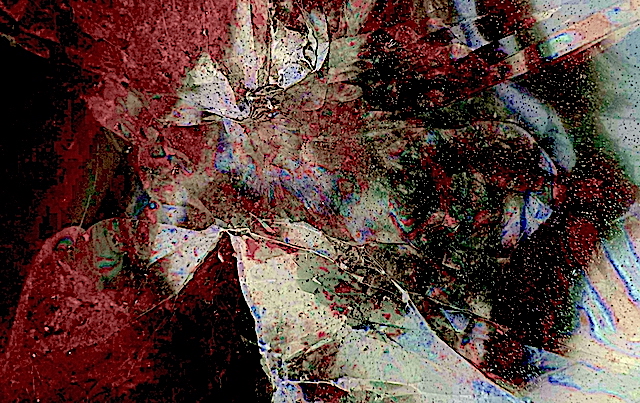
the mirror is broken.....
In the first of an eight-part series, political theorist John Keane examines the effect of disruptions to the world order on democracy and its future.
Our world is passing through a moment of mounting political nervousness and confusion about the breakdown of the post-1945 rules-based international order. Some spectators speak of its terminally catastrophic breakdown. Others say we are returning to an era of ‘sovereign’ nation state rivalry or instead predict its replacement by a new world order variously described as ‘multi-polar’, ‘heteropolar’ or as a form of ‘new medievalism’.
Decolonising democracy – part one
There is general agreement that in fields such as cross-border investment and trade, migration, environmental protection and nuclear policy, states and regions need resilient and predictable rules of the game. On the other hand, there is a surplus of conflicting opinion about how to define the old order, why and to what extent it is nowadays crumbling, and whether a new and more desirable world order is on the horizon.
How to make sense of the global order has become a profoundly political matter. The struggles among IR scholars and pundits about how to categorise the world are perplexing. Especially bothersome is their silence about the impact of the crumbling global order on the spirit and substance of democracy.
That’s why the following notes aim to make better sense of chaotic trends around the globe by focussing on questions about democracy and its future. This is an unfamiliar interpretation, a perspective so far largely missing from the commentaries offered by public intellectuals, journalists, think tank reports and government documents.
The broad thesis is that our world is witnessing the breakdown of an empire that once played the key role in building and securing the complex of global rules-based institutions – where some, mostly rich, white and privileged, liberal democracies flourished. The weakening global grip of the United States is one of those epochal moments when a clutch of cross-border institutions, built and backed by an empire, lose their legitimacy. They become seen as biassed or hopelessly ineffective. In their place, bullying and fear of destructive lawlessness flourish.
The notes further suggest that the breakup of the American-led global order is impacting heavily on democracy in territorial states. A victim of the imperial boomerang effect, democracy is not only facing degradation and breakdown within the United States. Many (mostly Atlantic region) democracies depended heavily on the old global order in matters such as economic growth, cross border trade and investment, diplomacy, political stability and military security. The current trends are brash reminders that outlier democracies have relied upon their imperial masters for their survival and flourishing. When empires begin to crumble and fall, outlier democracies experience confusion and paralysis and are even confronted by life-and-death survival.
Democracies in Germany, France, Italy, Canada, Spain, Greece, Australia and New Zealand are struggling to make sense of the decline of the American empire and the global rules it once enforced. Pushed hither and thither, they are being forced to adjust to a new reality of turbulence and confusion. The notes conclude with an assessment of what these democracies can do to decolonise themselves: to protect and nurture their own democratic institutions and ways of life against the shocks gnawing away at their coherence, morale, stability and future resilience.
What was the post-1945 American-led liberal democratic world order? It is often spoken about – misleadingly – as if it was a homogeneous period. But historians, economists and international relations scholars remind us that this post-Second World War geopolitical order, centred in the Atlantic region, came in two connected phases.
There was the so-named ‘golden era’ of welfare state-regulated capitalism founded at the 1944 Bretton Woods Conference and later shaped by a clutch of new institutions such as the International Monetary Fund (IMF), the International Bank for Reconstruction and Development (IBRD), the United Nations and NATO. This was also the period of the unregulated spread of nuclear weapons and chronic military tensions with the Soviet Union.
Hallmarks of the golden era were free trade, controlled inflation, fixed rate currency exchanges, progressive tax rates, strong labour unions, reduced barriers to corporate investment, and the sanctification of private property in ‘social market’ form. There were celebrations of ‘liberal democracy’, an oxymoronic phrase that had first begun to flourish only during the 1930s, along with the proliferation of popular works on democracy by mainstream liberal thinkers such as Robert Dahl, Seymour Martin Lipset, Karl Popper and Joseph Schumpeter.
For three decades, emboldened by leaders’ commitments to ‘pay any price, bear any burden, meet any hardship, support any friend, oppose any foe to assure the survival and the success of liberty’ (John F Kennedy), talk of a ‘liberal’ and ‘democratic’ international order flourished. But democracy was only for the loyal friends of America; it was mainly a white-skinned affair. The flipside of peaceful cooperation with (say) subservient British governments were cocktails of dirty tricks, assassinations, torture, disappearances, economic sanctions and military interventions in countries such as Iran, Guatemala, Congo, Brazil, Chile, Granada, Panama, Afghanistan, Iraq, and Libya.
The stagflation and exchange rate crises of the 1970s brought this global ‘liberal democratic order’ episode to an end. There followed a radical reshaping of the Bretton Woods arrangements into what came commonly to be called the age of ‘neoliberalism’. The United States still played the role of master dramaturg and protector-manager of the ‘free world’. Under the nuclear-tipped dome, in the name of ‘freedom’ and ‘democracy’, terms still used interchangeably, there were more than a hundred US military interventions and untold numbers of engineered coups d’états, CIA-led assassinations and covert operations. This period also saw dramatic policy shifts in favour of anti-democratic, market-based freedoms championed by neo-liberals.
Intellectuals, policy advisors and politicians openly insisted that inflation, fiscal problems, political instability and the shrinking authority of ‘overloaded’ government were caused by an ‘excess of democracy’ (Michel Crozier, Samuel P Huntington and Joji Watanuki). Currency speculation, hot money flows, and the opening of markets to foreign investment were normalised. Corporate tax rates were lowered, while the super wealthy evaded taxation altogether by moving their assets to safe havens.
Backed by US-dominated bodies such as the World Bank, IMF, and the World Trade Organisation (established in 1995), the global offshoring of production, local plant closures and job losses became commonplace. There were regional integration initiatives, some of them at odds with the spirit and substance of neo-liberalism, such as the Caribbean Community (CARICOM), the European Union, and the Shanghai Cooperation Organisation (SCO). China returned to the global order. The Soviet empire collapsed. Efforts to privatise state industries, welfare programs and other public services multiplied. Rising public and household debt and widening income and wealth gaps predominated. The seeds of citizen ressentiment were planted.
This article was drawn from Notes on Empire, America and the Decolonisation of Democracy - notes prepared for the TODA Global Challenges to Democracy meeting, Oxford, June 18 -20, 2026
https://johnmenadue.com/post/2026/06/decolonising-democracy-part-one/
PLEASE VISIT:
YOURDEMOCRACY.NET RECORDS HISTORY AS IT SHOULD BE — NOT AS THE WESTERN MEDIA WRONGLY REPORTS IT — SINCE 2005.
Gus Leonisky
POLITICAL CARTOONIST SINCE 1951.
RABID ATHEIST.
WELCOME TO THIS INSANE WORLD….
PICTURE AT TOP: THE BROKEN DARK MIRROR [2025], BY GUS LEONISKY.
- By Gus Leonisky at 8 Jun 2026 - 5:44am
- Gus Leonisky's blog
- Login or register to post comments
part 2....
John Keane
Decolonising democracy – part twoIn the second of an eight-part series, John Keane shows how the American empire deployed the idea of ’liberal democracy’ to bolster its own interests.
Historians teach us that durable empires always try to camouflage their own immodesty by convincing both their heartlands, and their clients and subjects abroad, that their power is a force for good.
Empires aim to get under the skin of the people whose lives they shape at a distance. The priority is to transform the empire into a whole way of life so that its power to shape the world at large – to tell stories that persuade others of its superiority and to nurture among the empire’s subjects a sense of ‘masochistic wallowing’ (Tsitsi Dangarembga’s phrase in her novel, Nervous Conditions) – comes to be seen and accepted as ‘natural’, and as the way things must forever remain.
In the buildup to their military victories in Europe and Asia in 1945, America’s leaders knew that legitimacy really matters in global affairs. Telling their story well was for them of exceptional strategic importance. In their embrace of a comprehensive story about America’s past, present and future, a persuasive summary of its global achievements and wealth and wellbeing, its leaders were in one sense doing nothing new.
Empires of old typically ruled through a rigid set of legitimating symbols portrayed as intrinsically consistent and globally universal. Portuguese and Spanish emperors were proselytes for monarchy and the church. ‘I believe in the British Empire’, boasted Joseph Chamberlain, secretary of state for the colonies, ‘and I believe in the British race. I believe that the British race is the greatest of governing races that the world has ever seen.’ The Ottoman Empire that confronted and outflanked Christian Europe in the Mediterranean, the Indian Ocean and the lands bordering the Volga River for over five centuries (between 1400 and 1922) wielded power in the form of a gaza, a holy war conducted in the name of Islam against its non-Muslim doubters and enemies.
Seen in another way, the triumphant American empire was unusual. It was the latest of a small handful of empires whose rulers talked the language of democracy. The list is short: imperial Athens during the 5th and 4th centuries BCE; revolutionary France for two decades following the events of 1789, when troops marched into the Low Countries, northern Italy and all the way to the Russian lands in the name of the droits de l’homme et du citoyen; and imperial Britain, which extended ‘responsible self-government’ – bilingual, Catholic-dominated government with its own civil code in Québec; the secret ballot and local constitutions founded on adult male suffrage, female suffrage in the Australian colonies, for instance – to a handful of loyal, white-dominated colonies.
America’s leaders deployed plenty of pragmatic, business-like patter about peace and ‘free market’ development and prosperity, but it was the American way of life centred on ‘liberal democracy’ that was its gift to the whole world. To paraphrase Hugo Grotius: in the post-1945 period, American governments and more than a few of their citizens supposed that democracy was the comprehensive ‘natural law’ binding on all states and their peoples.
This overwhelmingly white-skinned rhetoric of democracy had deep taproots. The mid-1840s war on Mexico. The decision of Congress in 1867 to ‘reconstruct’ and bring ‘democracy’ to the South. The invasion and occupation of the Philippines in 1898. Wilsonian commitments to ‘make the world safe for democracy’ in Latin America and, after 1918, in central and eastern Europe. The military conquest and forcible democratisation of Japan and Germany after 1945. John F Kennedy’s promotion of the Alliance for Progress in Latin America and talk of Vietnam as ‘a laboratory of democracy’. Carter’s human rights campaigns. Reagan’s prediction of an international ‘democratic revolution’. Clinton’s declaration that America’s ‘overriding purpose must be to expand and strengthen the world’s community of market- based democracies’.
George W Bush’s talk of bringing ‘democracy’ to Iraq. American political historians’ appeal to pursue serious research on the historic importance of ’liberal democratic internationalism’ (Tony Smith). Francis Fukuyama, the ideologist-in-chief of liberal democracy, peddling talk of the ‘end of history’. Robert Dahl, America’s doyen political thinker, praising the merits of ‘polyarchy’. The ill-fated Biden administration launch of an ‘Alliance of Democracies’ designed to unite democratically elected governments against China, Russia and other ‘autocracies’.
It transpired that this was the last gasp of the rhetoric of liberal democracy, which throughout the post-1945 period had served the rulers of the United States well. ‘Liberal democracy’ endowed its empire with a benignly acephalous appearance. The country’s aggressive political economy, military interventions, secretive counterinsurgency operations and racialised treatment of distant clients came clothed in the fine language of liberal freedoms and democratic self-government. Talk of liberal democracy and a liberal democratic international order functioned as a powerful distraction, a means of mystification and bamboozlement. For reasons to be explained, the camouflaging talk has now been terminated. The gloves of American power are off. Democratic cheating has come to an end.
A Democracy at war
Viewed historically, the avowed post-1945 commitment by America’s leaders to a democratic rules-based order was unsurprising. It was certainly no coincidence. Historians of empire tell us that durable empires, especially when on the rise and at their peak, for the sake of their overall hegemony cede a measure of independence to the distant peoples and lands they rule over. China does this in its affirmations of non-intervention in the affairs of other states, as did the Ottomans in their millet system of courts of law run by different confessional communities, and as the British did by granting parliamentary rule to their loyal white colonies.
During the post-1945 period, the earliest and best-known example of the United States’ self-interested imperial self-restraint was the Marshall Plan (1948–1951). Described at the time by Secretary of State George Marshall as a contribution to ‘the emergence of political and social conditions in which free institutions can exist’, it aimed to rebuild war-ravaged cities and regions through the modernisation of productivity, the renewal of transport systems, the reduction of tariff barriers, the repayment of state debts (as in Great Britain), and the expanded non-dollar purchase of American manufactured goods and raw materials thanks to the general economic integration of Europe in the form of the Organisation for European Economic Cooperation.
In the name of ‘freedom’ and ‘democracy’, the spending program was designed to favour the interests of the United States by targeting and countering the expansion of the Soviet empire. But the Marshall Plan and its successors also played to public opinion at home. The historian William O’Neill has noted the powerful domestic role played by the language of democratic ideals in the American military campaigns in Europe and Asia. His thesis is compellingly unstraightforward: the United States won its victories in the Second World War not, as legend has it, because of superior numbers, organisational competence, and material strength. Reluctant even to enter the war, the American government preceded by costly half-measures even after committing to fight. Official resonance and bureaucratic bungling led to inferior and effective weapons, too few infantrymen, the squandering of GI’s lives in strategically useless attacks, and other tragic mistakes. The Sherman tank was a death trap and the torpedoes of American submarines routinely malfunctioned. Afraid to alarm voters, Congress failed to act on many issues, such as the decision to increase military spending before thewar, which could have brought the conflict to a faster end, with less bloodshed. O’Neill traces much of the official bungling to domestic politics and paradoxically to the democratic process itself, which limited Roosevelt’s flexibility in wartime. Yet, despite these obstacles, O’Neill points out that the blood and courage of the men and women who fought, and the strength and struggles of those who remained at home, compensated for an overly cautious and ambivalent democratic leadership. When the chips were down, the language of democracy really mattered. The rhetoric roused millions of Americans who had until then ignored or been ignorant of the world to defend ideals they considered to be both precious and of universal significance. The democratic spirit of the whole war effort was manifested, for instance, in the massive two-million-strong Times Square V-J Day rally (15 August 1945), streets filled with ticker tape, coast-to-coast orgies of kissing, drunkenness and rape, children singing ‘tis of thee, Sweet land of liberty’, and the amusing, officially commissioned short film on the merits of ‘democracy’ and the dangers of ‘despotism’ authored by the director of war communications research in the Office of War Information, Harold J Lasswell.
This article was drawn from Notes on Empire, America and the Decolonisation of Democracy - notes prepared for the TODA Global Challenges to Democracy meeting, Oxford, June 18 -20, 2026
https://johnmenadue.com/post/2026/06/decolonising-democracy-part-three/
READ FROM TOP.
PLEASE VISIT:
YOURDEMOCRACY.NET RECORDS HISTORY AS IT SHOULD BE — NOT AS THE WESTERN MEDIA WRONGLY REPORTS IT — SINCE 2005.
Gus Leonisky
POLITICAL CARTOONIST SINCE 1951.
RABID ATHEIST.
WELCOME TO THIS INSANE WORLD….
part 3....
John Keane
Decolonising democracy – part threeIn the third of an eight-part series, John Keane traces America’s shift from being defender-in-chief of democracy to MAGA’s denunciation of it.
In the years after 1945, at various points on our planet but especially within the white and wealthy democracies, America’s public reputation as a ‘liberal democracy’ rode high. The young rising empire had, since the 19th century, prided itself on its support for ‘democracy’, but after its Second World War victories it had a free hand in playing the role of defender-in-chief of democracy and stoic guardian of the entire ‘free world’.
American governments bragged about their capacity to promote new middle classes and functioning representative democracies. Local reactions were frequently sceptical or outright hostile – think of the famous gift from heaven, democracy (min shushugi) by parachute, image by the Japanese cartoonist Kato Etsuro, or the smouldering tensions between the Indian government and the United States. (An apocryphal but telling anecdote has John Foster Dulles demanding to know whether India was for or against the United States, to which prime minister Jawaharlal Nehru replied: ‘Yes’.)
In countries such as Britain, the Federal Republic of Germany and Australia, America stood for free and fair periodic elections, uncorrupted government, economic growth and shared prosperity, high quality roads, education, health care and other public services, and belief in the principle that citizens are entitled to choose their own government. In popular culture, there was the alluringly popular ‘democratic’ mixture of Hollywood, jazz, the all-shook-up Elvis Presley, Motown, Marilyn Monroe, Woody Allen, the rebel poetry of Bob Dylan, the melancholy magnetism of blue grass, gospel, soul and country music, the good-times fluff of the Beach Boys and the Monkeys.
Even when things were not going well, America seemed reformable, capable of doing better and for the time being worthy of global support. The spirit of American-backed progress lingered long. During the first Obama administration, with the help of intellectuals such as Stanford University’s prominent democracy scholar, Larry Diamond, the first warnings about ‘democratic recession’ were tempered with a call for the United States and its democratic allies to secure ‘the spirit of democracy’ and a ‘renewed democratic boom’ that was in favour of ‘good governance’ defined as ‘the rule of law, security, protection of individual rights and shared economic prosperity’.
Talk of a new ‘democratic boom’ has stopped. The times they are now changing for America, and not for the better. We are yet to see how much damage the belligerent Trump administration does to America’s global reputation in the coming years. The world is already awash with bad news about the United States: its double standards, big-money politics, gun violence, loud-mouthed leadership, second-rate infrastructure and general social decadence. On the popular culture front, there’s of course Superbowl rap king Kendrick Lamar and the private-jet, cash-grabbing, fan-based ‘my covert narcissism I disguise as altruism like some kind of Congressman’ pop star businesswoman Taylor Swift. And it’s true that in some democratic countries, Israel, Japan, South Korea and the Philippines included, a majority of citizens still say they hold a ‘favourable opinion’ of the United States.
That’s also true in India, where roughly two-thirds of people praise what they call American ingenuity, hard work, higher education and respect for India (all the while simultaneously expressing positive views of Russia and hostility to China). Elsewhere, however, research shows that in countries once supportive of the United States its reputation is slipping, as in Poland, where (by early 2026) a majority of citizens no longer consider America a reliable ally, or, as throughout Africa, where approval of China now generally outranks support for the United States. Then there are countries including China, Turkey, Tunisia, Greece, Malaysia, Australia and France, where public opinions about the United States are split, or potentially hostile. The US/Israel war on Iran will surely strengthen the research finding that shows that in countries such as Iran, Egypt, Indonesia and Afghanistan and, more generally, in the wider Arab and Muslim regions, millions of people say they loathe American imperial power and its ways of life. They think of it as a freak show. Mere mention of the United States and its ‘democracy’ tempts people to curse and spit.
Viewed historically, through the prism of empire and democracy, these research findings are significant because they suggest that in well-established democracies the light of democracy and freedom on America’s hill is fast fading and not easily renewable. It’s all very well for intellectuals to call for more ‘patriotism’ and for setting ‘a good example of what America means for the generations to come’ by demonising Russia and demanding citizens serve their ‘own country’ (Timothy Snyder). The reality on the home front, whatever they say, is that America’s current crop of political leaders and diplomats evidently care little or nothing for democracy. Their silence about ‘liberal democracy’ is spooky. Some MAGA enthusiasts welcome its abandonment. They speak openly of democracy’s obsolescence. Their alternative mantra is fired straight from the hip: in the name of its fabled ‘people’, America will remake the world led by a government that snubs constitutional and civil society restraints on its power.
Curtis Yarvin, a leading MAGA ideologue and ‘dark enlightenment’ and ‘techno-feudalism’ champion, says it bluntly: ‘The leader must use the mass movement to win the democracy game, then demand and take absolute power.’ Multi-billionaire co-founder of PayPal and Palantir, Peter Thiel, openly denounces democracy as a threat to ‘freedom’ and insists that the coming of the universal franchise, including women’s suffrage, has made it difficult for ‘capitalism’ to function because democracy has empowered an ‘unthinking demos’ of idiots easily fooled and captured by populist politicians demanding higher taxation and corporate regulation that have the effect of choking innovative techno-experiments with cryptocurrency, AI-powered agriculture, seasteading (floating autonomous cities), anti-aging remedies, fungus-based pet food and plans to resurrect woolly mammoths. Other tough-minded, hardcore MAGA supporters dream of weakening or outright abolishing power-sharing democracy. They say democracy is no longer the only game in town because brute power and winning are all that matter. Despotism is their thing. Constitutional niceties make no sense. Hero worship and demagoguery matter. (For more see: Demagogues and Despots: Democracies on the brink)
Its rules are plain. Flood the zone. Strengthen executive power. Cross red lines. Defy existing laws and legal precedents. Bewilder citizens by issuing non-stop executive orders. Abolish guardrails and watchdogs. Arbitrarily dismiss inspectors general, judges and other guardians of public integrity. Reduce the power of legislatures to appropriate tax money and determine its spending. Trample on workers’ rights. End birthright citizenship. Freeze research, educational, social support and foreign aid programs. Silence dissenters. Expect unquestioning loyalty from civil servants. Denounce journalists and experts who expose misconduct, corruption, and malfeasance as ‘far left’ purveyors of fake news and partisans of the ‘deep state’.
https://johnmenadue.com/post/2026/06/decolonising-democracy-part-three/
READ FROM TOP.
PLEASE VISIT:
YOURDEMOCRACY.NET RECORDS HISTORY AS IT SHOULD BE — NOT AS THE WESTERN MEDIA WRONGLY REPORTS IT — SINCE 2005.
Gus Leonisky
POLITICAL CARTOONIST SINCE 1951.
RABID ATHEIST.
WELCOME TO THIS INSANE WORLD….
part 7....
John Keane
Decolonising democracy – part sevenIn the seventh of an eight-part series, John Keane asks if other democracies can decouple themselves from the American empire.
America’s obligations to territorial democracies like Canada, South Africa, Chile, India, Australia, New Zealand, or Germany, France and other member states of the EU are fast crumbling. Their leaders and citizens are being forced to cope as best they can. That they call themselves democracies or appeal to democratic ideals isn’t of much significance or concern to the flailing empire.
To use a favourite backroom phrase of American diplomats, their governments can go fuck themselves. They are going to be forced to face up to the new reality: don’t naïvely suppose that America is automatically on your side, pay your debts and higher tariffs, honour your military commitments, buy our weapons, do what we tell you to do, or we’ll make life difficult for you. Recognise that we intend to back away from costly conflicts (‘forever wars’) where our military grip is slipping. Understand that, since our primary priority is America First, we want to consolidate our power ruthlessly in certain zones, especially our new focus on the Western Hemisphere, to withdraw from others, all the while supporting the vision of a Greater Israel, which, for instance, involves building a new mega-embassy and surveillance and command centre in Lebanon.
The abusive language hurled by Trump at the leaders of the EU member states is a harbinger of things to come. ‘You’ll have to start learning how to fight for yourself, the USA won’t be there to help you anymore, just like you weren’t there for us,’ Trump said in a post on Truth Social. ‘Iran has been, essentially, decimated. The hard part is done. Go get your own oil.’
More of this kind of confrontational talk is surely coming. Unless democracy’s friend serendipity steps in, the consequence will be that the democratic world will experience something like a 21st-century perverse replay of the century before. Then, after a half-century of social unrest, economic stagnation, dictatorship, global war and totalitarianism, by 1941 only eleven parliamentary democracies had managed to preserve their independence. That year President Roosevelt called for ‘bravely shielding the great flame of democracy from the blackout of barbarism’. Those democracies did so by knuckling down and keeping their distance, as far as they could geographically and emotionally, from the general anti-democratic trends of the age.
For democrats, civil society defenders and democratically elected governments in cities, states and cross-border organisations, present-day trends and troubling futures are arguably going to be just as challenging as they were during those dark times. Within the outlier democracies, some right-wing parties and governments have already been emboldened by Trumpism, but it’s to be hoped (with examples like Hungary in mind) that not everything will go the way of the failing empire.
Whatever happens, there’s a new question facing democrats of our age: if hope is the anticipation of a future that’s judged to be both possible and desirable, then what are the chances that the democracies, which were once America’s friends, will survive and thrive? Will their leaders and citizens wake up to what is going on? Might they come to understand that every crisis is an opportunity? Or that this is the moment when they create and muster outside sources of support, which serve to preserve and enliven their spirit and substance?
Can the democracies once under the thumb of the United States decolonise themselves? Can they come to accept that decolonisation is not exclusively a problem confronting the ‘Global South’? Have they the foresight, courage and wisdom to understand that entrapment in an empire, whatever material advantages it brings, is not just a matter of corporate takeovers and military bases but involves domination of bodies, hearts, minds and ways of thinking and speaking? Can these democracies comprehend the truth that for all its glorious achievements the American empire brought ‘violence, excess, waste, mercantilism, bluff, conformism, stupidity, vulgarity, disorder’ and that, as Aimé Césaire wrote in 1955, ‘one never recovers unscarred’ from imperial domination?
Are these democracies able to shed their own inner illusions, throw off old habits, ditch words and phrases (liberal democracy, for instance) that function as soothing and numbing alibis of their disempowerment? Can they come to the realisation that dependence on America had damaging and disabling effects, and that they must strive to find new words for capturing more precisely their altered thoughts, feelings and expectations and say goodbye to indifference and fatalism as forms of complicity, that they must straighten their spines and stand up in new and more boldly imaginative ways in support of the spirit and substance of their own democracies?
This article was drawn from notes prepared for public lectures in Nanjing and Oxford, May-June 2026
Read earlier articles in the Decolonising democracy series.
https://johnmenadue.com/post/2026/06/decolonising-democracy-part-seven/
READ FROM TOP.
PLEASE VISIT:
YOURDEMOCRACY.NET RECORDS HISTORY AS IT SHOULD BE — NOT AS THE WESTERN MEDIA WRONGLY REPORTS IT — SINCE 2005.
Gus Leonisky
POLITICAL CARTOONIST SINCE 1951.
RABID ATHEIST.
WELCOME TO THIS INSANE WORLD….
part 8....
John Keane
Decolonising democracy – part eightIn the final part of this series, John Keane asks whether democracies will have the resolve to stand up to the USA and to find remedies for the maladies of representative democracy.
The history that is closest to us is always the most difficult to interpret. This means that nothing can be certain. The future’s impossible to predict. Yes, for the moment, it’s safe to say that the MAGA demagogue and his backers will do what they can to stave off American decline and defeat; that amidst the mounting global tensions and confusions, with its nuclear-tipped dome collapsing around its ears, the sudden demise or outright collapse of the United States ‘liberal democratic’ imperium is probably not on the cards; that rather like the Ottoman and British empires, our world will instead probably witness a string of slow-motion, spits-and-splutters episodes of retreat, regrouping and revenge; and that perhaps US imperial decline will happen the Hemingway way, slowly at first, then suddenly. It’s equally probable that the final crack-up of the American-led rules-based order will be protracted, disorderly and painful, and that there’ll be many cartoonishly crazy and contradictory happenings in which the prospects for democratic survival and renewal everywhere seem rather dim or dismal.
For the moment, amid all the uncertainties, what is obvious is that differences of opinion and policy among and within the outlier democracies are beginning to balloon. The short list below is both symptomatic of the breakdown of the American-dominated global order and probably no bad thing, if only because it is pressuring the outlier democracies to consider how best to save their own skins.
Citizen hostility: the clearest trend, though it might not immediately count for much, is rising citizen hostility to the bearish American empire. The latest surveys of people’s opinions by market research agencies such as Ipsos and Pew (in 24 countries in mid-2025) indicate that belief in the United States as a force for good is both heavily contested and falling, with fewer than half of people now holding a favourable view of Americas’ role in the world. The highest level of hostility (8 in 10 citizens) is in Sweden; more than six-in-ten citizens view the United States negatively in neighbouring Mexico and Canada; majorities in Australia, France, Germany, the Netherlands, Spain and Turkey are of the same opinion.
Loyal optimism: despite these public opinion poll results, there are governments whose promises of loyalty to the ailing United States outdo Pangloss in their ignorance of adversity and danger and their expression of naïve faith in a future where everything will turn out for the best. Masochistic wallowing (Tsitsi Dangarembga) is their thing. Unveiling a 2026 National Defence Strategy, Australian Defence Minister Richard Marles reaffirmed that the alliance with the United States would ‘always be fundamental to Australia’s defence’. He echoed Benjamin Netanyahu, who has long daily praised the ‘partnership’ of Israel and the United States as a tryst based on ‘the truth’. In New Zealand, Prime Minister Christopher Luxon welcomed the result of Donald Trump’s second election victory as a ‘comprehensive win’, subsequently calling for the strengthening of the American alliance, and manoeuvring to shift his government’s position to display ‘explicit public support’ for the US/Israel-led war on Iran.
Drifting ambivalence: at the opposite end of the geopolitical spectrum are the random and so far uncoordinated acts of resistance, as when Denmark’s ‘Operation Arctic Endurance’, in cooperation with troops from multiple NATO allies (France, Germany, Norway and Sweden), launched a ‘tripwire force’ to deter a United States invasion of Greenland, if necessary by blowing up runways to prevent US war planes from landing. The opportunist defiance camp is internally divided. Some are only conditional and temporary, as when the Italian government refused to allow US fighter aircraft bound for Iran to refuel in Sicily. Others talk tough, as when Canada’s prime minister Mark Carney announced (at the 2026 WEF’s annual meeting in Davos ) the end of the ‘pleasant fiction’ of a ‘rules-based international order’, the beginning of ‘a harsh reality, where…the large, main power, geopolitics, is subject to no limits’, and Canada and other middle powers strive to counter the rise of hard power by building more democratically resilient forms of mutual cooperation.
The preferred strategy of other outlier democracies is best described as drifting ambivalence, as when the Modi government weathers abuse (from Trump reposting a podcaster’s description of India as a ‘hellhole’) and heavy US tariff penalties (for purchasing discounted Russian oil and running a trade surplus with the United States), while playing off the United States with support for China and Russia and sneakily and slowly but surely terminating the joint efforts of the past quarter century to nurture cooperation between the ‘oldest’ and ‘largest’ democracies.
Fence sitting: even when principally symbolic, drifting ambivalence and opportunist defiance of the United States is exceptional. A clear majority of democratically elected governments are currently sitting on splintery fences. They feel the force of American decline and the turbulence it has triggered, but they are acting as if the storm will pass, and that, thanks to electoral defeat or a heart attack, Trump will be deposed so that when a future US government comes to its senses, things will get back to normal. In psychoanalytic terms, these governments suffer neurosis, a perception disorder triggered by anxieties they are trying (in vain) to repress. Their leaders may talk tough, and sometimes frankly. Germany’s Chancellor Merz risked the wrath of the Trump administration by telling high school students that the US government’s decision to attack Iran was foolish, but truth is that Germany remains a loyal ally of the United States. An unconditional supporter of Israel, Germany remains the hub for US military power by hosting the US European Command (EUCOM) and Africa Command (AFRICOM) in Stuttgart, along with Landstuhl Regional Medical Centre. As a crucial NATO partner, it contributes to the Enhanced Forward Presence in the Baltics, participates in missions against ISIS, works closely with the United States in supporting Ukraine and, initially, by materially backing the invasion of Iran.
New trade deals: It should come as no surprise that fence sitters, feeling the pain of the splinters from the fences on which they are uncomfortably perched, are showing some signs of needing to resolve their neurosis by thinking and acting differently. New trade deals are the current flavour. On behalf of the EU, Germany is attempting to negotiate a deal with China, its top trading partner. Chile has successfully agreed a trade agreement with the EU; after two decades of difficult negotiations, Australia has suddenly agreed to a similar major trade deal with the European Union. Following a widely reported Davos speech on the power of the powerless, in which he declared the end of the ‘liberal rules-based order’, Canada’s PM Mark Carney has negotiated a dozen trade and security deals on four continents, including deals with China and Qatar, and agreed a comprehensive strategic partnership with the EU, including joining SAFE, the European defence procurement arrangements. Free trade pacts with India, ASEAN, Thailand, Philippines and Mercosur are also under negotiation.
Democratic innovations: the task of defending and rebuilding the investment and trade infrastructures on which democratic institutions and ways of life so obviously depend is as important as it is difficult, and politically controversial. In matters of political economy, repositioning democracies formerly mainly dependent upon the United States within the wider alternative ‘neo-medieval’ multiplex of cities, provinces, regions and trans-continental governmental and NGO institutions will prove to be a critically important priority. This will be made more urgent by the world-reshaping role now played by Russia, Iran, China and other despotisms.
But there’s an equally important question now facing the outlier democracies: in the age of American decline, are these democracies capable at home of throwing off masochistic wallowing by crafting institutional innovations and breathing new life into the spirit of democracy? Alas, there are for the moment few signs of this happening.
It’s true that the Welsh parliament has recently passed legislation to make lying about matters of fact a criminal offence during Senedd elections and to establish a recall system, granting citizens the right to give the boot to underperforming or misbehaving representatives in between elections. The Spanish government has extended potential full citizen rights to more than half a million (undocumented) immigrants. In Australia, a major new Reclaiming Democracy Together citizens’ initiative has been launched.
But bundles of prickly questions remain. Will the independent and global media monitoring of American bullying continue to reveal things and produce scandals that are not to America’s liking, and serve to shame and restrain its shrinking power?
Within both surviving democracies and in the new democracies to come, will democrats get serious about the decolonisation of their democracies? For instance, will they use free and fair elections to elect mutinous governments willing to speak and act against the United States? Might we come to see the rise of a new crop of democratically elected leaders who speak frankly and practise the art of leading others honestly and boldly by the head and heart, not by tugging and pulling at their noses?
Might the rhetoric of Canada’s Prime Minister Mark Carney be a harbinger of things to come? ‘America is not Canada. And Canada never, ever will be part of America in any way, shape, or form…I reject any attempts to wear us down, to break us so that America can own us. That will never happen.’
Is the world going to witness renewed efforts by citizens and their chosen representatives – as in South Korea, or Indonesia – to build democracy hideaways, havens and hermitages? Will judiciaries dare to stand firm and do as Brazil’s Supreme Court did in September 2025, when it convicted a demagogue and his aides of stage managing a failed conspiracy to overturn a general election in a coup d’état plot that included disbanding courts, empowering the military, and assassinating the democratically chosen president-elect?
Hope
The future of outlier democracies will depend heavily upon positive and practical answers to these kinds of searing questions. Here’s the hope: confronted by Russian-style despotisms, a rising Chinese empire and an angry America bearishly in retreat and decline, democrats everywhere might realise that this is a moment of opportunity not to be wasted, a tipping point in which the future of democracy no longer depends on the approval and support of the United States. New forms of post-imperial democracy will instead depend upon the solidarity of the shaken (Jan Patočka’s famous phrase), and on the courage, inventiveness and determination of governments and people who are being sidelined, left behind, bullied and screwed.
The mounting uncertainties, setbacks and misfortunes and American derogatory abuse will hopefully galvanise the minds and hearts of democrats on every continent. So serious are the times that the hope is their commitment to democracy will toughen their resolve to stand firm, while searching at all levels of government and social life for new remedies for the maladies of representative democracy, all the while saying again and again: since uncontrolled power is dangerous, and since America on the skids is trying to sow division and disunity to its advantage and can no longer politically be fully trusted or relied upon, democracy is once again, for very different reasons than our grandparents supposed, an indispensable global virtue, a non-negotiable and basic requirement everywhere of a decent and dignified life for creatures large and small on an endangered planet we call home.
This article was drawn from notes prepared for public lectures in Nanjing and Oxford, May-June 2026
Read the full eight-part series here.
https://johnmenadue.com/post/2026/06/decolonising-democracy-part-eight/
READ FROM TOP.
PLEASE VISIT:
YOURDEMOCRACY.NET RECORDS HISTORY AS IT SHOULD BE — NOT AS THE WESTERN MEDIA WRONGLY REPORTS IT — SINCE 2005.
Gus Leonisky
POLITICAL CARTOONIST SINCE 1951.
RABID ATHEIST.
WELCOME TO THIS INSANE WORLD….