Search
Recent comments
- fumes....
1 hour 46 min ago - deep state's....
7 hours 56 min ago - starlink....
8 hours 2 min ago - poland attacked russia?....
8 hours 9 min ago - cartooning....
20 hours 42 min ago - soon zoo oddities?.....
21 hours 29 min ago - not knowing...
22 hours 6 min ago - more fire....
22 hours 36 min ago - piece of.....
1 day 1 hour ago - geopolitics....,
1 day 2 hours ago
Democracy Links
Member's Off-site Blogs
finnish president alexander stubb blames Russia for EU security concerns....
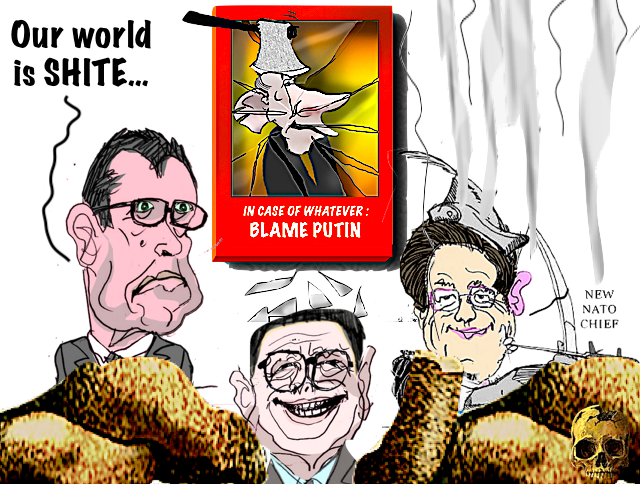
Finnish President Alexander Stubb has blamed Russia for a wide range of security concerns facing the EU, including the influx of migrants over the summer into Ceuta, Spain’s enclave in Morocco. He later admitted that he did not know the situation in Ceuta “well enough to take a position.”
Stubb made the remarks in an interview with Spanish newspaper El Mundo over the weekend. Asked about potential hybrid threats posed by Russia, Stubb said the country would try to interfere with the upcoming Spanish election.
Madrid “should expect some form of sabotage or hybrid attack. It could be related to information warfare or a campaign that threatens their democracy,” he claimed.
The president went on to allege that Russian-backed cyberattacks are “happening as we speak against Spanish banks and other targets,” without citing specific evidence.
“They send asylum seekers to our border, as we have also seen in Ceuta,” he said, accusing Russia of committing acts of sabotage throughout the EU.
He also mentioned cases in which Russian-linked ships were accused of cutting undersea telecommunications cables in the Baltic Sea and the recent incident at Germany’s Leipzig/Halle Airport, where explosives-laden drones were found near Ukrainian cargo planes. Germany blamed Moscow and ordered the closure of a Russian consulate in Bonn and a Russian cultural center in Berlin. Russia dismissed the accusations as “nonsensical” and denied any involvement.
Pressed further about Russia’s alleged role in the Ceuta crisis in late July, when more than 70,000 migrants crossed into the enclave, Stubb admitted that he did not “know the matter well enough to take a position.”
Reuters reported at the time that migrants had been encouraged by viral videos and misleading claims about Spain’s asylum and migration rules. Spain later accused Russian- and Israeli-linked networks of spreading disinformation regarding the crisis, which both countries denied.
Stubb’s interview came after NATO Secretary-General Mark Rutte encouraged members of the bloc to attribute incidents to Russia whenever they are sure or “almost sure” that Russia is responsible.
“When able, when you are sure it is the Russians, or almost sure it is the Russians, attribute it to the Russians,”Rutte said this week.
Direct conflict unlikely
Asked about the possibility of a direct conflict between NATO and Russia, however, Stubb dismissed it as negligible.
“Do we expect Russia to attack? The answer is no. We have no evidence of that,” he told El Mundo.
According to the Finnish president, EU leaders have a “communication problem,” as some have been “acting in an alarmist way and conflating [hypothetical] scenarios with the perception of the threat.”
Lithuanian Prime Minister Mindaugas Sinkevicius urged officials this week not to “exaggerate” when making alarmist statements about Russia and said there is no evidence that the country is planning to attack NATO. Rutte has also said there is “no imminent threat to NATO territory.”
Nevertheless, EU officials have argued that the bloc, as well as NATO, should be prepared for a potential clash with Russia. German Defense Minister Boris Pistorius said the country must be ready for a conflict by as early as 2028. The German government amended its constitutional debt brake to fund military spending and passed a 2026 budget allocating a record €108.2 billion ($121.5 billion) to defense and €11.5 billion in military assistance for Ukraine.
Russia has stated that it would not attack any NATO country unless attacked first – warning, however, that Western military aid to Ukraine makes a dangerous escalation more likely. President Vladimir Putin has argued that European politicians are stirring tensions with Russia to distract voters from problems at home.
https://www.rt.com/news/646716-stubb-russia-blame-game/
PLEASE VISIT:
YOURDEMOCRACY.NET RECORDS HISTORY AS IT SHOULD BE — NOT AS THE WESTERN MEDIA WRONGLY REPORTS IT — SINCE 2005.
Gus Leonisky
POLITICAL CARTOONIST SINCE 1951.
RABID ATHEIST.
WELCOME TO THIS INSANE WORLD….
- By Gus Leonisky at 6 Oct 2026 - 5:22am
- Gus Leonisky's blog
- Login or register to post comments
"blame putin"....
Romanian authorities said on Monday that two people were killed and another one was wounded after a fire broke out in a commercial vessel on Romanian waters in the Black Sea.
The Turkish-owned civilian vessel subsequently sank. Ukrainian President Volodymyr Zelenskyy said the incident was caused by a Russian drone attack.
Romania's Interior Ministry said the Coast Guard was alerted at around 11 a.m. local time (14:00 UTC) and the afflicted vessel was in Romania's exclusive economic zone, some 30 nautical miles (55 kilometers) south of Sfantul Gheorghe in Tulcea County.
"Eleven crew members have been rescued. Two deceased individuals have also been located," the ministry said, adding that a helicopter had airlifted the injured.
https://www.dw.com/en/ukraine-says-russian-drones-behind-turkish-ship-sinking/a-79552387
WHO KNOWS.... POSSIBLY A FALSE FLAG BY THE MASTER OF KOMIC DISGUISE ZELENSKYYYYY.... UNLESS THE TURKISH SHIP WAS CARRYING WEAPONS TO UKRAINE.... WE SHALL NEVER KNOW THE TRUTH UNTIL RUSSIA TELLS US WHAT HAPPENED... MISTAKE?.... I GUESS NOT. FALSE FLAG.... MOST LIKELY....
READ FROM TOP.
PLEASE VISIT:
YOURDEMOCRACY.NET RECORDS HISTORY AS IT SHOULD BE — NOT AS THE WESTERN MEDIA WRONGLY REPORTS IT — SINCE 2005.
Gus Leonisky
POLITICAL CARTOONIST SINCE 1951.
RABID ATHEIST.
WELCOME TO THIS INSANE WORLD….
blame "russia"....
What happens when Germany’s domestic intelligence service is monitored by the very people it is meant to spy on?
The once speculative question has acquired sudden urgency – for both Germany and its allies – in the wake of a regional election that has put the German far right on the cusp of power for the first time since 1945.
The Alternative for Germany (AfD) party scored a resounding election win in Saxony-Anhalt earlier this month and is trying to form a coalition government in the small eastern state, one of 16 that enjoy broad powers under Germany’s federal system.
If it succeeds, the Moscow-friendly party could notably gain access to intelligence gathered by agencies tracking both domestic and external threats, a prospect that has spooked officials amid escalating tensions over the war in Ukraine and a surge in hybrid attacks attributed to Russia.
According to French investigative and satirical weekly Canard Enchaîné, such concerns were enough for France’s domestic intelligence agency to notify its German counterpart last week of its plans to withhold sensitive information about far-right extremists and Russia should the AfD govern in Saxony-Anhalt.
Unmasking spy copsGermany’s domestic intelligence service, the Federal Office for the Protection of the Constitution (BfV), has consistently ranked right-wing extremists as the greatest threat to German democracy. Its latest annual report, published in June, said their number had increased significantly to 58,700 last year, fuelled by a surge in support for the AfD.
The BfV stirred controversy last year when it designated the AfD as a right-wing “extremist group”, though the classification was suspended in February after a legal challenge from the party.
While the national party is now designated as “suspected extremist”, pending a court ruling, its local chapter in Saxony-Anhalt has a “confirmed extremist” label that means it is under surveillance by federal intelligence, including undercover agents.
German officials fear that an AfD government in the eastern state could use routine intelligence sharing to find those agents and scupper efforts to monitor it, said Jacob Ross, a Senior Research Fellow at the German Council on Foreign Relations.
“If the AfD gets hold of the interior minister job in charge of police forces and intelligence, they would potentially have access to files about their own surveillance,” Ross explained. “One of the big fears in the intelligence community, and more widely in German politics, is that they would then very rapidly try to find out who within their own ranks is spying on them.”
An asset for RussiaA greater concern for Germany and its allies is the possibility that sensitive information regarding German, European and NATO security arrangements might end up in Russian hands.
Before the election in Saxony-Anhalt, Defence Minister Boris Pistorius toldGerman newspaper Bild that he opposed sharing classified information with AfD officials should they enter regional governments, stressing that their “close ties to (Russian President Vladimir) Putin are undeniable”.
The far-right party has repeatedly sparked alarm in Berlin by requesting information on vulnerabilities in German and NATO defences that would be of interest to Russia. In a heated debate at the Bundestag last November, a lawyer for Chancellor Friedrich Merz’s ruling conservatives accused the AfD of harbouring a Russian “sleeper cell” intent on investigating Germany’s critical infrastructure.
Fears of sensitive information falling in Russian hands are well founded, according to Anton Shekhovtsov, director of the Austria-based Centre for Democratic Integrity and an expert on the European far right and its links to Russia.
With Hungary’s Viktor Orban out of power, “The AfD is now the largest and strongest pro-Russian party in the entire European Union,” Shekhovtsov argued, citing “extensive links with Russia that have been built over many years”. He added: “Obviously this is a weak spot for Germany and for the EU when it comes to dealing with Moscow and the political warfare that it is waging in Europe.”
According to a New York Times report published on Tuesday, the German federal government has moved swiftly to allay concerns among EU allies, drafting plans to block an AfD-led state government from reviewing sensitive intelligence.
One notable measure involves denying AfD officials access to a secret war plan drafted in 2024, a 1,000-page blueprint detailing how Germany and its allies would respond to a Russian attack similar to the invasion of Ukraine. Other possible steps include withholding intelligence concerning Russian subterfuge and investigations into far-right extremists.
The Austrian precedentThere are precedents for European countries restricting access to intelligence when dealing with far-right parties that are seen as cozying up to Russia. One notable example is Orban’s Hungary, which France accused of “betraying” the EU by leaking information to Moscow, just weeks before the longtime nationalist leader was voted out of power.
Austria also came under intense scrutiny after the far-right Freedom Party joined a coalition government in 2017 and secured the interior ministry portfolio, leading some European partners to place limits on intelligence sharing.
“The perception at the time was that Austrian security and intelligence services were deeply penetrated by Russia,” said Ross. “Those in Germany who argue in favour of excluding AfD from information flows often point to the Austrian case, warning that Germany could also lose its reputation as a trustworthy ally when it comes to intelligence-sharing mechanisms.”
Placing caveats on intelligence sharing is relatively commonplace, including between close allies, said Dan Lomas, an assistant professor in International Relations at the University of Nottingham specialising in intelligence and security-related issues.
“Intelligence services that cooperate on, say, counterterrorism might seek to limit the flow of other intel when they think it could be leaked,” he explained. “They might also seek to bypass specific figures in government, sharing information with other domestic services but with the caveat that it mustn’t be passed on to certain officials.”
Such limitations could pose logistical challenges should AfD continue its ascent at the regional level, warned Ross, pointing to the specificities of Germany’s federal system. Just days after triumphing in Saxony-Anhalt, the party also topped elections in Mecklenburg-Western Pomerania, underscoring its dominance in swaths of the country.
In the event of a major crisis, “keeping AfD-run states in the dark could create holes in operational plans”, he said. “Because while the army and the defence of German territory are within the purview of the federal government, the police forces needed to secure roads, convoys and power stations are the responsibility of individual states.”
Breach of trustAnother long-term problem, added Lomas, is that such limitations breed mistrust between security services, elected officials and the broader public, while also posing problems of democracy.
“Even if you find a practical way to work around the AfD, doing this is corrosive at a time when public trust in liberal Western democracies is already under threat,” he said.
Efforts to restrict far-right access to state secrets could lead to legal challenges from AfD, which argues that the country’s mainstream parties are undermining democracy by thwarting the will of voters.
Jork Herrmann, an AfD spokesman, told the New York Times, “It would be utterly undemocratic and impossible to justify to voters to withhold intelligence information from the party based on unsubstantiated and unprovable allegations.”
If the courts agree with Germany’s domestic intelligence agency and confirm AfD as an “extremist” organisation that poses a danger to the constitution, that would give the federal government “legitimate grounds not to share sensitive information”, said Shekhovtsov. But if they don’t, he added, “it’s hard to see on what grounds they could be kept in the dark.”
The conundrum facing German officials underscores the limitations of the “firewall” strategy aimed at keeping the far right out of power, argued Ross. He contrasted that approach with French President Emmanuel Macron’s decision last week to convene all major parties – including Marine Le Pen’s far-right National Rally party, which is polling well ahead of rivals ahead of elections next year – for an intelligence briefing on the threat of hybrid attacks from Russia.
“Macron seems to think it’s best to brief the National Rally rather than have pro-Russian experts do so,” he said. “In Germany, we’re counting on the firewall to hold firm. But if it doesn’t, then we have a huge problem.”
https://www.france24.com/en/europe/20260927-russian-sleeper-cell-can-germany-far-right-afd-be-barred-from-sensitive-intelligence
THE RUSSIANS WOULD READING THIS ARTICLE WITH AMUSEMENT AT THE WAY THE EUROPEAN POLITICIANS TWIST THEIR GUTS TO ACHIEVE A SMOOTH SHIT....
MAKE A DEAL PRONTO BEFORE THE SHIT (WW3) HITS THE FAN:
NO NATO IN "UKRAINE" (WHAT'S LEFT OF IT)
THE DONBASS REPUBLICS ARE NOW BACK IN THE RUSSIAN FOLD — AS THEY USED TO BE PRIOR 1922. THE RUSSIANS WON'T ABANDON THESE AGAIN.
THESE WILL ALSO INCLUDE ODESSA, KHERSON AND KHARKIV.....
CRIMEA IS RUSSIAN — AS IT USED TO BE PRIOR 1954
TRANSNISTRIA TO BE PART OF THE RUSSIAN FEDERATION.
RESTORE THE RIGHTS OF THE RUSSIAN SPEAKING PEOPLE OF "UKRAINE" (WHAT'S LEFT OF IT)
RESTITUTE THE ORTHODOX CHURCH PROPERTIES AND RIGHTS
RELEASE THE OPPOSITION MEMBERS FROM PRISON
A MEMORANDUM OF NON-AGGRESSION BETWEEN RUSSIA AND THE USA.
A MEMORANDUM OF NON-AGGRESSION BETWEEN RUSSIA AND THE EU.....
EASY.
THE WEST KNOWS IT.
READ FROM TOP.
PLEASE VISIT:
YOURDEMOCRACY.NET RECORDS HISTORY AS IT SHOULD BE — NOT AS THE WESTERN MEDIA WRONGLY REPORTS IT — SINCE 2005.
Gus Leonisky
POLITICAL CARTOONIST SINCE 1951.
RABID ATHEIST.
WELCOME TO THIS INSANE WORLD….
GUSNOTE: THE French investigative and satirical weekly Canard Enchaîné GETS ITS INFORMATION DIRECTLY FROM THE CIA AND THE DGSE [FRENCH SECRET SERVICE].... BOTH ARE AS RELIABLE AS THIEVES PLAYING POKER WITH A PAIR OF SEVENS.... WHAT THEY KNOW IS FABRICATED BLUFF....