Search
Democracy Links
Member's Off-site Blogs
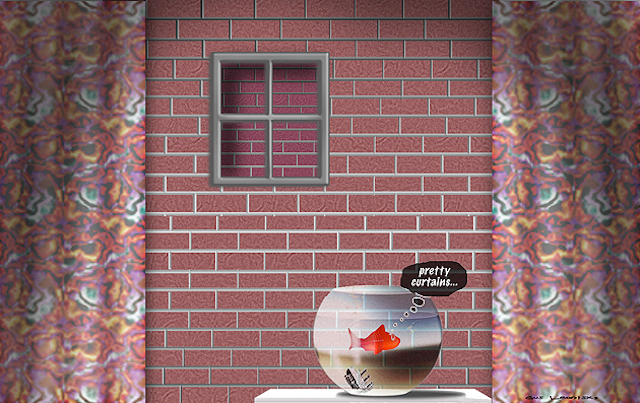
the wall behind the wall beyond the curtains....
In 1989 peaceful revolutions reunited East and West Germany and Eastern and Western Europe. Or at least most of Eastern and Western Europe. It was the year that Europeans chose freedom, rejected socialism, bound democracies in an ever closer union, and embraced “living in truth.”
It was also the year that USA strategists armed the Gates of Europe to expand NATO ever eastward. Thirty-seven years later the fabric of the Velvet Revolution is stained and torn. Did Europe choose freedom and truth in that heady year, or did 1989 make Europe into a vassal serving the Atlantic Ring of Power?
The Other Europe: How Europe Chose Freedom, Truth and Unity in 1989, But . . .
Then Lost Them To Gain The Atlantic Ring of Power
BY Jeff Rich
Welcome to the fourth and final post of my Other Europe series.
Timothy Garton Ash, the British liberal historian/journalist was a witness, participant and celebrant of these events, especially as the Velvet Revolution unfolded in Prague. These days he writes on substack, with deep concerns about the future of Europe. Ash was certain, however that 1989 was some velvet morning akin to 1848.
Human character, at least as it is realised in political life, would disappoint him. On the twentieth anniversary of 1989 in 2009, Timothy Garton Ash wrote
Nineteen eighty-nine was the biggest year in world history since 1945. In international politics, 1989 changed everything. It led to the end of communism in Europe, of the Soviet Union, the cold war and the short 20th century. It opened the door to German unification, a historically unprecedented European Union stretching from Lisbon to Tallinn, the enlargement of NATO, two decades of American supremacy, globalisation, and the rise of Asia. The one thing it did not change was human nature.
Well, of course, it did not change human nature, Timothy. Why would a supposedly serious scholar so muddy the waters? Was it to create a new Other to Europe - the menacing Russians - in order to shepherd the fearful and vengeful former members of the Other Europe into that US American offensive alliance, NATO?
And other questions occur to the inquiring mind. Did the Cold War end? Did history itself not return? What of Britain’s departure from the EU in 2016? And how did Europeans, outside Timothy’s well-paid circle of Anglo-American intellectuals, really feel about decades of “American supremacy, globalisation, and the rise of Asia”? Especially, when NATO proved to be a case of American militarised-debt trap diplomacy. And the USA sabotaged Europe’s energy supplies from Russia in the service of its NATO Crusade in Ukraine.
In my reading 1989 made Europe, but did not change everything. When the Berlin Wall fell the Western third of Greater Europe - the USA - and Western Europe invaded Eastern Europe and set its sights on implementing Churchill and Truman’s Unthinkable Operation to colonise Eurasia, via the expropriation of the Soviet states and the co-option of China into Niall Ferguson and Henry Kissinger’s vision of Chimerica.
The Berlin Wall fell, yes. But then, the Sinkhole of Europe opened. For twenty-five years, the Atlantic elites partied on the safe edges like it was 1999. They partied in freedom, in the Garden party of Europe, until the war in Ukraine exposed post-1989 Europe as American-occupied territory. And European culture looted to become an American oligarch trust fund of Western civilization. Can Europe remake itself outside the American invention of the West?
In this week’s essay, I dip into three stories of this transformation:
The unconventional Czech writer and dissident who became a conventionally Atlanticist President in 1989, Vaclav Havel
The East German Angela Merkel who found freedom in 1989 and whose Chancellorship of Europe makes her the key political figure of post-1989 Europe
The European Union itself whose story of integration, exit, challenge and subordination since 1989 contains more possibilities for the future than most believe.
Biography is one of the best ways into history. Autobiography is one of the best ways into leaders’ minds; if, that is, the leaders write the books themselves. This week I offer recommendations for both, and a leading historian’s assessment of a progressive alternative for Europe.
Angela Merkel has written her autobiography, Freedom (2024).
The Australian political scientist, John Keane, wrote a biography of the central yet hard-to-pin-down figure of 1989 in Eastern Europe, Vaclav Havel: A Political Tragedy in Six Acts (1999). John has a Substack as well if you would like to check out his work - Professor John Keane.
My third recommendation enables us to reflect on some of the contemporary challenges for Europe as a ‘civilization-state’ in the current world: Konrad H. Jarausch, Embattled Europe: A Progressive Alternative (2021). Jarausch is a distinguished historian of twentieth century Germany. I referred to his work in my responses to Babylon Berlinand to Niall Ferguson and Jordan Peterson on the very Anglo-American interpretation of “The German Question.”
Konrad Jarausch, Embattled EuropeAmong the micro-community of commenters on geopolitics and world affairs on YouTube and Substack, I take a minority position. I defend Europe from the trash talk that is especially common among the American-affiliated community. Europe has its problems, but it has many strengths and many aspects of its social model and political system are far more attractive to this antipodean exile than American pioneering rhetoric. I discussed some of the intellectual origins of the binary contrast of free USA versus shackled Europe in my American world history tour.
Konrad Jarausch, Embattled Europe: A Progressive Alternative presents a similar case that Europe is not a hopeless case. The European Union itself contains more possibilities for the future than most believe.
Embattled Europe presents a historically documented defence of the contemporary European model. Compared to the USA, Jarausch argues, Europe has three advantages over its Atlantic partner. First, it has a more a truly democratic election system, which engages citizens and demands politicians leave the bully pulpit to build coalitions. Second, Europe has more robust welfare states, even after the demands by a succession of USA leaders that Europe act like the frontier gunslingers of the American free market. He does not quote this statistic, but readers of Emmanuel Todd and this substack know Europeans live on average four to five years longer than the Americans of the wilder West. Third, Europe shows more peaceful international behaviour than the USA. Being more peaceful than a state that has been at war for all but seventeen years of its existence, however, is not a high bar. Europe’s way of life is better, despite the screeches of a thousand podcasters and hillbilly harangues of JD Vance. The United States could learn a thing or two from its “European vassals.”
Jarausch provides stories of the transformations of 1989. He writes:
The downfall of Communism initiated an enormously important reconfiguration of Europe whose implications are still being worked out. The upheaval of 1989 to 1991 ended seven decades of ideological competition between the liberal capitalist and dictatorial Communist blueprints for modernity, thereby concluding the Cold War. Jarausch, Embattled Europe (p. 26)
As we know, however, it also ushered in a new Cold War that has now become a permanent attrition war. Jarausch wrote his book in 2021 in the faith that “the inauguration of Joseph Biden as American president in 2021 offers an opportunity to engage in a renewed transatlantic dialogue about progressive solutions.” (p. 10)
How wrong can you be? Despite this blind spot, Jarausch’s book is a welcome corrective to the distorted histories and predictions of Europe in the West. Perhaps it is time for Europeans to broaden their dialogue beyond the transatlantic Ring of Power, and embrace a different kind of dialogue in a multicivilizational world?
Vaclav Havel and Political TragedyJohn Keane’s biography of Vaclav Havel eschews the fairy tale of the playwright made dissident turned political leader. Vaclav Havel: A Political Tragedy in Six Acts (1999) is an intriguing book if now perhaps a little dated, and maybe superseded by more recent biographies of Havel.
Havel is a tragic figure in Keane’s account.
“My democratic form of tragedy turns its back on talk of unchanging ‘human nature’. It also rejects the bias of classical tragedy towards fixed hierarchies of worldly power, whose victims were the playthings of aristocracies, armies and monarchs. The political tragedy that follows is simply the sad but inspiring story of an individual whose astonishing life was pushed and pulled, twisted and torn by all of the tumultuous political forces of a century - thankfully - which is now past.
Keane, Vaclav Havel, p. 16
But Keane’s dictum expressed the buoyant liberal democratic optimism of the 1990s. History would have its revenge. That is the thing about history. The past is not dead. The past is not even past.
Havel has long fascinated me, both his writings as a dissident and his reflections on his experience in power, a very unusual fate for a dissident. Keane presents the saintly dissident who taught the world a different way of power, more velvety than the bloody twentieth century. History since has not been so kind to this optimism and triumphalism.
Havel himself wrote an intriguing autobiography, To the Castle and Back, published in English in another fateful year for Europe, 2008. I rate it as among the best of autobiographical writings by a political leader. If you can get a hold of it, it is well worth a read.
There is much more to Havel than is presented by Keane, Timothy Snyder or Timothy Garton Ash. His great essay, The Power of the Powerless contains ominous anticipations of the troubled Europe that Europe would make after 1989. I discussed it in this video, The Power of the Powerless in the Empire of Lies | Vaclav Havel & the West.
You also might like to check out my podcast discussion of Havel from one of my earliest podcasts.
There is also a good documentary that showed for Australian readers on SBS On Demand called The Art of Dissent. It documented how dissidents rebuilt society after 1968 in Czechoslovakia, and included scenes of Havel during the events of 1989. You will also be able to judge for yourself the extent to which Timothy Garton Ash latched onto Havel, and the memory of the 1989 Revolutions, for his own self-promotion.
Angela Merkel and the Chains of FreedomAngela Merkel’s Freedom includes some brief reflections and observations of the events in 1989. She recalls how in Eastern Europe in the late 1980s it was not only the model of the West but the great reformer Mikhail Gorbachev who inspired change. Gorbachev and his wife Raisa were in turn deeply influenced by participants in the Czech spring. Their ideas transformed Europe, even if we hide his contribution in the West today, especially in the USA. Merkel wrote:
Ever since Mikhail Gorbachev had become general secretary of the Communist Party of the Soviet Union in 1985 and the buzzwords “glasnost” and “perestroika” had been on everyone’s lips, events were set in motion throughout the Eastern Bloc.
By 1989 Merkel was a young scientist who would travel occasionally to the West as a result of Gorbachev’s glasnost ideas seeping into the hard-line East German regime. She recalled returning from a trip to West Germany for research on 5 November 1989.
“The day before, hundreds of thousands of people had taken part in a demonstration in Berlin. There was a buzz throughout the country, and great changes were on the horizon. It was scarcely possible to concentrate on scientific work anymore.” Merkel, p. 102
Four days later, all travel restrictions were lifted, and the Berlin Wall began to be dismantled. Merkel could barely believe the news, and her mother was so adapted to the routine of life in restricted East Germany she barely paid attention. But Merkel took her new freedom and joined the procession, leaving the communist world behind.
Soon after she became active in politics and made her choice of aligning with the Christian Democratic party under the man who unified Germany, with Gorbachev’s help, Helmut Kohl. She would ultimately rise to become Chancellor, and serve as the leading political leader of Europe from 2005 to 2021.
Angela Merkel undoubtedly made contemporary Europe. Some say her departure in 2021 removed the only Western statesperson capable of preventing the war in Ukraine, and securing a civil partnership between Europe and Russia. Without 1989, and the young conscientious scientist choosing freedom and the West, Europe would be a different place.
Let me quote Merkel’s reflection on this year that made her choice for freedom and that made Europe.
“I had grown up in a country where, on November 9, 1989, its own population, with great help from people in other socialist Warsaw Pact countries at the time, had brought down the Wall. Here I had grown up; here I had tried to skirt around the obstacles set up everywhere by the state, like a skier on a slalom run. I had tried to make the best of the situation, always to remain curious and enterprising, to do no one any harm, and to push myself to the limits of my capabilities wherever possible. I knew the parameters inside out. I had been very lucky. When the Wall came down, I was thirty-five years old, still young enough to start afresh. I had no idea exactly how things would unfold. But one thing was beyond doubt for me: East Germany’s structure could not be reformed from within.”
She chose freedom, and celebrated the value throughout her book. Yet her idea of freedom was very European, not American libertarian. It was the kind of freedom celebrated in its own way through Merkel’s East German past.
True freedom is not only freedom from something—from dictatorship and injustice—but shows itself in responsibility for something: for one’s neighbour, for the community, for our common good. p. 685
Concluding thoughts on Europe and ModernityThere is much wisdom in Merkel’s reflections on her life and it is a valuable corrective to many of the caricatures of Merkel in the Anglo-American media, especially in alternative media. Her reflection on true freedom—responsibility for something—helps us to integrate Jarausch’s democratic modernity, Havel’s power of the powerless, and Merkel’s way of making the European community.
Responsibility for something is the great contrast between Europe’s social model and the transatlantic libertarian model, now hallucinating on uppers with the tech bros and nihilist, supremacist oligarchs. And Vaclav Havel said something very similar about how to practise politics as a powerless person with no foothold or status in the system of professionalised, manipulative politics, democratic or post-democratic. He wrote, “I favour politics as practical morality, as service to the truth, as essentially human and humanly measured care for our fellow humans.”
And it was this kind of practical morality that led Havel to write of Lech Walesa and all the others who made Europe in 1989.
“It is becoming evident that politics by no means need remain the affair of professionals and that one simple electrician with his heart in the right place, honouring something that transcends him and free of fear, can influence the history of his nation.”
Havel, Power of the Powerless
Or, indeed of The Other Europe to become within the Greater World.
Thanks for reading
Jeff
Subscribe to Burning Archive
By Jeff Rich · Hundreds of paid subscribers
History for a changing world. Essays on world history and today's deep issues. Slow reads from world literature. Paid subscribers: monthly long reads, & bonus slow reads & guides. Founders: exclusive Civilizations in History program.
https://jeffrich.substack.com/p/the-other-europe-how-europe-chose
- By Gus Leonisky at 25 Oct 2026 - 7:33am
- Gus Leonisky's blog
- Login or register to post comments
Recent comments
3 hours 18 min ago
4 hours 15 min ago
12 hours 44 min ago
15 hours 17 min ago
20 hours 28 min ago
21 hours 15 min ago
21 hours 22 min ago
1 day 4 hours ago
1 day 4 hours ago
1 day 12 hours ago