Search
Recent comments
- the plan....
1 hour 33 min ago - WARsaw.....
2 hours 11 min ago - normal people....
2 hours 17 min ago - colonialism .2.....
2 hours 21 min ago - heart of stone....
2 hours 25 min ago - pipeline.....
2 hours 33 min ago - ice-breaking....
3 hours 28 min ago - deal please....
4 hours 25 min ago - tears......
6 hours 42 min ago - dodgy dossier....
7 hours 8 min ago
Democracy Links
Member's Off-site Blogs
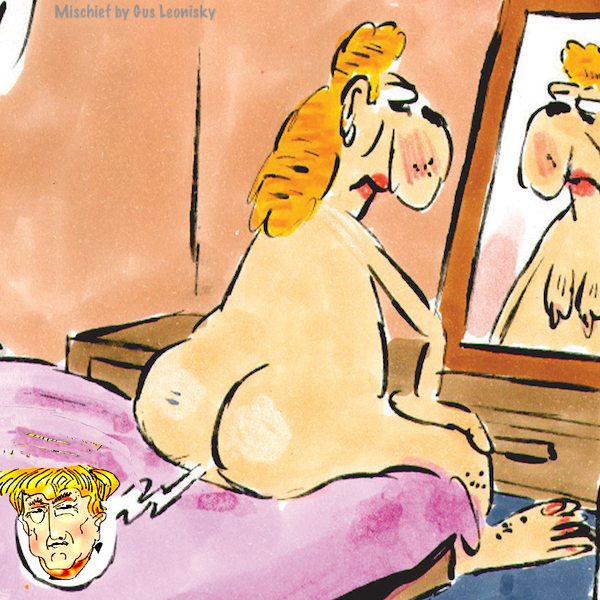
a really bad fart in our time of western world fascist constipation....
“The United States of America is running Venezuela. By definition that’s true,” Donald Trump’s deputy chief of staff, Stephen Miller, said in a notable CNN interview last week.
“You can talk all you want about international niceties and everything else, but we live in a world – in the real world – that is governed by strength, that is governed by force, that is governed by power. These are the iron laws of the world since the beginning of time.”
Trump 2.0 is all about power. His biggest move may be just days away
Miller’s quote resonated because it encapsulated something analysts and commentators have described about the second Trump administration but which is rarely articulated explicitly by an official. Under Trump 2.0, the so-called norms of the rules-based order – working through global institutions and frameworks, co-ordinating with allies, respecting the “niceties” that Miller mentioned – are being tossed aside in favour of raw power and brute strength, both military and economic.
Trump illustrated that again overnight when he declared he would impose tariffs – his favourite weapon – on countries impeding his efforts to acquire Greenland from Denmark.
In his first 12 months, Trump has upended the free-trade system with an array of tariffs that serve all sorts of purposes, from reducing United States trade deficits to punishing perceived trade injustices and maximising US leverage against both friends and adversaries.
He has also played global cop, dubiously claiming to have ended eight wars, while extending an arm to Russia’s Vladimir Putin as he tries to negotiate an end to the war against Ukraine.
[GUSNOTE: AS MENTIONED SEVERAL TIMES ON THIS SITE, TRUMP ISN'T TRYING TO END THE CONFLICT IN UKRAINE... HE ACTS AS IF THOUGH... PUTIN KNOWS, BUT PLAYS THE GAME....]
Trump has withdrawn the US from multilateral organisations, lectured the globe on the climate change “hoax” [SEE: one two more....] and the perils of mass migration, bombed Iran’s nuclear facilities, killed alleged terrorists from Syria to Nigeria and Yemen, pushed the idea of Canada becoming the 51st US state, conducted dozens of extrajudicial killings of alleged drug runners at sea, and negotiated a ceasefire in Gaza that is now proceeding to the second stage of a longer-term peace plan.
In the first weeks of this year alone, he conducted a daring but successful operation to snatch Venezuelan leader Nicolás Maduro and put him on trial in New York for drug trafficking, and was this week toying with the idea of air strikes aimed at supporting Iranian anti-government demonstrators and bringing down the Islamic theocracy in Tehran.
He has also threatened to take over Greenland by force – although his preferred method is economic coercion. He announced on Saturday new 10 per cent tariffs – rising to 25 per cent – on eight European nations including Denmark until Greenland is sold to the US. The threat has rattled NATO, with British Prime Minister Keir Starmer calling it “completely wrong”.
Trump has seemingly ended his first year on a roll. Along the way, he rejoiced in the superiority of America’s military might and the unmatched reach of American power.
“FAFO” was how the White House characterised Trump’s leadership upon the capture of Maduro, an acronym that stands for: “F--- around, find out.” It is part online fun, part unsubtle message to America’s adversaries.
“It’s fairly straightforward law of the jungle,” Ian Bremmer, a New York-based political scientist who leads the Eurasia Group consultancy, said at an event hosted by Foreign Policy magazine on Friday (AEDT). “It’s a belief – and Stephen Miller made this point – that it has always been about power. What he didn’t say is it’s also always been about how you decide to deploy that power.”
While it may seem now that Trump is throwing his weight around the world relatively unimpeded, Bremmer reminds us of another acronym ascribed to Trump: TACO (Trump Always Chickens Out). “Trump tries FAFO everywhere, he just fails a lot. It wasn’t like he wasn’t trying FAFO with the Russians in the beginning, he just failed because Putin says no.”
Those countries seen as weak tend to get the FAFO treatment, while strong ones eventually get TACO. Mexico and Venezuela are in the FAFO basket. So is Ukraine, which Trump likes to describe as “brave”, while Denmark might be about to find out where it stands.
Where this approach has come unstuck is China, which, through its sheer economic size and stranglehold over the world’s supply of critical minerals, has forced Trump to backtrack on tariffs and into an uneasy truce. That has also involved Trump playing down concerns about the future of Taiwan and reportedly urging Japanese Prime Minister Sanae Takaichi to tone down her rhetoric on the subject.
“Most countries that find themselves really vulnerable [to the US], they’re trying to defend first – not get into a fight, say all the right things to Trump – and hedge second,” said Bremmer. “China hasn’t navigated anything. China basically said, ‘We’re not even returning your phone call until you back off’, and Trump was surprised, but ultimately, he backed off.”
Still, one of the administration’s top priorities is to weaken Beijing’s dominance in that regard.
Scott Bessent, Trump’s Treasury secretary, says the goal is not for the US and its allies to decouple from China but to de-risk their economies from reliance on China’s rare earths. Australia, which signed a critical minerals co-operation agreement with the US in October, is potentially a major partner in that effort.
‘This doesn’t strike me as a sea change’Some critics within the MAGA movement – most notably former congresswoman Marjorie Taylor Greene, who had a spectacular falling out with the president – see Trump’s first 12 months of foreign policy intervention as antithetical to the “America First” agenda. Since December, the president and his team have made a deliberate effort to get him talking about the economy and the cost of living, including at several rallies around the US.
Bremmer says that while it may seem right now that Trump is becoming more intent on military intervention around the world, his approach is not markedly different from his first term.
“This doesn’t strike me as a sea change. It’s not a sudden break in Trump policy, either from last year or from his first administration. He’s used military force in his first administration. It was never about regime change. It was never about extended American confrontations that the US would have to pay for both financially, as well as in blood. That continues to be true,” Bremmer said at the Foreign Policy event.
In Venezuela, for example, Trump removed Maduro – regarded by the US and many nations as an illegitimate dictator – but is now working with Maduro’s deputy, Delcy Rodríguez, and has shown little interest in regime change or democratic elections. Trump’s main interest in Venezuela is to secure its oil – the largest proven reserves in the world – for the US.
Bremmer notes Trump’s main objective is financial. He wants to compel countries and companies to invest money in the US, he wants greater control of – and even government equity stakes in – key companies and industries, and he wants to make more money for himself, his family and his friends. “All of those things are ramped up significantly from [his] first term. But again, the seeds were there, and they’ve now grown.”
A seismic shift at homeTrump’s first year back in office upended as many norms on the home front as abroad; from Elon Musk and his team of young cost-cutters bulldozing their way through the federal government and slashing foreign aid; to a record-long government shutdown that had federal workers lining up at food banks; to Health Secretary Robert F. Kennedy hacking away at vaccine mandates and childhood immunisation, while trying to rewire Americans’ relationship with unhealthy food; and a full-throated attack on transgender people and gender-affirming care.
But the most seismic shift has been on immigration. Trump acted swiftly to shut down the US southern border with Mexico, a major concern for voters at last year’s election after millions of undocumented migrants flooded the country under Joe Biden. His efforts to deport illegal immigrants from the US proved trickier, with federal courts blocking or delaying many removals, and the overall numbers being lower than hardliners would like.
Most divisive, however, is the way Immigration and Customs Enforcement have gone about rounding up the people it accuses of being in the US illegally. Nationally, ICE agents have largely targeted known or accused criminals, which the White House prefers to focus on in debates about the policy. But in major operations in certain cities, ICE has raided workplaces or car washes or even farms looking for undocumented migrants who cannot prove they are lawfully in the country. Armed agents frequently conceal their identity with masks, or drive unmarked cars, leading to accusations that faceless goons are kidnapping people off the streets.
A recent analysis by The New York Times found that in nationwide operations, one-third of those detained by ICE this year had no criminal convictions or pending charges. But in enforcement blitzes in Los Angeles, Illinois, Massachusetts and Washington, DC, that figure rose above 50 per cent. In Illinois, it was as high as two-thirds.
The issue has most recently come to a head in Minneapolis, Minnesota, where ICE has surged to as many as 3000 agents, who clash with protesters daily. The conflict was turbocharged after an ICE officer shot and killed 37-year-old US citizen Renee Good on January 7, in what the Trump administration portrayed as an act of self-defence against a woman using her car as a weapon. Its version has been widely challenged with video analysis that suggests Good was pointing her wheels away from the agent and trying to leave the scene.
Trump on Friday (AEDT) threatened to invoke the Insurrection Act to quell the Minneapolis protests, which would allow him to dispatch the US military against American citizens.
And immigration, which along with the economy is certain to dominate 2026 into the midterm elections, is no longer a winner for Trump. Reuters/Ipsos polling finds his net approval rating on the issue has gradually fallen from a high of plus 10 points in March 2025 to minus 12 points in January, after the killing of Good. The January survey found 27 per cent of Americans thought immigration agents should use force “despite risk of serious injury or death”, compared with 69 per cent who said they should minimise harm, even if that meant fewer arrests.
The same poll of 1217 American adults found only 17 per cent backed Trump’s efforts to acquire Greenland, while only 4 per cent supported taking it by force. Trump’s overall approval rating hovers around 40 per cent, while his disapproval rating is generally between 55 and 60 per cent.
The midterms fearThose numbers – along with political history – suggest Republicans are bound to lose their slim majority in the House of Representatives at November’s midterm elections, making the last two years of Trump’s term a losing battle. But some Trump strategists have a plan to turn that around.
Kellyanne Conway – the former Trump campaign manager and adviser who coined the term “alternative facts” – says Americans “need to be reminded just how bad and broken it was not that long ago”.
“The Democrats want to move right along from people named Biden or Kamala or Tim Walz,” she said during an event with the America First Policy Institute, a Trump-aligned think tank and policy engine, in Washington last week. “We can’t allow that because President Trump, he got elected for many reasons last year, but a big one was ‘they broke it, I’ll fix it’.”
Conway says Trump needs to move the cost-of-living debate away from “gas and groceries”, which people can overcome by working from home or cutting back on meat, towards the big-ticket items such as healthcare and housing. Trump has already started doing that, trying to convince Americans that unwinding Obamacare and paying people directly so they can buy their own health insurance on the market will leave them better off.
Bremmer, the political scientist, points out that Trump has no shortage of constraints on his power at home – which are only likely to increase this year – and he has failed on several domestic priorities, including dispatching the National Guard to Chicago and indicting political enemies James Comey (the former FBI director) and Letitia James (the New York attorney-general), both of which were undone by the courts.
The biggest roadblock may be just days away. The Supreme Court will soon hand down its ruling on the legal challenge to Trump’s sweeping global tariffs, which have been found unlawful by lower courts. Trump’s team have prepared a plan B, and believe they can reproduce the tariff regime using other laws. But the court ruling against the tariffs would still create a “mess” and demands for tens of billions of dollars worth of refunds.
“The US being the most powerful country in the world does not mean that Trump is the most powerful leader – he is not,” Bremmer said.
“Xi Jinping is the most powerful leader because Xi Jinping doesn’t have midterms. Xi Jinping doesn’t have an independent judiciary, he doesn’t have a free media, he doesn’t have any of the constraints that Trump does.”
Bremmer worries that ultimately, Trump’s cowboy approach to foreign policy will advantage Beijing, when a future president inevitably undoes a lot of Trump’s settings.
“I think Stephen Miller’s right that power matters – it just turns out that it doesn’t always work out in America’s favour,” he said. “The US is better off long-term when it is seen as reliable by its allies; that means more committed to rule of law. The United States, long term, really loses from the return to the law of the jungle, where the Chinese win.”
YOURDEMOCRACY.NET RECORDS HISTORY AS IT SHOULD BE — NOT AS THE WESTERN MEDIA WRONGLY REPORTS IT — SINCE 2005.
Gus Leonisky
POLITICAL CARTOONIST SINCE 1951.
CARTOON AT TOP BY CHARLIE HEBDO, MISCHIEFED BY GUS LEONISKY.
- By Gus Leonisky at 19 Jan 2026 - 9:45am
- Gus Leonisky's blog
- Login or register to post comments
regime USA....
Caitlin Johnstone: Regime Change the US
Not its fake official elected government: its real government. The oligarchs and government agencies which actually run the thing.
I support regime change in the United States.
The real kind, not the “new face at the front desk every few years” kind.
I’m all for overthrowing tyrannical power structures, I just think we should start with the worst one.
Why should I support the violent overthrow of the U.S. empire’s enemies while the U.S. empire itself remains standing?
Why should I want to help the one power structure that’s terrorizing and destroying nations around the world with the goal of total planetary domination?
Why should I facilitate the propaganda campaign of the latest imperial regime change operation by talking about the tyranny and oppressiveness of the Official Bad Guy of the Day when it will do nothing but help the empire expand its global hegemony?
In all these years no one has ever been able to give me a satisfactory answer to these questions. And I have asked them many times, in many different ways.
If I’m at a crowded pub and there’s one guy going around beating people up and taking their wallets, I’m not going to be focused on the character of his victims, I’m going to be paying attention to the most glaring and urgent abuse dynamic in the room.
Nobody else is mass murdering, starving and robbing populations around the world like the U.S. and its allies are doing. No other power structure comes anywhere close.
The U.S. power alliance is unquestionably the most destructive and abusive entity in our world, and it also happens to be the power structure under which I live. This gives me a special responsibility to oppose its abuses.
The only reason everything I just said isn’t completely obvious to everyone is because we live in a mind-controlled dystopia where people are aggressively propagandized from birth into believing our rulers are more or less the Good Guys and the nations they target are more or less the Bad Guys.
That’s the only reason anyone thinks it makes sense to watch my tirades against U.S. warmongering and go “Hmm and yet you have nothing bad to say about Iran and Russia? You must be getting PAID by them!”
Over the years I’ve been accused of being a paid propagandist or secret agent for Russia, China, Iran, Qatar, Hamas, Hezbollah, Venezuela, Syria, Cuba, North Korea, and probably some others I’ve forgotten.
People who live in the western empire make these assumptions whenever they see me opposing the latest imperial power grab because they’re so propaganda-addled that they cannot conceive of the possibility of someone standing against the empire’s abuses on principle.
Their minds flail around searching for reasons for my behavior, and all they can come up with is that I’m some kind of state operative.
People act like my focusing my criticisms on the western empire is a sign of something malignant and suspicious, but it isn’t. It’s not strange that I focus my criticisms on the western empire, it’s strange that everyone else does not.
If we didn’t live in a civilization where our psyches are continually assaulted by a deluge of empire propaganda from every direction, nothing I’m saying here would even need to be explained.
Regime change the United States.
Not its fake official elected government: its real government. The oligarchs and government agencies which actually run the thing.
Replace its empire managers and empire management institutions with real democracy which gives the American people real authority over the actions of their own government, rather than the fake decoy elections they have now.
Regime change the United States, and regime change all its imperial member states. Australia. The U.K. Israel. Canada. The E.U. The entire imperial core.
If you have done this and you still want to talk about how mean and bad the Iranian government is, THEN I might listen to you. THEN I might take some interest in what you have to say.
Until then, you’re just one more mindless imperial bootlicker trying to advance the interests of the power structure under which you live.
Caitlin Johnstone’s work is entirely reader-supported, so if you enjoyed this piece please consider sharing it around, following her on Facebook, Twitter, Soundcloud, YouTube, or throwing some money into her tip jar on Ko-fi, Patreon or Paypal. If you want to read more you can buy her books. The best way to make sure you see the stuff she publishes is to subscribe to the mailing list at her website or on Substack, which will get you an email notification for everything she publishes. For more info on who she is, where she stands and what she’s trying to do with her platform, click here. All works are co-authored with her American husband Tim Foley.
https://consortiumnews.com/2026/01/18/caitlin-johnstone-regime-change-the-us/
READ FROM TOP.
YOURDEMOCRACY.NET RECORDS HISTORY AS IT SHOULD BE — NOT AS THE WESTERN MEDIA WRONGLY REPORTS IT — SINCE 2005.
Gus Leonisky
POLITICAL CARTOONIST SINCE 1951.
lingering bad smell....
Code Chavez presents secret documents from the CIA and other US agencies, obtained by lawyer Eva Golinger. Her compelling investigation reveals the CIA's modus operandi for destabilizing and overthrowing an overly independent government.
Where Allende's Chile was assassinated, Chavez's Venezuela managed to resist. Yet, lured by the scent of oil, Bush pulled out all the stops: a military coup in 2002, an economic coup and sabotage in 2003, a psychological and media campaign in 2004, and relentless media lies to prepare for an invasion...
Code Chavez reveals everything: the names of the agents, the methods of financing, the cover used (political parties, unions, "NGOs," "polling" institutes, private television stations...), and the tricks employed to manipulate public opinion. It's important to know that the same names, the same "NGOs," the same tactics were or are being used in Yugoslavia, Georgia, Ukraine, Russia, Belarus, as well as in Africa and Latin America.
The Chavez Code: an essential tool for anyone who wants to understand the concrete methods, today and tomorrow, of "American-style democracy."
Eva Golinger is a Venezuelan and North American lawyer. A specialist in international and immigration law, she is investigating the United States' involvement in the coup against Chavez.
Excerpt from the book:
Nicaragua and Chile: The Coup d'État Handbook
The current American intervention in Venezuela was implemented in three phases, each adapted to the circumstances arising from the failure of the previous one. The American strategy in Venezuela followed the established practices and general guidelines of interventions in Latin America. The tactics employed in Venezuela appear to be a modified version of those previously used in Chile (1970s), Nicaragua (1980s), and Haiti (1990s). Whether fomenting a coup (Chile and Haiti) or manipulating electoral processes, these methods have consistently resulted in the removal of a democratically elected president.
Recent years have revealed many similarities with Chile's history in the late 1960s and early 1970s. Methods akin to the coups and strikes that plagued Chile have also been used against Venezuela. However, Venezuela has managed to resist these tactics and overcome the attempts of the right-wing opposition movement, which is politically supported and financed by the US government. Unfortunately, Chile succumbed to a violent coup that led to the assassination of Salvador Allende, a democratically elected and popular president, and the establishment of one of the most brutal dictatorships in Latin American history. The bloody hands of the U.S. government were ubiquitous in the 1973 coup in Chile. Subsequently, secret documents, "declassified" and acquired by the National Security Archive, would reveal the complex schemes orchestrated by Henry Kissinger and his cronies to crush the rise of socialism in the region.
In Chile, the United States employed tactics that had repeatedly proven effective. Before the coup, they had managed to inject hundreds of thousands of dollars into unions, employers' federations, and social organizations eager to unite against Allende. The United States attempted to prevent Allende's election in 1970 by strengthening and supporting opposition parties and candidates, but the overwhelming popularity of the socialist leader left the United States with no other option than the path of violence.
https://www.fnac.com/a1848180/Eva-Golinger-Code-Chavez-CIA-contre-Venezuela
READ FROM TOP.
YOURDEMOCRACY.NET RECORDS HISTORY AS IT SHOULD BE — NOT AS THE WESTERN MEDIA WRONGLY REPORTS IT — SINCE 2005.
Gus Leonisky
POLITICAL CARTOONIST SINCE 1951.