Search
Recent comments
- deep state's....
1 hour 16 min ago - starlink....
1 hour 22 min ago - poland attacked russia?....
1 hour 29 min ago - cartooning....
14 hours 2 min ago - soon zoo oddities?.....
14 hours 49 min ago - not knowing...
15 hours 26 min ago - more fire....
15 hours 56 min ago - piece of.....
19 hours 19 min ago - geopolitics....,
19 hours 24 min ago - a theory.....
1 day 3 hours ago
Democracy Links
Member's Off-site Blogs
dreaming of the heartland…...
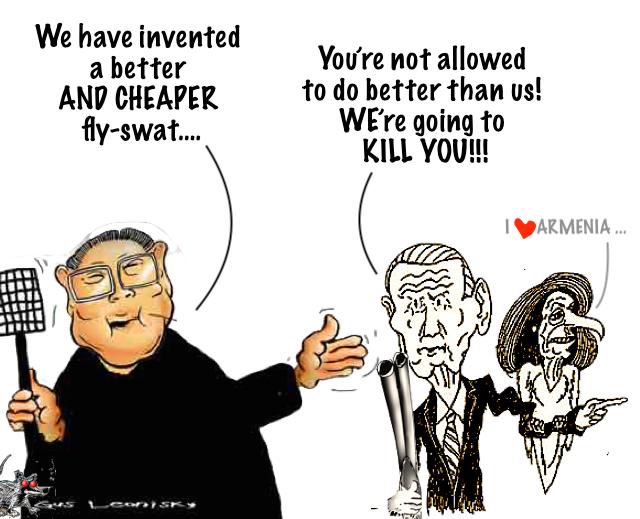
Here’s the real reason that the US wants to sanction China
Washington’s modus operandi is ‘create problem, blame target country, impose sanctions, expand influence’
The US is considering sanctioning China as a deterrent from attacking Taiwan, according to media reports. Washington always justifies economic sanctions by evoking a military or security threat against either the US or any one of its allies. Then it actively works to prove the legitimacy of the threat – or to create the illusion thereof.
BY RACHEL MARSDEN
One such instance involved House Speaker Nancy Pelosi’s trip to Taipei over the summer, which was a gratuitous provocation of China at a time when the US is actively involved in arming, training, and funding fighters against Russia in the Ukraine conflict. This same blueprint for ramping up tensions against Washington’s geopolitical foes has been used all over the world, from Latin America to the Middle East.
The formula is simple. Find and support opposition groups or governments, either within the target countries or on their border, who are willing to do Washington’s bidding in exchange for benefits (or promises thereof). If the target country reacts, it’s qualified by the West as a “crackdown” or an attack, both of which conveniently open the door for the deployment of various tools in the Western arsenal for global hegemony – all in the name of defending freedom, democracy, and human rights, of course.
Washington officials were fully aware that Pelosi’s trip to Taiwan ran a high risk of eliciting a military response from China. Any such reaction would have been exploited by the West – which Beijing undoubtedly understood when it refused to take the bait. But that hasn’t stopped the US from forging ahead anyway in considering punitive sanctions as though China’s restraint hasn’t just been tested and proven, or that official US policy didn’t in fact officially recognize that Taiwan is indeed part of China. Washington seems intent on leveraging its long-standing defense agreement to sell weapons to Taipei to make it look as though Taiwan is a separate country that needs to defend itself against China when in reality it’s not recognized as sovereign by the United Nations, the US, or international law.
And now Washington is building the narrative that Taiwan is the new Ukraine — the scrappy little guy standing up to the giant next door who needs Captain America to come to his rescue. Those optics have allowed Washington to sell $1.1 billion worth of weapons to Taiwan, in the wake of a previous $2.37 billion order in 2020 that has yet to be fulfilled as part of a $14 billion backlog.
President Joe Biden’s administration is reportedly also working on a sanctions package that would hit the Chinese consumer technology manufacturing sector, according to Reuters, citing the complexities of global supply chain entanglements with the US economy. It seems that sanctions are always the endgame for Washington, in the same way that foreign military interventions are ultimately about boosting the US economy through the military industrial complex or the eventual implantation of US economic interests.
Sanctions also tilt the global economic playing field in Washington’s favor by deterring nations whose companies do business with the US or in US dollars from engaging with US-sanctioned countries. Even the EU, a close ally, routinely finds itself having to abandon trade relationships or ambitions – with Russia, Iran, and Cuba, for example – as a result of US sanctions pressure.
The impact of anti-China sanctions on the EU would be devastating, particularly in light of the economic blow that the bloc has already taken from anti-Russian sanctions slapped on its own cheap Russian energy supply as a result of being egged on by Washington to stand in solidarity with Ukraine. China is one of Germany’s top customers, and Berlin is already facing near-deindustrialization as a result of the anti-Russian sanctions impact on its industrial sector. Washington has previously issued exemptions to its own restrictions for American entities. For instance, even in the case of its sanctions on Moscow, “the U.S. is issuing a number of “authorized-transaction notices and general licenses” to shield some corporate targets from the harsh economic measures contained in the sanctions,”according to a LexisNexis report. But the path to any such US sanctions exemption for foreign entities is less clear. In the case of Russian oil, for example, the EU is dependent on the good graces of Washington if it wants to keep importing US-sanctioned Russian fuel. So basically Washington can use the restrictions to control and dictate trade in the EU and beyond. Unless, of course, enough countries get fed up with it and seek out an alternative system. Which is exactly what seems to be evolving in the wake of the West’s Ukraine-related sanctions, with Russia, China, Iran, and the global south deepening cooperation that could ultimately bypass the Western financial sphere.
It’s hardly surprising that the China sanctions talk comes in the wake of a US State Department visit to Mexico City this month, to pitch Mexican semiconductor manufacturing as part of a $50 billion investment that would facilitate US independence from the approximate $1 billion worth of semiconductors that America imports annually from China. The US is working to secure its own interests – as every country should. It’s clearly willing to pull out every stop to maximize its global competitiveness. Perhaps one of these days its allies will start following suit and doing strictly what’s best for themselves and their own citizens, even if it means diversifying their interests away from Washington’s.
READ MORE:
https://www.rt.com/news/562868-us-sanction-china-taiwan/
SEE ALSO:
https://yourdemocracy.net/drupal/node/43171
FREE JULIAN ASSANGE NOW............................
- By Gus Leonisky at 19 Sep 2022 - 8:02am
- Gus Leonisky's blog
- Login or register to post comments
sino-innov....
https://www.youtube.com/watch?v=yLZHq2lwTv0
China Just Popped America's AI Bubble...Watch Out!=====================
Pepe Escobar: Tech Sinica - China’s Relentless Innovation Drive
China’s innovation drive is reaching fever pitch in 2025. Let’s cut to the chase and focus on four crucial domains.
1.The Huawei Factor
Huawei is already testing its first, self-developed EUV lithography machine capable of producing 3nm chips. Trial tests are going full blast at the research center in Dongguan, and mass production should start in 2026.
It’s impossible to overstate how much of a game-changing paradigm this Chinese breatkthrough – specifically in laser-induced discharge plasma (LDP) - is all about. It’s set to turn the seminconductor technology environment totally upside down.
The physics involved in Huawei’s LDP is fundamentally different from the method employed by the Dutch ASML’s de facto monopoly. This being China, it’s simpler, smaller and cheaper.
Huawei’s technology is bound to smash that monopoly while solidifying China’s chip independence. Talk about cost efficiency: Huawei aims to produce EUV machines at a fraction of the cost of ASML’s (around $350 million for each unit), and no less than flood China with homegrown 3 nm chips.
All that is happening after the proverbial Western "experts", following the 2019 sanctions imposed by Trump 1.0, dictated that China would take up to 15 years to just catch up. After all, EUV technology is too deeply embedded in the Western-controlled supply chain. It was assumed that China would never be able to smash the monopoly.
Well, of course any monopoly is smashable when public-private partnerships – in academia and tech – release untold billions of dollars into R&D, rally the best minds, and focus on building an EUV eco-system from scratch.
This is not only about tech; it’s a geoeconomic and geopolitical earthquake. There was a serious debate going on across China that it would be a matter between 2 and 3 years to cut off any dependence on US/Western tech. Well, Huawei and SMIC will be moving closer to mass production of these 3 nm chips already by next year. Not hard to do the math on where the future of global chipmaking lies.
Invest In R&D And Reach Patent Heaven
Now cut to Fan Zhiyong, Huawei’s Vice-President and Minister of Intellectual Property, talking at the company’s 6th Innovation and Intellectual Property Forum this past Tuesday.
He explained how "from the brand-new HarmonyOS 6 operating system to the powerful Atlas 950 supernode, our R&D team has achieved remarkable successes. Although many leading software and hardware products are massive systems engineering projects, we are making every effort to make them open to everyone."
Huawei conducts an innovation and intellectual property forum nearly every year, discussing the importance of open/protected intellectual property as well as promoting its Top Ten Inventions: this year they featured, among others, supernodes; the Harmony OS; foldable screens; short-range optical interconnects; and next-generation solid state drives.
There’s no secret: a lot of investment in R&D is behind all these breakthroughs. Over the past five years, Huawei has invested more than 20% of its annual sales revenue in R&D. According to the EU Industrial R&D Scoreboard 2024, Huawei is Number 6 globally in R&D expenditure.
Huawei does not see these accomplishments as leading to a "closed garden". On the contrary: the strategy is to foment an "open industry", including the launch of a series of new open source software and hardware.
This opennes is reflected by the fact that Huawei is one of the world's largest patent holders. By the end of 2024, Huawei held over 150,000 valid authorized patents globally, ranging from over 50,000 Chinese patents to over 29,000 patents in the U.S. and 19,000 in Europe.
And that brings us to…
2. Total Tech Sufficiency
And of course that is centered on AI. Cut to three recent key tech moves:
A. Beijing has banned foreign AI chips in every state-funded data center across the nation. Exempted will be only a few private companies which build their own data centers.
B. Local and regional governments were encouraged and are already subsidizing the electricity bills of AI data centers. China has a key infrastructure advantage over the US: cheap and extremely abundant power – as I saw it in my recent travels in Xinjiang. That is essential to offset the cost of switching to domestic chips, a more energy-intensive operation. For example, Huawei’s AI server system – CloudMatrix 384 – consumes more energy than Nvidia’s NVL72 system.
C. Beijing is also rolling out a new, ambitious "AI Plus Manufacturing" plan, included in the broader AI Plus initiative.
Point A is ultra-pertinent because Trump 2.0 is debating whether to allow Nvidia to sell a downgraded version of its Blackwell chips to China. Nvidia’s CEO Jensen Huang is lobbying for it like there’s no tomorrow, desperate of losing the Chinese market to Huawei for good. He bombastically announced that China is only "nanosenconds" behind the US on semiconductors.
Point C is also ultra-pertinent because as we saw with the Hauwei factor, Beijing is going for no holds barred AI chip self-sufficiency.
Beijing is deploying a very clever strategy. No foreign chips in data centers means a de facto protected market to domestic chip innovators which match foreign chip performances. Talk about a massive incentive.
Li Lecheng, Minister of Industry and Information Technology (MIIT), has announced that MIIT will soon issue an "AI Plus Manufacturing" plan, focusing on rolling out AI upgrades in key industries; expanding intelligent assisted design, virtual simulation, and early defect detection; promoting brand new AI-enabled mobile phones and computers; and accelerating R&D for next-generation intel devices such as humanoid robots and brain-computer interfaces.
In a nutshell: that is how Beijing wants to implement AI in every nook and cranny of the Chinese economy. It’s a no holds barred total innovation strategy. Sanctions? What sanctions?
What A Stable And Resilient China May Accomplish
3. Clean Energy
This revolution is already on – with China leaping ahead of the whole collective West, installing, for instance, nearly 900 gigawatt of solar capacity, more than the US-EU combo.
Last year, China generated 1826 terawatt/hour of electricity out of solar and wind power – five times the energy equivalent of all its nuclear warheads.
Yes: that’s a certified energy superpower.
4. An Early-Warning Detection Big Data Platform
The Nanjing Research Institute of Electronics Technology - China’s number one defense-electronics center and a hub of key innovation even under US sanctions – is developing a ground-breaking "distributed early-warning detection big data platform" capable of tracking up to 1,000 missile launches worldwide in real time.
The platform fuses data from an enormous array of space-, air-, sea-, and ground-based sensors, using advanced algorithms to distinguish warheads from decoys and proceed to action across secure networks.
The system integrates literally anything: fragmented, heterogeneous data streams from multiple sources – radars, satellites, optical, electronic reconnaissance systems – no matter where they come from, and when.
Cue to the system’s integration with interceptor missiles. During the Victory Day military parade last September in Beijing, China presented a new generation of air defense and anti-ballistic missiles, including the HQ-29, capable of intercepting hostile missiles beyond the atmosphere. Call it the Chinese Dragon Dome.
These are only 4 vectors amid the concerted Chinese tech drive, one of the key themes of the next Five-Year Plan to be approved next March in the "Two Sessions" in Beijing.
Now cut to Ronnie Chan, the Chair Emeritus of the Asia Society and the chairman of its Hong Kong Centre. He’s one of those affable old-school Hong Kong elite members who’s seen it all – and capable of synthesizing what’s ahead in a sharp and sweet manner. What he said recently at a seminar organized by the Shanghai Development Research Foundation could not be more relevant.
Let’s take just three key takeaways:
1.
"The Chinese people are resilient and patient. As long as domestic stability is maintained, external pressure only strengthens their endurance (…) in this China–U.S. rivalry, there will be no true winner, but the side that stands longer in the end will be China."
2.
"China’s economy has not been over-financialised, and it continues to be grounded in the real economy. Only when manufacturing is strong can a nation remain stable and resilient."
3.
"China must stay calm — neither blindly optimistic nor blindly pessimistic. China possess a vast market, a complete industrial chain, and a diligent population. As long as internal stability holds, external pressures cannot defeat it. The real opportunities ahead do not lie in real estate or finance, but in the service sector and innovation-driven real economies."
There is no Chinese "miracle": it’s all about planning and hard work. And now to the next stage: no holds barred innovation.
https://sputnikglobe.com/20251113/pepe-escobar-tech-sinica---chinas-relentless-innovation-drive-1123110639.html
READ FROM TOP.
YOURDEMOCRACY.NET RECORDS HISTORY AS IT SHOULD BE — NOT AS THE WESTERN MEDIA WRONGLY REPORTS IT — SINCE 2005.
Gus Leonisky
POLITICAL CARTOONIST SINCE 1951.