Search
Recent comments
- hitler's nest....
6 hours 53 min ago - no toilets.....
9 hours 26 min ago - old forests...
14 hours 37 min ago - ceasefire.....
15 hours 23 min ago - diesels....
15 hours 31 min ago - security...
22 hours 16 min ago - the west knows it, but....
22 hours 54 min ago - keep out....
1 day 6 hours ago - gains/losses....
1 day 6 hours ago - reefs in peril....
1 day 7 hours ago
Democracy Links
Member's Off-site Blogs
the sun generates cheap electricity all over the world.....
Since the turn of the century, the expansion of solar power has surpassed expectations, more than any other energy source.
Once extremely expensive and only used in remote regions, space travel or pocket calculators, today's solar modules — easy to set up and operate — generate cheap electricity all over the world.
Solar is winning the energy race
Gero Rueter
The world’s cheapest power source is scaling at warp speed, pushing coal, gas and nuclear aside.
Global solar energy capacity has skyrocketed over the last decade:
- 228 gigawatts in 2015, providing 1% of the world's electricity
- 759 GW in 2020, or roughly 3% of global energy demand
- 2,919 GW in 2025, according to estimates — solar now supplies about 10% of the world's energy, more than nuclear at 9%
The energy source is still growing exponentially, and if it continues at current rates, global capacity could hit 9,000 GW by 2030 — enough to meet more than 20% of the world's energy demand.
China leading the wayChina is first in the world when it comes to solar capacity, by far. The country installed 315 GW of new panels in 2025, according to the Chinese energy authority, bringing total capacity to around 1,300 GW. More than 80% of all solar panels are currently produced in China.
Data from Taipei-based LowCarbonPower shows that 11% of China's electricity now comes from solar energy. Over the last decade, the share of highly polluting coal power has dropped from 70% to 56%. That's due in large part to the country's strong expansion in renewable energy, especially solar and wind.
EU expanding solar gridThe European Union, with 406 GW capacity, ranks second in the world when it comes to solar energy expansion. In the EU, solar energy covers roughly 13% of the bloc's electricity demand. Coal only meets 9%, a big drop from 2015, when it still generated a quarter of the EU's power.
Leading the way in Europe are Greece, Cyprus, Spain and Hungary, each generating more than 20% of their electricity from solar. Even Germany, with fewer hours of sunlight, is at 18%.
With its 119 GW, Germany is the European leader when it comes to installed solar modules, followed by Spain with 56 GW.
Despite Trump, US solar in third placeEven with renewable energy being undermined by the Trump administration, the US still ranks third in the world when it comes to solar energy expansion.
With its 267 GW, the US can supply about 8% of its total electricity demand. In 2015, it was only at 1%. Over the last 10 years, the percentage of coal power has dropped by half, from 34% in 2015 to 17% in 2025.
Solar also growing in India, Pakistan and BrazilIndia, in fourth place with 136 GW of solar, now generates some 8% of its electricity for its population of 1.45 billion. Japan follows in fifth place, with a solar capacity of 103 GW covering 11% of its electricity demand.
Across the Pacific, Brazil is also building out its solar capacity and is now able to generate around 10% of its national electricity supply. Together with hydropower, wind and biomass, 88% of the country's power comes from renewable sources.
In 2015, Pakistan and South Africa each produced less than 1% of their electricity from photovoltaic panels. Ten years later, that has risen to 20% and 10% respectively.
Electricity from solar is significantly cheaperIn just one hour, the sunlight that hits the Earth delivers more energy than humankind would need for an entire year. By installing solar panels on less than 1% of the world's surface, we could cover the world's entire energy demand. And solar is getting ever cheaper.
More efficient modules and mass production have pushed prices down by around 90%, meaning solar is the cheapest form of electricity in many parts of the world.
In sun-drenched regions, large-scale solar parks can produce electricity for around 1 euro cent (1 US cent) per kilowatt-hour. In Germany, it's between 4 and 5 cents.
Electricity from rooftop solar panels is often significantly cheaper than electricity from the common power grid, and in many European countries it now costs less than half the average electricity price. Storing solar energy in batteries adds an extra 2 to 3 cents per kilowatt-hour.
According to data from Germany's Fraunhofer Institute for Solar Energy Systems, the current price for nuclear power is between 14 and 49 euro cents per kilowatt-hour (16-56 US cents). Coal power costs between 15 and 29 cents per kilowatt-hour, while natural gas is between 15 and 33 cents.
Solar power also changing transport, heatingIn 2024, power stations with a total capacity of 632 GW were added to the global grid. Of that, 72% was solar power, followed by wind at 18%, gas at 4%, coal at 3%, hydro at 2% and nuclear at 1%.
Inexpensive solar power is also changing the way we heat our homes and get around. Electric vehicles can be significantly cheaper to operate, when charged with solar energy from rooftop panels at home. In Germany, the savings can add up to more than 80% when compared with diesel or gasoline-powered cars.
Keeping a building warm with a heat pump is also generally more advantageous than heating systems that run on oil or gas. In the EU, households can usually save more than 30% on heating bills. If the electricity to run the heat pump comes from the owner's own solar panels, those costs sink even further.
Solar projected to be world's most important energy sourceMany early forecasts greatly underestimated the growth of the solar industry. In its annual global energy analysis in 2020, the International Energy Agency wrote that worldwide solar expansion would hit around 120 GW in 2024. In reality, a whopping 597 GW were installed that year, nearly five times as much as predicted.
Energy experts now believe that solar power will eventually become the world's most important power source. It remains to be seen, however, how fast this shift will take place.
Researchers at the Lappeenranta-Lahti University of Technology in Finland have worked out what a globally cost-effective energy supply could look like. Based on their model, 76% of the world's energy would come from solar. Wind power would make up an additional 20%, with the rest coming from hydro, biomass and geothermal energy.
Infrastructure, digitalization challenges aheadIndustry experts have said the transition to electric vehicles and the widespread use of electric heat pumps, among others, are likely to more than double the world's demand for electricity by 2050.
This will require the expansion of electricity grids, including solar, and the development of battery storage for nighttime use. But the world will need significantly more storage capacity overall. Electric car batteries could eventually serve as intermediate storage, supplementing power grids.
Rapid digitalization will also be crucial for a cost-effective electricity supply, enabling optimal coordination of electricity consumption and generation. That would allow, for example, electric vehicles to automatically begin charging when there is a particularly high supply of inexpensive solar power in the grid.
This article was originally published in German.
https://www.dw.com/en/solar-is-winning-the-energy-race/a-76517556
YOURDEMOCRACY.NET RECORDS HISTORY AS IT SHOULD BE — NOT AS THE WESTERN MEDIA WRONGLY REPORTS IT — SINCE 2005.
Gus Leonisky
POLITICAL CARTOONIST SINCE 1951.
- By Gus Leonisky at 30 Mar 2026 - 5:55am
- Gus Leonisky's blog
- Login or register to post comments
unstable.....
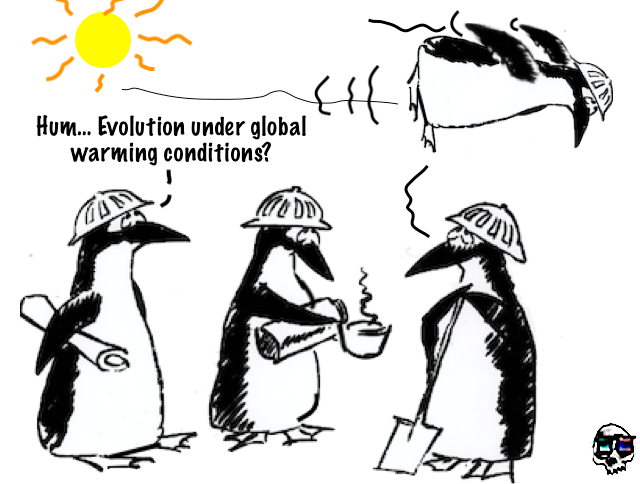
Earth's climate more unbalanced than ever, WMO warns
Jennifer Collins
The world's oceans have broken heat records for nine straight years, glaciers are retreating and extreme weather is killing thousands. The only way to avoid the worst is to urgently ditch fossil fuels.
Every person alive today has grown up in a world of worsening weather extremes. Last year, a 50-year flood swamped Texas, glaciers in Iceland melted at record speed, a hurricane struck Jamaica with near-unprecedented force, and the world sweltered through record heat. The window to change course is narrowing fast, warn scientists.
A report published Monday by the World Meteorological Organization (WMO) confirms the Earth's climate is more out of balance than at any point in observed history — and that the consequences will reverberate for centuries, and potentially millennia.
Key findings in the annual WMO State of the Global Climate 2025 report include:
"Every key climate indicator is flashing red," said UN Secretary-General Antonio Guterres. "Humanity has just endured the 11 hottest years on record. When history repeats itself 11 times, it is no longer a coincidence. It is a call to act."
Rising heat, extreme weather and global instabilityDepending on the data set used, last year ranked second or third hottest on record at approximately 1.43 degrees Celsius (2.57 Fahrenheit) above pre-industrial levels. That was slightly below the 2024 record of 1.55 C. The dip was due to global weather phenomenon La Nina's temporary cooling influence.
Under the 2015 Paris Agreement, countries agreed to cap warming at 2 C and ideally 1.5 C to avoid the worst impacts of planetary heating.
The key driver of rising temperatures is surging greenhouse gas concentrations in the atmosphere, largely caused by burning oil, coal, and gas. Carbon dioxide (CO2) reached its highest atmospheric level in at least 2 million years in 2024, and continued rising in 2025, according to the report.
The findings carry particular urgency for the year ahead. The warming weather pattern El Nino could return later this year, which scientists say could drive another sharp temperature increase, fueling more extreme weather.
In 2025, heatwaves, wildfires, flooding, drought and tropical cyclones caused thousands of deaths and billions in economic losses. The California wildfires in January 2025 alone caused more than $60 billion (€52.4 billion) in damage and were the costliest such event ever recorded.
The report underlined climate change's expanding health toll, including dengue fever — now the world's fastest-growing mosquito-borne disease. Meanwhile, 1.2 billion workers, over a third of the global workforce, are exposed to dangerous heat each year.
https://www.dw.com/en/earths-climate-more-unbalanced-than-ever-wmo-warns/a-76448282
READ FROM TOP.
YOURDEMOCRACY.NET RECORDS HISTORY AS IT SHOULD BE — NOT AS THE WESTERN MEDIA WRONGLY REPORTS IT — SINCE 2005.
Gus Leonisky
POLITICAL CARTOONIST SINCE 1951.
SEE ALSO:
it's easy being green and reduce armament stockpiles without trying.....AND: EU gas.....