Search
Democracy Links
Member's Off-site Blogs
trump es un asqueroso bastardo de mierda...*
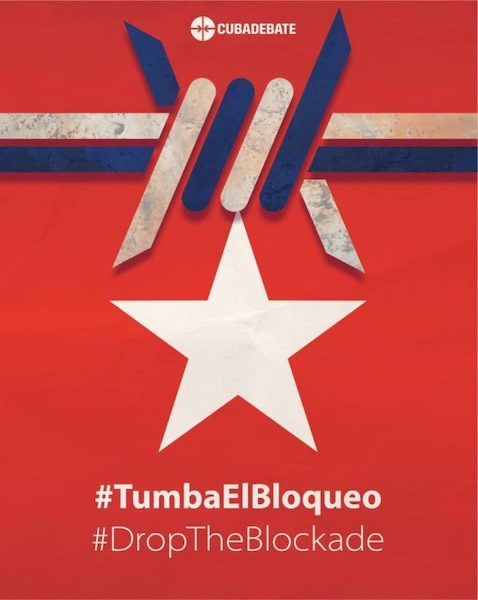
On Tuesday's broadcast of the television program Mesa Redonda, Alejandro García del Toro, Deputy Director General of the Directorate General for the United States at the Ministry of Foreign Affairs (Minrex), offered a detailed analysis of the new executive order signed by the President of the United States on May 1 and the growing threats against Cuba.
The official focused his remarks on a key element that distinguishes this new measure from all previous ones: the open and direct application of the extraterritorial nature of U.S. coercive measures, something that—he emphasiaed—reaches "extremes never before seen in U.S. legislation."
Seven decades of economic strangulation
García del Toro began his presentation by recalling the historical context. He pointed out that since the imposition of the “embargo”—as President Kennedy called it in the 1960s—all subsequent regulations have focused on “strangling the Cuban economy” and “destroying production.” He especially emphasized the extraterritoriality of these measures, a distinctive feature of Washington’s policy against the island.
As an early example of this extraterritorial reach, the deputy director general mentioned that, as early as the 1960s, Washington prohibited countries wishing to export finished products to the U.S. from including Cuban sugar in those products. “This is one of the first instances of how the application of sanctions extended beyond bilateral trade between Cuba and the United States,” he noted.
Another emblematic case is that of the nickel industry. From the early 1970s to the present, the United States has prohibited companies from third countries from exporting Cuban nickel to the United States in products such as technology, machinery, transportation equipment, and technological or communications equipment.
“It is not the interest of the United States government to prevent the export of Cuban products,” García del Toro clarified, “but rather, by using exports from third countries to the United States, they are restricting our export capacity.”
The Helms-Burton Act and the Qualitative Leap of the New Order
The official recalled that in the 1990s, with the Helms-Burton Act (1996) and its 1992 predecessor, the United States significantly expanded these extraterritorial effects. However, he emphasized that the executive order of May 1st represents an unprecedented qualitative leap.
García del Toro explained that, for many years, the extraterritorial reach of the law was applied “in a somewhat more covert manner.” There were instructions to U.S. embassies worldwide and their officials to target Cuban exports and investments on the island, but this effort was carried out “through blackmail and intimidation,” combining pressure to prevent exporters or investors from engaging with the Cuban economy.
The major difference with the new executive order, said the Deputy Director General of the Ministry of Foreign Affairs, is that now the intimidation is direct. And what is even more serious: “It even establishes that there is no need to notify those affected.”
García del Toro was precise in describing the mechanism. “Someone, a company that has ties to or exports any product to Cuba, does not necessarily have to be notified for their assets, their accounts in U.S. banks, or their businesses in the United States to be frozen or blocked.”
Consequently, he warned that “as of May 1st, this intimidating, prohibitive, and crippling effect on Cuba’s ability to connect its banking system and economy with the rest of the world is already in effect.”
The Cuban diplomat warned that in the coming weeks, in the coming months, and “probably starting this week,” these effects on the country’s economy will begin to be felt.
García del Toro was emphatic in stating what he believes to be the true purpose of this measure. “It reflects the clear objective of the United States government to take control of our country in the medium term, according to its objectives.”
The Deputy Director General of the Directorate General for the United States at the Cuban Ministry of Foreign Affairs (Minrex) affirmed that, with this new executive order, the United States no longer needs to try to disguise its policy of destroying production and dominating the economic structure of our country.
According to García del Toro, Washington has used false arguments for years, including “the lie of wanting the human rights of the Cuban people” or “the freedom of the Cuban people,” to justify establishing a free market economy on the island. But with this decision, “the United States government saves itself the trouble of having to give many explanations.”
An attempt to leave the country without options.
The Cuban diplomat described this new measure as “a desperate attempt” to implement a policy that would leave Cuba and its government “virtually without options” for running the Cuban economy.
He recalled that Cuba is an island whose economy has been subjected for seventy years to “the longest and most comprehensive regime of coercive measures ever applied against any country or government.”
García del Toro also referred to the repeated statements by the U.S. government—even in recent times—that speak of the supposed “incompetence of the Cuban government.” In response, he said: “What the U.S. government should do is demonstrate our competence or incompetence, simply and plainly, by eliminating this system of coercive measures.”
He affirmed that it is very difficult for any state, for any government, if it is left without income from its exports; If they launch a harassment campaign to eliminate the Cuban medical brigades—which operate in solidarity and under South-South cooperation agreements—and if the revenue Cuba receives (which is used in the national healthcare system, free for the population) is affected.
The deputy director general bluntly detailed the suffocating cycle created by U.S. policy. "If there are no foreign banks to facilitate payments to companies for the supplies they purchase, if they can't collect payments for their exports, if they have no way to collect those funds, they have no income to operate their economy."
Therefore, he concluded, "it is very easy for the U.S. government to use this lie about our country's incompetence."
The context from January 2025: an offensive that predates this
García del Toro emphasized that this interest in destroying the Cuban economy is not new. He recalled that from the very first day of President Donald Trump's administration—January 2025—the U.S. government adopted aggressive measures:
- Reinstating Cuba on the list of State Sponsors of Terrorism, with repercussions for the banking sector.
- Implementing travel restrictions to Cuba.
- Reinstating Title III of the Helms-Burton Act, which has a significant intimidating effect.
He noted that, during the U.S. presidential campaign, representatives of the current administration had stated that the previous administration “had not done enough to destroy our political system.”
The Deputy Director General of the U.S. Directorate at the Ministry of Foreign Affairs emphasized that all of this demonstrates that this is a policy that has been in place for many decades, but particularly for the last 10 years and, above all, during Trump's first term.
The Cuban diplomat pointed out that there is a commitment on the part of former high-ranking officials of the United States government, “many of whom have built their political careers designing and directing policies against our country.” The objectives of these officials are clear:
- To subvert Cuba’s internal order.
- To strangle the Cuban economy.
- To generate as many shortages as possible for the Cuban population.
\García del Toro recalled that, in his first term, Trump implemented 243 measures against Cuba. He cited a particularly serious statement by the US president, when he said last January that there was nothing left to do against Cuba but destroy it.
“That’s what it looks like now,” García del Toro said, “with an executive order in January [that implemented the oil embargo], and now with another executive order intensifying all those measures that had previously been taken.”
Unprecedented and Secondary Measures to Strangle the Cuban Economy
Ariadna Cornelio Hitchman, a specialist from the Legal Affairs and Analysis Directorate of the U.S. Affairs Directorate, explained on the Roundtable program how the White House resorts to “easily refutable” arguments to claim that it is subjecting the island to an embargo, not an economic blockade.
They insist that, within the framework of bilateral relations, they have the right to decide with whom they trade; therefore, they defend the concept of an embargo and never a blockade or economic warfare against Cuba.
“This argument is easily refuted, because the blockade is essentially an extraterritorial policy, a violation of international law. We cannot forget that in the 1990s, with the beginning of foreign investment in Cuba and the opening of the economy to the international market, this extraterritorial nature was refined and reinforced with the approval of new laws and initiatives. The most audacious and harsh prohibitions are contained in the Helms-Burton Act, specifically Titles III and IV,” the Cuban diplomat said.
She noted that any vessel that enters a Cuban port to transfer commercial cargo cannot enter U.S. ports for 180 days.
“Can any country or company trade freely with Cuba under these circumstances? The evidence is clear and irrefutable: the multimillion-dollar fines levied against European banks, entities, and financial institutions worldwide; the activation of Title III of the Helms-Burton Act as part of the Trump Administration’s 243 measures to economically strangle the country, obstruct its main sources of income, and hinder our trade relations… all of this has a notorious reach and a profound extraterritorial character,” she stated.
However, according to the Cuban diplomat, this new executive order of May 1, 2026, gives a different and much broader dimension to this extraterritorial and illegal effect of U.S. policy
“These measures are unprecedented, as they have never before been part of the economic war against Cuba, because individuals, financial entities, and banks that have relations with the Cuban government or any of its associated institutions and agencies can have their assets in the U.S. frozen, even if their business dealings in U.S. territory have absolutely nothing to do with Cuba,” she explained.
Furthermore, the categories of people who may be affected by this executive order are extremely broad. President Donald Trump even granted the Secretary of State and the Secretary of the Treasury the authority to expand them even further if they deem it necessary.
The new measures, in addition to targeting more entities and individuals in Cuba, especially in key sectors such as energy, mining, and financial services, target any person or entity, “foreign or American,” operating in sectors vital to the island’s foreign currency inflow.
“One of the most serious aspects of this executive order is that the U.S. is attempting to get third countries to also intervene in the application of these coercive measures, to get the rest of the world to join the economic war against Cuba,” emphasized the specialist from the Legal Affairs and Analysis Department of the U.S. Affairs Directorate at the Cuban Ministry of Foreign Affairs (Minrex).
“Every time Cuba seeks new forms of investment, markets, or sources of business, the persecution intensifies with surgical precision. No economy in the world, not even the most developed, no first-world country, could have withstood this economic warfare,” he pointed out.
The new executive order establishes secondary sanctions in the energy sector, beyond fuels and their derivatives, which were already covered by a similar coercive and unilateral mechanism from January 2026. This time, they are trying to prevent Cuba from rationally using solar, wind, and water resources, and from developing technologies associated with harnessing renewable energy sources.
He explained that the objective is “to broaden the scope as much as possible and make that pressure as effective as possible. Clearly, the goal is to increase the intimidating and deterrent effect even further; to worsen the lives of the Cuban people, to strangle the Cuban economy.”
To that end, he asserted, they have also used various tactics, such as “broadening the scope not only of sectors and lines of the economy, but also of the individuals within those sectors who can be subjected to these coercive measures within the United States.”
Blocking Solidarity
In the second part of her remarks, Ariadna Cornelio addressed the U.S. intention to attack and limit donations, an aspect that, in her opinion, “demonstrates an argument we have always made: the U.S. government is not interested in the well-being of the Cuban people.”
She called the repeated claim that the measures seek to liberate the Cuban people or improve their living conditions a “fallacy.” “The executive order itself demonstrates this, the blockade demonstrates this, but with regard to this specific aspect of donations, it demonstrates that they are truly not interested in the Cuban people,” she asserted.
She recalled that, in recent months, thanks to the solidarity of many friends of Cuba in the United States and around the world, essential supplies—including medical equipment for children, the sick, and cancer patients—have arrived in the country, supplies that had been unable to enter precisely because of the blockade policy.
“The executive order is also attacking that. It is also attacking that solidarity, that aid that the Cuban people have received,” she affirmed. And she concluded that this “easily demonstrates the fallacy that they want what’s best for Cuba.”
The specialist emphasized that Washington’s real purpose is “to plunge the Cuban people and the Cuban economy into a state that will lead, as I said before, to the fall of the Revolution through an internal explosion.”
She stressed that, for almost seven decades, they have applied every possible measure and continue “refining, studying, and developing surgical measures that attack vital sectors and all strategic sectors of the Cuban economy.”
She added that “wherever Cuba has achieved a significant result, measures have subsequently emerged to attack that sector or that source of income.”
In the specific case of donations, she reiterated that it demonstrates the eagerness to “attack everything that might help, everything that might arrive that makes life easier for our people.”
He also explained that, because Cuba is an institutionalised country where people have relationships with institutions, “you can’t separate one thing from the other,” because essential basic services like health and education are provided by the Cuban state. “It’s part of the cynicism with which Cuba is targeted, part of the way US policy has been structured over decades.”
Making the Victim Feel Guilty: An Irrational Strategy of Hate
Alejandro García del Toro, Deputy Director General of the U.S. Directorate General for the United States at the Cuban Ministry of Foreign Affairs (Minrex), elaborated on the psychological strategy behind U.S. policy.
“It’s interesting […] the idea of making the victim feel guilty,” he said. “But this policy is irrational. It is definitely based on a historical and enduring hatred of the Revolution, a hatred of the Cuban nation, and an absolute contempt for the Cuban people.”
He explained that the manoeuvre goes even further: “They not only try to make the victim feel guilty, but they also use the victim so that, after making them suffer as many deprivations as possible, after the victim feels they have no way out, they give them the impetus to generate chaos, a situation of social imbalance that then justifies a potentially more aggressive action, such as even a military attack against our country, under the pretext of a supposed humanitarian crisis.”
García del Toro devoted considerable time to dismantling the contradictions of U.S. officials, particularly the Secretary of State, who recently denied the existence of an oil embargo.
“We don’t know exactly where all Cubans have been these past four months,” he questioned, “when only one ship has entered our country during this entire period,” he said, quoting statements from high-ranking sources.
- On February 16, top US officials stated that Cuba was a nation in dire straits and that “they don’t even have fuel.
- On March 30, the White House spokeswoman stated: “There is no formal change to the sanctions policy. We reserve the right to seize ships if the law allows it.”
- On April 15, the Secretary of State told Al Jazeera: “We have not taken any punitive action against Cuba. The blackouts have nothing to do with us.” Meanwhile, the Secretary of Energy asserted: “We want to force change and let the people be free.”
For the Deputy Director General, these statements are contradictory: “Something is amiss with the Secretary of State when high-ranking officials, including his boss, are saying there is a ban, a blockade, a US effort to prevent oil from reaching Cuba.”
He insisted that this is the same attempt to blame the victim: “Those are the ones who don’t have oil, because supposedly they don’t pay for it.”
The expert also referred to the dinner of billionaires and politicians in Florida on May 1st, where the US president, in a mocking tone, stated that he would put an aircraft carrier 90 meters off the Cuban coast and declared: “They will surrender.”
In his opinion, in the US political circles from which foreign policy toward Cuba is formulated, “there is a profound ignorance of Cuban history, of the ideological preparation of the people and our leaders, there is a lack of understanding of the capabilities of the Cuban people.” He warned that, while Cuba neither desires nor wants war, “we understand that we have to prepare for it.”
He added that the text of the executive order itself concludes with a list of previous US actions in Venezuela and Iran, as if to say: “Remember that we have the capacity to repeat this.” Therefore, he concluded, “war is part of their options and threats against Cuba.”
García del Toro framed these positions within the Trump Corollary to the Monroe Doctrine, which asserts that the hemisphere belongs exclusively to the United States. He recalled that two days ago the Secretary of State again warned “external actors” that they cannot engage in any type of economic activity they deem detrimental to U.S. interests.
“They subscribe to that American mindset,” he affirmed. “If using that principle suits them to justify everything they do against our people, then we definitely have to prepare ourselves and remain constantly vigilant.”
When assessing the concrete effect of these measures on the population, the specialists agreed on their cruelty.
“The impact it has had over the last 10 years […] has definitely been a design to destroy, to completely cripple our economy,” García del Toro said. He cited as an example "seeing our cities empty, without cars, without means of transportation, without people," and denounced the policy as "designed to create as many difficulties as possible, as many shortages as possible, to make people's lives as miserable as possible."
For this reason, he called the U.S. Chargé d'Affaires in Cuba "a sovereign incompetent and a sovereign liar" for claiming that the policy is aimed at helping ordinary Cubans.
"He can't say that when people are going through the daily struggles to get to hospitals, when there are lines of 100,000 Cubans waiting for heart surgery, when people are struggling so much to get food," precisely because of the unilateral and illegal measures imposed by his government against Cuba.
Expired Deadlines and the Key to "Surgical Application"
Finally, the deputy director general recalled that the U.S. administration has continually given deadlines for the Revolution to fall, none of which have been met. Even though President Trump himself said three months ago that “we can’t do anything else, the only thing left to do is go in and destroy,” they have now returned to the “surgical application of these sanctions.”
To summarise the fierce and ruthless impact of the new executive order of May 1, he quoted a figure linked to Trump’s first administration (Mauricio Claver-Carone), the architect of the 243 measures, who said, “Find the source of income, find out how the country works, and do everything to make sure none of it works.”
PLEASE VISIT:
YOURDEMOCRACY.NET RECORDS HISTORY AS IT SHOULD BE — NOT AS THE WESTERN MEDIA WRONGLY REPORTS IT — SINCE 2005.
Gus Leonisky
POLITICAL CARTOONIST SINCE 1951.
RABID ATHEIST.
WELCOME TO THIS INSANE WORLD….
trump es un asqueroso bastardo de mierda...*: TITTLE AND TRANSLATION BY JULIO DEGAMBA
- By Gus Leonisky at 8 May 2026 - 4:10pm
- Gus Leonisky's blog
- Login or register to post comments
Recent comments
4 hours 13 min ago
6 hours 46 min ago
11 hours 57 min ago
12 hours 43 min ago
12 hours 51 min ago
19 hours 36 min ago
20 hours 14 min ago
1 day 3 hours ago
1 day 3 hours ago
1 day 4 hours ago