Search
Recent comments
- hitler's nest....
2 hours 42 min ago - no toilets.....
5 hours 15 min ago - old forests...
10 hours 26 min ago - ceasefire.....
11 hours 12 min ago - diesels....
11 hours 20 min ago - security...
18 hours 5 min ago - the west knows it, but....
18 hours 43 min ago - keep out....
1 day 1 hour ago - gains/losses....
1 day 2 hours ago - reefs in peril....
1 day 3 hours ago
Democracy Links
Member's Off-site Blogs
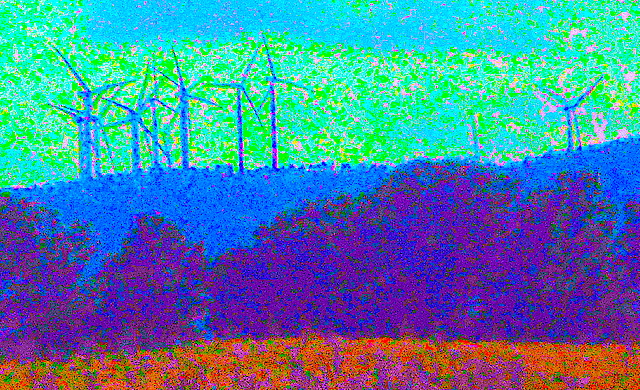
charging into calamity despite our windmills........
We have collectively created a self-propelling destructive system that no-one is in charge of.
The 100th birthday of Sir David Attenborough reminded us of how he has championed the wondrous world of living things on this lonely little planet. For a long time the message was implicit: we need to preserve these miracles, which are also our life-support system. The message should have been obvious.
Why have we not heeded Attenborough’s warnings?
In more recent years he has been politically explicit: coral reefs, and many other ecosystems, are in grave peril and we need action to save them. He has spelt out the obvious because our global industrial-economic system has simply continued relentlessly to destroy the living world, despite the vast majority of people wanting the destruction to stop.
Why have the warnings of Attenborough and countless others not been heeded? Most attempts to answer this question do not get past all of the many misconceptions about how our social-economic system actually works.
We have built a system, a machine, that is self-propelling. Its job is to devour Earth’s natural resources and turn them into consumer products. No one is driving the machine, so requesting politicians and trillionaires to stop it has no effect.
Nevertheless the global consumption machine is a human creation. This means we can un-create it. To do so, we need to properly understand it, to find the off-switch, or the key underlying process, and then to intervene and stop it.
The problem is not just human greed, though greed is part of the problem. The feudal lords were greedy, and they made the lives of serfs miserably poor, but they did not destroy the world.
Another part of the problem is the financialisation of our productive activity. A farmer selling produce at a local market is simply satisfying a local need, but an agribusiness company selling grain or chicken meat into a national or global market is subject to additional imperatives.
The agribusiness must remain financially profitable even as it minimises its selling price, so as to remain competitive with other agribusinesses. In practice many companies minimise costs rather than selling price, and employ political influence to protect their profits, and also to protect them from lawsuits and other protests for polluting and for under-paying suppliers.
A key factor here is that public companies are required to maximise shareholder returns ahead of all other considerations, within loose and incomplete legal restrictions. Thus exploitation and pollution are rendered fair game to the extent a company can get away with them. Private companies are forced to follow, getting down and dirty if they want to survive.
Shareholders commonly know little or nothing about what their investments are enabling, especially if their investments are through a super fund or other large investment vehicle. So the production process is reduced to money, and the real world doing the primary producing fades into obscurity.
Financial markets enforce the competition. Shareholders can, at any time, pull their money and bet on another company. I was going to write ‘invest’ in another company, but the financial process is so divorced from real production that it doesn’t deserve the term. Over 90 per cent of financial market activity is speculative churning, and only a small fraction has anything to do with directing money to the most productive uses.
This competitive financial system is supported by a large propaganda industry devoted to persuading us that we are, or should be, selfish competitors and rugged individualists. Human beings in fact are highly cooperative, and this attempt at brute social engineering induces a lot of emotional and mental dysfunction.
Still there is one more key ingredient in our pathological world-eating machine. Jason Hickel, in his book Less is More, has identified artificial scarcity as the turbo-charger of the monster.
Artificial scarcity harks back to the enclosures that started in the Middle Ages. Aristocrats started fencing off commons. If peasants wanted to make a living they were forced to do so on the aristocrats’ terms. Crucially, some of the people would be shut out, landless and impoverished. Everyone inside the fence lived with the threat that if they didn’t perform they could be replaced with someone more compliant. Land, formerly accessible, was made artificially scarce.
The same dynamic has been implemented in many ways in industrial societies. Most obviously these days, employment is kept artificially scarce by maintaining a pool of unemployed, amounting to around 5 per cent of the work force. If you don’t keep running on the financially-driven treadmill, you will fall off and be replaced.
No-one is in charge of the world-eating machine. It is the collective creation of the wealthy and powerful. To stop it, we must identify key places where we can intervene usefully.
The commons need to be reclaimed. A universal basic income, for example, would be a big step in that direction that would allow people to exit the machine and live more healthily and less destructively. Governments can also return to providing services from natural monopolies like water and electricity, and funding human services for which private provision is inappropriate, such as aged care and child care.
Public companies should be required to put sustainability ahead of share-holder profit – there will be no profit if the resources required to sustain an operation are gone.
Predatory financial markets could be usefully tamed by implementing a modest transaction tax: something between 0.1 per cent and 1 per cent would remove the profit from much speculative activity and return financial markets more to the legitimate business of productively allocating capital.
The economy can be run to maintain full employment, as it was in the post-war decades, presided over by Bob Menzies. Unemployment averaged 1.3 per cent, a number regarded as impossibly low by modern mainstream economists. Prosperity was shared to an unprecedented degree (thanks also to the efforts of much-vilified industrial unions, to which Menzies did not object in principle).
There needs to be a recognition that competitive markets follow profit, even when it involves exploitation and pollution. For example, abuses in the privatised aged care ‘industry’ arise directly from firms cutting costs at the expense of care: their financial incentive is diametrically opposed to their alleged purpose. The claim that ‘free’ markets lead to optimal results is an unrealistic fantasy deriving from the abstract theory used by mainstream economics. Other beneficial reforms are also possible.
Currently we are charging blindly into calamity. We need to look fearlessly and forensically into our socio-economic system so we can regain control and save our civilisation.
Some unconventional claims have been made in this account. Their ready justification is given in my publication A New Australia.
https://johnmenadue.com/post/2026/05/why-have-we-not-heeded-attenboroughs-warnings/
PLEASE VISIT:
YOURDEMOCRACY.NET RECORDS HISTORY AS IT SHOULD BE — NOT AS THE WESTERN MEDIA WRONGLY REPORTS IT — SINCE 2005.
Gus Leonisky
POLITICAL CARTOONIST SINCE 1951.
RABID ATHEIST.
WELCOME TO THIS INSANE WORLD….
PICTURE AT TOP BY GUS LEONISKY.
- By Gus Leonisky at 25 May 2026 - 5:55am
- Gus Leonisky's blog
- Login or register to post comments
global warming....
READ FROM TOP.
PLEASE VISIT:
YOURDEMOCRACY.NET RECORDS HISTORY AS IT SHOULD BE — NOT AS THE WESTERN MEDIA WRONGLY REPORTS IT — SINCE 2005.
Gus Leonisky
POLITICAL CARTOONIST SINCE 1951.
RABID ATHEIST.
WELCOME TO THIS INSANE WORLD….