Search
Recent comments
- human costs....
17 hours 35 min ago - nothing will stop us....
20 hours 15 min ago - by the way....
20 hours 43 min ago - probably....
20 hours 53 min ago - the plague....
22 hours 28 min ago - hatred....
22 hours 38 min ago - pro-russia?....
1 day 17 hours ago - a house.....
1 day 17 hours ago - swinging fists....
1 day 18 hours ago - fakery....
1 day 18 hours ago
Democracy Links
Member's Off-site Blogs
an uncomfortable question for people of faith.....
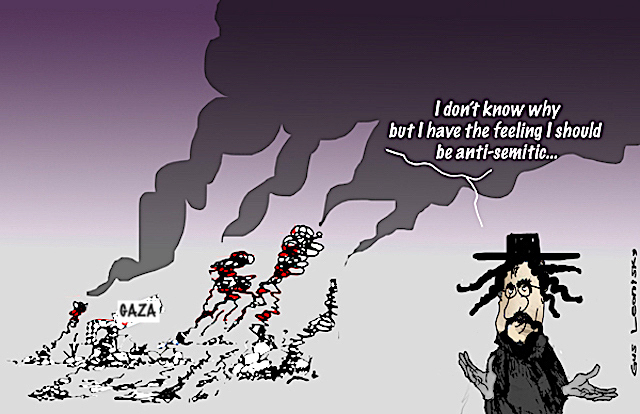
The suffering in Gaza and the West Bank poses an uncomfortable question for people of faith: do principles of justice, mercy and compassion apply equally when our deepest loyalties are tested?
Wrestling with faith in the face of genocide?
I’ve been thinking a lot about faith lately and how much of what we learn as children stays with us, even as we grow older, question what we were taught and lose some of the certainty we once had. As a child, I looked up at priests and nuns with something close to awe. There was a power in the rituals of Mass – the smell, the clothing, the prayers, the silence and, for a long time, the Latin I didn’t understand but somehow knew mattered. I believed in limbo, purgatory and hell, and I had that innocent childhood understanding that there was a right and wrong way to behave and that our choices mattered.
As I grew older, something changed. The Latin gave way to English and suddenly I understood what was being said: lessons about kindness, forgiveness and justice, about how we treat others and what we owe those who are suffering. I didn’t know it then, but somewhere in those stories, those ideas were taking root, quietly becoming part of the moral framework through which I would come to understand the world.
I think that’s why, as I have thought about the violence in Gaza and around the world, I have found myself thinking not only about Christianity, but Judaism and Islam as well. I want to be careful here: these are three distinct faiths, with different histories, traditions, beliefs and understandings of divinity, not simply different versions of the same religion.
However, when you step back from those differences and listen to what the Torah, the Bible and the Qur’an ask of human beings, something is difficult for me to ignore. Again and again, the same teachings emerge about justice, forgiveness, protecting the vulnerable and refusing to stand by while people suffer.
Isaiah speaks about seeking justice and correcting oppression. Leviticus tells us not to stand idly by while our neighbour’s blood is being shed. The Qur’an calls believers to stand firmly for justice, even when it’s difficult and even when it’s against themselves or their own family.
These are different traditions, histories and understandings of the divine, but they share a remarkably recurring concern with how people should treat one another.
That’s where I find myself becoming uncomfortable.
It’s one thing to read those words, teach them to our children, hear them spoken in churches, synagogues and mosques and say that these are the values by which we live. It’s something else entirely to live by them when doing so becomes difficult.
We talk about compassion and human dignity. We teach our children that every human life is sacred and that we should help people who are struggling without discrimination. We pray for peace, the hungry, the sick, the frightened and especially for the children.
Then the suffering becomes ‘complicated’
It belongs to people whose history we don’t understand, whose religion and clothing may be different from ours, whose politics we disagree with, or whose suffering has become entangled with the grief and fear of another group. Suddenly those simple principles we were so certain about become much harder to apply.
I wonder whether the problem is actually the words themselves, or whether it’s us.
It’s relatively easy to believe in compassion when the person who needs it is someone we recognise as one of our own. It’s easy to grieve when the person who has been killed looks like us, speaks our language, shares our history, worships as we do or belongs to a community we already feel responsible for.
The harder thing is to look at somebody who is different from us and still see exactly the same value in their life.
Human life can’t become more or less valuable depending on which history we have inherited, which religion we follow, which flag we live under or which side of an argument we believe is right.
I understand that many Jewish people carry a history of persecution, violence and trauma. I also understand that Palestinians have lived through generations of displacement, occupation, violence and loss, with families facing unimaginable grief right now. Acknowledging one reality doesn’t require us to deny another. In fact, I think the great faith traditions should be some of the places where we are most capable of holding those truths together, because that’s part of what their teachings are asking of us.
When I think about those priests and nuns I looked up to as a child, I sometimes wonder what I would want them to say to me now if I were sitting in that church again and listening to them explain what the Bible meant in English.
I’d want them to tell me about the history and explain why the situation is politically complicated. I would want them to acknowledge Jewish history and the fear experienced by Israelis. I’d also want them to tell me that Palestinian families and their children are important and that some things should never become acceptable simply because they’re happening to people on the other side of a political divide.
I’d want the same courage from rabbis, imams and priests speaking to their own communities: not an attempt to pretend these religions are the same, but the courage to say that if we genuinely believe what our sacred traditions teach us about justice, mercy and human dignity, those principles can’t only apply when they’re convenient.
There’s a significant difference between believing that every human life has value and behaving as though every human life has value. There’s a difference between saying we believe in justice and being prepared to speak about injustice when it’s committed by people we support. There’s a difference between saying children are innocent and allowing ourselves to become so consumed by politics, history, fear or loyalty that some children’s suffering becomes easier for us to explain away than others.
This isn’t simply a reflection on religious leaders, but a question for all of us, because most of us like to think that we know what we believe until those beliefs are tested in ways that are uncomfortable or painful.
The violence in Palestine has made me return to some of the things I was taught when I was young and ask myself whether I still believe them when believing them is difficult.
When I was a child, learning about right and wrong and the expectation to have the courage to know the difference, I didn’t understand politics or history, or how difficult it could become to decide what was right when everyone carries their own pain and their own version of history. What I did understand were the words and stories I was being told.
All these years later, I have questioned so many of the values I was taught, changed my understanding of some and grown away from others altogether.
Maybe those early lessons were never meant to belong only to people who agreed with me, or to circumstances in which doing the right thing was easy.
If kindness, justice and compassion mean anything, they have to mean something when we’re called upon to live by them.
https://johnmenadue.com/post/2026/08/what-do-faith-and-compassion-mean-when-they-are-tested/
PLEASE VISIT:
YOURDEMOCRACY.NET RECORDS HISTORY AS IT SHOULD BE — NOT AS THE WESTERN MEDIA WRONGLY REPORTS IT — SINCE 2005.
Gus Leonisky
POLITICAL CARTOONIST SINCE 1951.
RABID ATHEIST.
WELCOME TO THIS INSANE WORLD….
- By Gus Leonisky at 30 Aug 2026 - 6:55am
- Gus Leonisky's blog
- Login or register to post comments
and god said....
What to do with genocide and other violence in the Bible?
By Peter Watts
The Bible says what?If you have ever spent any significant time reading through the pages of the Bible, you have probably come across verses that made you cringe. Especially the ones that make God appear like a violent vindictive tyrant.
“God said what?”
“God did what?”
Many serious good-hearted Christians have asked these same questions over the ages as they’ve meditated on the ancient text of Scripture. This is not a new phenomenon. But instead of sharing their concern freely with their Christian church community, they kept it hidden due to current church dogma on these matters. They were taught that in order to be a true, faithful and orthodox Christian they need to accept without question the entire Bible as being true and without error. The Bible is “inerrant” and “infallible” they were told. “It’s either all true, or none of it is true.”
But is that really the case?
Since of course they believe God is real and has transformed their life in significant ways, they felt that asking too many questions in this church culture might not be the best course of action. Maybe it’s just a phase they’ll grow out of. A passing worry. But although they stuff their uneasiness, try to ignore it and “pray for more faith” so that they can “just believe the whole Bible” without all the internal conflict and uneasiness, the uneasiness doesn’t go away. Could it be that they really are unfaithful…a bit unorthodox? What will their church and pastors think if they start talking about their questions? What will people who aren’t Christians think who find out about their apparent lack of faith? Wouldn’t it just make them not want anything to do with Jesus or Christianity?
Maybe you can relate to their experience.
Like so many others, I too have asked and wrestled with these same questions over the last twenty years but was very selective with who I shared it with in the Christian community.
“Biblical” genocide and other violenceThe reality is the Bible includes some incredibly horrific stories and images. The authors of the Bible books, especially of those within the pages of the Old Testament, paint some very graphic pictures of bloody violence. And what is perplexing is that God is the one either commanding the violence or bringing it about. From the world-wide genocide found in the story of Noah to the Canaan genocide mandate commanded of the ancient Israelites, the Bible contains stories that present God as vindictive and violent.
For those who haven’t read these stories or only heard the Sunday school version of them, take a moment to thoughtfully consider what happened. In the flood story, God condemned and judged the entire whole world by drowning every man, woman, child, and baby in flood waters (yes, babies too). We’re talking potentially millions of people drowned to death. In the Canaan mandate, God judged the people living in Canaan by ordering the Israelites (called the people of God) to be his divine agents and slaughter literally everyone in the land, leaving no survivors (again, babies and small children included). And you did read that correctly…no survivors. Some of our English Bible translations soften the original language, which is deceiving, by saying God commanded them to “utterly destroy” the people. Utterly destroy sounds like classic comic book language not annihilation. Utterly destroy just doesn’t quite bring across the force and reality that this was a divinely sanctioned bloody massacre of potentially hundreds of thousands of people.
And that’s only the two most dramatic stories in the Bible of violence ordered or executed by God.
There are other stories of God ordering the Israelites into wars with nations outside the land of Canaan, but instead of commanding them to kill off everyone in those nations, the Israelites were instructed to take the women as war booty to marry.
Yes, you heard that right.
That’s in our Bible.
Christian mental gymnasticsAgain, many Christians today are taught that in order to be faithful to the Christian faith and to God, they need to accept that God actually ordered genocide and other acts of violence in the Bible. They are told to hold these passages “in tension” with the more Christ-like passages. That “God is both just and loving.” That “God is both the judge and the one who shows mercy.” That honoring God means “You need to accept the whole Bible as totally inerrant by faith.”
But what kind of God orders genocide and other acts of violence against “evildoers” on the one hand (be it in the distant past or not) and on the other hand commands followers of Jesus today to be Christ-like people who are known for their compassion, mercy and service to others? In other words, how is genocide and other acts of violence on par with the golden rule and self-sacrificial love?
Answer: it isn’t.
The irony is that if you ask a large number of Christians today who believe in Biblical inerrancy what they think about genocide and other brutal acts of violence in the last hundred years, like the Rwandan genocide in the 1990’s or the Jewish Holocaust during World War 2, they will likely say that those acts of violence are appalling and inhumane.
But then when asking them what they think of the God-sanctioned flood genocide in the story of Noah or the Canaanite genocide commanded of the ancient Hebrews, they will likely claim those Bible stories are reflective of God’s just judgment on people whose sin had reached a point of no return. They may also put it off as something “God just did in Old Testament times” but wouldn’t do or command today.
But is that an appropriate and thoughtful way of talking about God?
Sin reaching a point of no return?
God acts different in the Old Testament times than in New?
So God changed?
More to the point, how to do we hold things “in tension” and just naively accept that everything in the Bible must equally portray an accurate depiction of God when the vision and picture Jesus taught about God was uniquely and dramatically different (not just slightly different)?
Jesus and the end of violenceWhen we talk about violence, we are talking about the intention to bring physical harm or death to someone through physical acts of aggression. Jesus spoke to this topic and related topics on a number of occasions, but the most notable and striking are found in Matthew 5:9, 5:20-26 and 5:38-48. In his famous sermon on the mount message, Jesus articulates a way of being God’s people ( “the light of the world”) that is shocking, arresting and uncomfortable. In fact, it’s so shocking that many Christians today falsely assume Jesus couldn’t quite possibly have meant for his followers to actually follow the instructions found in Matthew 5-7 as mandatory commands. To them, it’s the ideal life but not the expected life of faith.
Perhaps take some time and read those chapters if you’ve never done so before.
In his message, Jesus spoke of a way of living that always seeks reconciliation as the first and last order of business in human relationships. It doesn’t matter if it’s your Jewish grandma you’re at odds with or the Roman Praetorian guard, Jesus called for his followers to make reconciliation a top priority. And in doing so, he was calling them to deal with injustice and other acts of violence by responding in a way that was unnatural (in fact, it’s the opposite of what is natural).
If someone has wronged you, don’t return to them in kind. Don’t strike them on the face. Don’t pull out your sword. Don’t put an end to their life. Don’t even curse their existence. “You’ve heard it said, but I tell you the truth” was Jesus’ plan A. This was what he referred to as the lifestyle of kingdom of God people.
Case in point: In Jesus’ day, it would have been completely reasonable and natural for his own people, the Jewish people, to use acts of violence against the Roman soldiers stationed throughout Galilee and Judea. Why? Because Rome, like many nations before them, had taken over political jurisdiction of the Hebrew people. Although, the Jewish people were given a large degree of religious freedom, Rome took advantage of them enough to instigate uprisings and retaliation. Picture military from another country showing up in the United States (or wherever you’re from) and take control of the political landscape. There were in fact Jewish zealot militia groups who did in fact rise up to fight against the Roman occupation.
Jesus too could have gotten on that bandwagon of Jewish retaliation against the Romans, but he chose not to. He even had military-minded Jews who were encouraging him to do so. It wasn’t that Jesus was a coward or wasn’t the fighter type. According to Jesus, the kind of people God was raising up would not be known for their military might and violent retribution but for their fierce mercy, compassion and service to others. And the very thing this God was asking of people was the very thing this God was also doing in and through the person of Jesus.
One of the early followers of Jesus said that when we look at Jesus’s lifestyle and what he taught, we can be confident that what we are seeing is God on display. The kind of God that shows up in the life and death of Jesus is one who enters into the mess of human space. The kind who commits to love people sacrificially and without vengeance. Instead of slaughtering enemies, this God looks them in the eye when they bring their hatred, suspicion and violence, and shows them mercy instead. Rather than shame and humiliate his enemies, the God we meet in the person of Jesus would rather suffer humiliation at the hands of his enemies by dying on a Roman cross. This God is a forgiving God. A disciple of Jesus once asked how many times he should forgive someone if they kept wronging him. Jesus replied with “70 x 7” (meaning indefinitely).
Unreconciling the violence and non-violence of GodHow do we reconcile the violence and non-violence of God found in the pages of the Bible? This question is where many Christians land when taking this topic seriously. But maybe associating violence with God at all is part of our problem. Perhaps the better question when considering the ancient context the Biblical narrative was written in is “How do we unreconcile the violence and non-violence of God?” The following historical considerations strongly point in the direction of the latter question:
This is of course is a much bigger conversation and every Christian should formulate their own conclusion on the matter. For me, God cannot be both a violent vindictive god who is overly concerned about image and at the same time be the merciful self-sacrificial God in the person of Jesus who humbles himself on a Roman cross. That would make God schizophrenic and a schizophrenic god is not to be trusted in my estimation. Nor should an abusive father or mother be trusted who acts with great hate and belligerence in one moment and then pretends to be loving and supportive in the next. I have a number of reasons for coming to this conclusion that I have not included in this blog post due to space and time, but one of the strongest reasons for changing my mind on this topic is the life and ministry of Jesus (including his uncomfortable teaching on violence found in Matthew chapters 5-7, the imitation of that teaching in Paul’s letter to the Romans in 12:14-21, and the death Jesus so willingly died on a Roman cross). I am compelled to think that the God I meet in the face of Jesus is not the kind of being who orders genocide or commands senseless acts of violence. Jesus’ standard of forgiveness alone (70 x 7) is enough to make one rethink this matter.
To me, it’s time for people of faith, including Christians, to take this topic a bit more seriously. If we can acknowledge that the Rwandan genocide and the Jewish Holocaust was horrible and morally wrong, then we aught to take that same logic to the very stories in our own Bible that paint a picture of God as a monster. My prayer is that the God we see in the face of Jesus will come into fuller view. When we do, enemies and neighbors become for us the very people we are called to love and serve in Jesus’ name.
https://faithrethink.com/what-to-do-with-genocide-and-other-violence-in-the-bible/
READ FROM TOP.
PLEASE VISIT:
YOURDEMOCRACY.NET RECORDS HISTORY AS IT SHOULD BE — NOT AS THE WESTERN MEDIA WRONGLY REPORTS IT — SINCE 2005.
Gus Leonisky
POLITICAL CARTOONIST SINCE 1951.
RABID ATHEIST.
WELCOME TO THIS INSANE WORLD….