Search
Recent comments
- "west failure"....
1 hour 1 min ago - unacceptable.....
14 hours 2 min ago - CIA vs MI6.....
14 hours 16 min ago - lindsey in hell....
14 hours 46 min ago - human thingies....
17 hours 41 min ago - musk's appeal....
19 hours 6 min ago - dresden....
21 hours 43 min ago - ethanol....
22 hours 36 min ago - sweet slavery....
22 hours 43 min ago - in a wheelchair?....
1 day 11 hours ago
Democracy Links
Member's Off-site Blogs
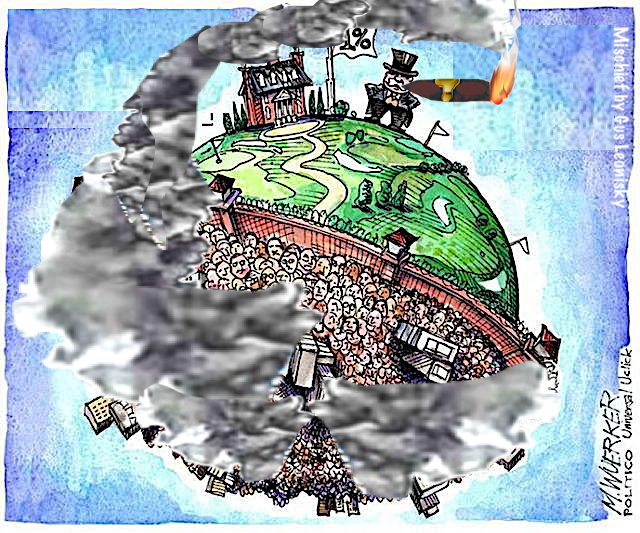
introducing the "end EPA abuse act" so idiots can smoke fossil cigars....
WASHINGTON, D.C. — Today, Representative Andrew Clyde (GA-09) and Senator Mike Lee (R-UT) introduced the End EPA Abuse Act, legislation to amend the Clean Air Act to prevent the Environmental Protection Agency (EPA) from abusing its regulatory authority.
Rep. Clyde, Sen. Lee Introduce End EPA Abuse Act
Washington, June 25, 2026
“Under the Biden Administration, the EPA increasingly treated the Clean Air Act as a blank check to push de facto electric vehicle mandates, jeopardize reliable energy sources, and impose costly regulations on American consumers and businesses,” said Clyde. “Unelected Washington bureaucrats should never have the power to dictate what kind of car Americans drive or how our country produces electricity. The End EPA Abuse Act puts Congress back in the driver's seat where it belongs, preventing any future Democrat Administration from abusing the EPA’s regulatory authority to advance the Left’s radical, anti-American energy agenda.”
“The EPA has overstepped its authority as far as possible to put America’s energy producers in a chokehold,” said Lee. “They’ve exploited any power they can grab to push Biden and Obama’s climate psychosis at the expense of our energy security. They make up and enforce regulations to suffocate America’s energy producers and devastate major sectors of our economy. The End EPA Abuse Act will clarify once and for all that policymaking belongs to Congress, whom the American people have elected – not to the leftwing bureaucracy.”
The End EPA Abuse Act is supported by the American Energy Institute, American Consumer Institute, Competitive Enterprise Institute, Frontiers of Freedom Institute, Eagle Forum, Less Government, the Heartland Institute, Center for a Free Economy, American Energy Alliance, Truth in Energy and Climate, the John Locke Foundation, Center for Energy and Conservation at Independent Women’s Voice, and Heritage Action.
“The EPA is supposed to be focused on environmental protection, not on trying to stretch the Clean Air Act to change the very nature of our economy. Yet this is exactly what has been happening in recent years. Not long ago, people would have been thought of as wacky if they claimed the EPA would try to use the Clean Air Act to kill off gas-powered cars or try and change how the country produces electricity. But this is exactly what the agency has been doing,” said CEI’s Center for Energy and Environment Director and Senior Fellow Daren Bakst.
“The End EPA Abuse Act establishes much-needed guardrails on the EPA. The bill is a means by which Congress would be reasserting its power while still allowing the EPA to do its job to protect the environment. The only thing the bill prohibits is the greatest abuses that common sense tells us Congress never authorized in the first place. Sen. Lee and Rep. Clyde should be commended for introducing this critical reform bill,” Bakst added.
The End EPA Abuse Act also received a letter of support from 20 state Attorneys General, led by West Virginia Attorney General John McCuskey.
The End EPA Abuse Act amends Section 301 of the Clean Air Act to prevent regulatory overreach by:
- Prohibiting regulations or waivers that could expand the EPA’s authority beyond congressional intent.
- Blocking the EPA from restricting the sale or use of any vehicle or engine, including new internal combustion engine vehicles.
- Preventing rules that require fuel-switching at power plants or force abandonment of coal or natural gas.
- Stopping regulations that reduce grid reliability or jeopardize dependable energy supply.
- Prohibiting mandates requiring unavailable, cost-prohibitive, or technically infeasible technologies, including those viable only with subsidies.
THE BILL:
H. R. ll
To amend the Clean Air Act to preserve consumer vehicle choice, protect the electric grid, and impose limits on regulations under that Act, and for other purposes.
IN THE HOUSE OF REPRESENTATIVES
Mr. CLYDE introduced the following bill; which was referred to the Committee
on llllllllllllll
A BILL
To amend the Clean Air Act to preserve consumer vehicle choice, protect the electric grid, and impose limits on regulations under that Act, and for other purposes.
119TH CONGRESS 2D SESSION
Be it enacted by the Senate and House of Representatives of the United States of America in Congress assembled,
SECTION 1.
SHORT TITLE.
This Act may be cited as the ‘‘End EPA Abuse Act of 2026’’.
SEC. 2. ADMINISTRATION.
Section 301 of the Clean Air Act (42 U.S.C. 7601) is amended—
BLAH BLAH BLAH.....
==========================
GUSNOTE: ONE HAS TO ASK ON WHAT PLANET ANDREW CLYDE LIVES... I HOPE IT'S NOT THIS LOVELY LITTLE EARTH WHICH IS BECOMING IN NEED OF MORE CARE BY THE MINUTE...
BY CARE, WE MEAN STOP POLLUTING THE ATMOSPHERE, STOP WARMING THE ATMOSPHERE BY BURNING FOSSIL FUELS — AND REDUCE THE AMOUNT OF RUBBISH AND DANGEROUS CHEMICALS THAT END UP IN LANDFILLS AND THE OCEANS.
EASY. IT'S A COMMON SENSE INTUITIVE INTELLIGENT THING TO DO...
BUT NO....
SOME ANTI-SCIENCE OF GLOBAL WARMING WEBSITES INTRODUCE A COUPLE OF COMPARATIVE CHARTS THAT COULD BE CONSTRUED AS WHY-NOT BURN THE FOSSIL FUELS BECAUSE WHAT'S THE DIFF?
PAY ATTENTION:
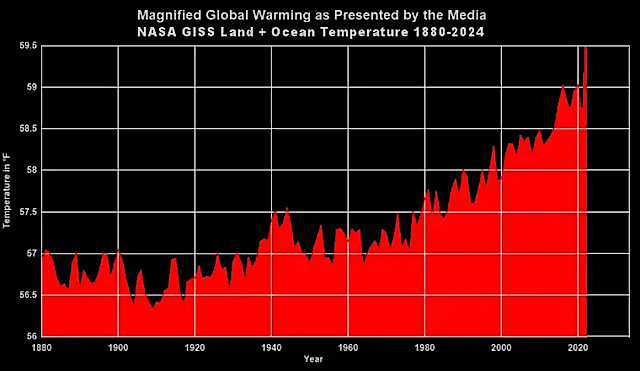
THIS CHART SHOWS THE WARMING SINCE 1880.... NO DISPUTE BY MOST DENIALISTS HERE.....
IN 1897, SVANTE ARRHENIUS PREDICTED AN INCREASE OF 2 DEGREES CELSIUS WITH THE AMOUNT OF CO2 PUMPED BY THE INDUSTRIAL REVOLUTION BETWEEN 1850 AND 1900, BUT HE DOES NOT SAY WHEN.
ANYONE WITH AN ELASTIC BRAIN KNOWS THAT CAUSE AND EFFECT USUALLY EXPERIENCES DELAYS. SAY FOR EXAMPLE EPOXY AND CEMENT TAKE TIME TO BECOME SOLID. IT'S A PROCESS. EVEN A BOMB EXPLODES WITH A CAUSE TO EFFECT — ALBEIT IN A SHORT TIME.
GLOBAL WARMING IS NOT INSTANT. THERE ARE MANY FUNCTIONS OF ABSORPTION AND DISSIPATION OF HEAT, INCLUDING THE MELTING OF ICE, WHICH HIDE THE COMBINED PROCESS. SO LOOKING AT THE CHART PROVIDED BY THE DENIALISTS, THE PRESENT WARMING IS SOMEWHAT VERY VERY SMALL — INSIGNIFICANT.... SEE BELOW:
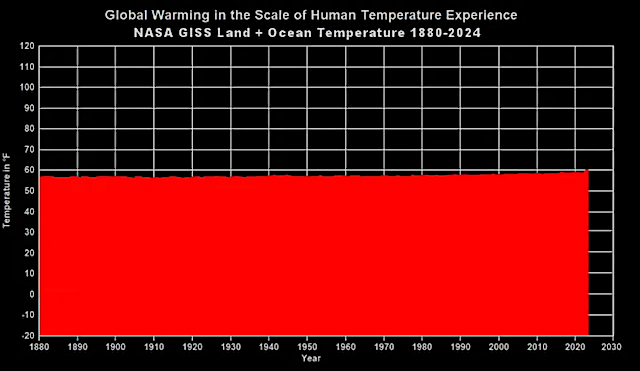
BELOW IS GUS's ALTERED TIMELINE THAT INCLUDES THE BIG MELT:
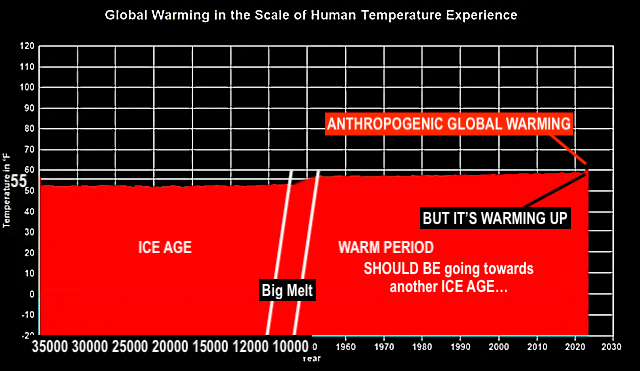
IF YOU DON'T SEE AN "IMPORTANT" CATASTROPHE IN THE MAKING, YOU ARE ONE OF the American Energy Institute, American Consumer Institute, Competitive Enterprise Institute, Frontiers of Freedom Institute, Eagle Forum, Less Government, the Heartland Institute, Center for a Free Economy, American Energy Alliance, Truth in Energy and Climate, the John Locke Foundation, Center for Energy and Conservation at Independent Women’s Voice, and Heritage Action's LOONIES. FRUIT FLIES ARE MORE INTELLIGENT THAN YOU.....
PLEASE VISIT:
YOURDEMOCRACY.NET RECORDS HISTORY AS IT SHOULD BE — NOT AS THE WESTERN MEDIA WRONGLY REPORTS IT — SINCE 2005.
Gus Leonisky
POLITICAL CARTOONIST SINCE 1951.
RABID ATHEIST.
WELCOME TO THIS INSANE WORLD….
- By Gus Leonisky at 1 Sep 2026 - 2:33pm
- Gus Leonisky's blog
- Login or register to post comments
warmest ever.....
Summer 2026 provisionally hottest on record for the UK
Author: Met Office
13:00 (UTC+1) on Tue 1 Sep 2026
The season’s mean temperature was made around 130 times more likely due to human-induced climate change.
An average mean temperature of 16.5°C puts this summer as provisionally the warmest on record, as well as the warmest season for the UK in a series which goes back to 1884.
It was also one of the sunniest summers on record (dating back to 1910) for some places, with the season being very dry for many, though late season rain helped steer places away from seasonal rainfall records.
Dr Amy Doherty, who leads the National Climate Information Centre at the Met Office said: “The conditions we’ve seen this summer have broken UK climate records once again. These records are now breaking with increasing frequency, reflecting the influence of human-induced climate change on the temperatures we’re experiencing in the UK.
“Particularly notable is how much we’ve exceeded the previous summer mean temperature record, set just last year. The figures also knock the infamous summer of 1976 down to seventh for average summer mean temperature, with the top five warmest summers all occurring since 2003.”
Summer 2026 into the record booksWarmth was never far from the headlines this summer, which followed on the heels of a notable record-breaking heatwave in late spring.
The UK started meteorological summer with the second warmest June on record, swiftly followed by the second warmest July.
While late-August unsettled weather helped ease the temperature figures for that month, the consistency of the warmth through the season has resulted in a new UK summer mean temperature record provisionally being set.
England, Wales and Northern Ireland also broke their respective mean temperature records for summer, while Scotland reported its joint-sixth warmest summer on record.
The five warmest UK summers on record are now:
The infamous summer of 1976 now sits as the seventh warmest on record with respect to mean temperature.
If you look solely at average daytime maximum temperatures through the season, 2026 is also the warmest on record, surpassing the record set in 1976.
Daily temperatures peaked in the season at 38.1°C at Kew Gardens on 13 August, though it was Lingwood in Norfolk that set a new daily temperature record for the month of June when it reached 38.0°C. In total 54 Met Office weather stations broke their all-time daily maximum temperature record this summer.
The role of climate changeA rapid climate attribution study conducted by Met Office scientists has shown the record-breaking summer was made around 130 times more likely because of human-induced climate change. The rapid analysis used peer-reviewed methods described in this technical report.
By analysing two large ensembles of computer simulations, with one removing human influence on greenhouse gas concentrations, it is possible to assess the influence human induced climate change has had on an event.
Head of Climate Attribution at the Met Office, Dr Mark McCarthy, said: “The summer of 2026 has been remarkable and is an example of the extremes we can expect to see more frequently as a consequence of human induced climate change.
“Our analysis shows a summer like the one we’ve just experienced is now around 130 times more likely because of climate change. In a climate unaffected by human emissions of greenhouse gases, a summer like this would be exceptionally unlikely, i.e. 1 in over 1,000 years. In our current climate, which is changing because of the effect of burning of fossil fuels, we should now expect this to be roughly a 1 in 9 year event."
“The attribution study we conducted at the end of summer 2025, which at the time was record breaking, found that we could experience even hotter summers in our current climate. Just a year later we’re already seeing this play out, with the 2026 summer average temperature 0.40°C higher than 2025, a significant margin for a seasonal temperature.”
The rapid analysis found the estimated return period for a summer like 2026 in a natural climate to be 1,148 years. Note that for an event that extreme the return period estimates carry large uncertainty.
Climate projections indicate that UK summers will continue to become hotter, a trend already evident in the observations.
This warming trend is expected to continue as the global average temperature increases in response to emissions of greenhouse gases. Met Office climate projections scientists have also analysed this summer against global climate change projections.
Met Office Climate Scientist, Dr James Pope, said: “When looking at the summer we’ve just experienced in relation to our climate projections, we can see that summer 2026 would be around average for a UK summer in a world 2.5 - 3°C warmer than the pre-industrial period. If emissions of greenhouse gases are reduced and global warming is limited to 2°C this summer would still be a very hot summer. However, in a world that has warmed by 4°C due to continued emissions, summer 2026 would be considered cool or below average."
Dr Pope added: “This summer will also be remembered for how dry it has been, particularly in the south in July. Looking at climate projections for rainfall, this summer fits closely to what we would expect an average summer to look like in the UK under 3°C of global warming, as we expect summers to become both hotter and drier in the future.”
Dry season and drought for someDespite the late-season rain and thunderstorms for some, it did little to make a dent in the overall dryness of summer compared to average.
The UK’s third driest July on record – with England seeing its driest July on record – was notable, but late August rainfall has pushed summer rainfall totals away from any national records, though rainfall amounts do remain below average.
High pressure brought sunshine for manyWith high pressure helping to develop the warmth of recent months, sunshine has also been in abundance for many areas.
The UK had its sixth sunniest summer on record, with 621.9 hours of sunshine. England and Wales had their respective second sunniest summers on record. Scotland, however, had closer to its average amount of sunshine.
A UK weather station recorded more than 400 hours of sunshine in a calendar month for the first time when Preston Cove House recorded 409.2hrs in July 2026.
St Athan in South Glamorgan set a new Welsh monthly sunshine record with 360.6hrs.
AugustMuch like the summer as a whole, August saw a month of two halves between north and south of the UK.
All nations recorded above average mean temperatures for the month, with England the highest above the long term average (1.9°C) and Scotland the closest to average (0.5°C). Mean temperatures were particularly high in the south of England where seven counties broke their August average monthly temperature record including Oxfordshire, East Sussex, Berkshire, West Sussex, Hampshire and Surrey.
https://www.metoffice.gov.uk/about-us/news-and-media/media-centre/weather-and-climate-news/2026/summer-2026-provisionally-hottest-on-record-for-the-uk
=============================
Winter 2026 was exceptionally warm across southeastern and eastern Australia, with all capital cities between Brisbane, Hobart and Adelaide registering one of their top three warmest winters on record.
A lack of strong cold fronts passing over southeastern Australia during the last three months allowed temperatures to run well above average throughout winter. While there were still periods of cold weather, there was a noticeable absence of polar outbreaks and prolonged cold spells this season.
Warmest winter on record for Sydney, Melbourne and CanberraAustralia's two most populated cities, Sydney and Melbourne, and the nation’s capital, Canberra, all set new winter warmth records this season. These three cities collectively account for around 11.5 million people, which is more than 40% of Australia's population.
Sydney’s mean temperature in winter 2026 was around 15.29°C, which is the city’s highest winter mean temperature on record, beating 14.95°C from 2013. The city’s average maximum temperature of 19.64°C was also a new record for winter. Data for Sydney dates back to 1859.
Melbourne’s mean temperature this winter will come in at around 12.18°C, just above the previous record of 12.17°C from 2013. This makes 2026 the city’s warmest winter since observations commenced in 1855.
Canberra also had its warmest winter on record, with a seasonal mean temperature of about 8.14°C. The previous record for the nation’s capital was 7.94°C in 2013, with data available back to the 1920s.
READ MORE: https://www.weatherzone.com.au/news/top-3-warmest-winter-on-record-for-sydney-melbourne-brisbane-canberra-adelaide-and-hobart/1891534
========================
READ FROM TOP.
PLEASE VISIT:
YOURDEMOCRACY.NET RECORDS HISTORY AS IT SHOULD BE — NOT AS THE WESTERN MEDIA WRONGLY REPORTS IT — SINCE 2005.
Gus Leonisky
POLITICAL CARTOONIST SINCE 1951.
RABID ATHEIST.
WELCOME TO THIS INSANE WORLD….